John_Quidor_-_The_Headless_Horseman_Pursuing_Ichabod_Crane_-_Google_Art_Project
The Headless Horseman Pursuing Ichabod Crane, by John Quidor (1858)

“The Legend of Sleepy Hollow” is a short story, originally published in The Sketch Book of Geoffrey Crayon, Gent. “Geoffrey Crayon” being a pseudonym of Washington Iriving.

It tells the story of Ichabod Crane, a schoolteacher in a region of New York known as Tarrytown in the early 19th-century. He is—if I may cut through the florid 19th-century lingo—kind of a jerk. He’s mean to his students, unless he sees an opportunity of mooching free meals off their mothers or flirting with their older sisters. 

Eventually, Ichabod’s fancy is caught by Katrina Van Tassel, the daughter of the wealthy Baltus Van Tassel. One thing  that’s interesting is that Ichabod seems to be interested in her largely for a wealth—whether he has affection or even mere lust for her seems beside the point.

But another of Katrina’s suitors, the large, vigorous, Brom Bones (actually Brom Van Brunt, but his nickname is Brom Bones) does not take kindly to the girl he’d been wooing spending all her time with the awkward schoolmaster. 

These are the three main characters, and they’re all kind of humorously unlikable. Ichabod is a selfish moocher, Katrina is a vapid tease, and Brom is what we would today call a jock frat boy. The main body of the story is more like a sit-com than a ghost story.

The ghost aspect comes from the setting—Tarrytown, a sleepy, dreamy village in the Hudson valley where, Irving tells us:

“…population, manners, and customs remain fixed, while the great torrent of migration and improvement, which is making such incessant changes in other parts of this restless country, sweeps by them unobserved. They are like those little nooks of still water which border a rapid stream where we may see the straw and bubble riding quietly at anchor or slowly revolving in their mimic harbor, undisturbed by the rush of the passing current.”

In other words, it’s a place that seems removed from modernity—modernity, in this case, being 1820. Even when Irving wrote the story, “Sleepy Hollow” was hearkening back to an earlier era. No doubt he was targeting those 1790s kids who felt nostalgic for their childhood.

Anyway, things culminate with Ichabod going to a large harvest party at the sprawling Van Tassel farm, where folks swap ghost stories, such as the one about “The woman in white that haunted the dark glen at Raven Rock, and was often heard to shriek on winter nights before a storm, having perished there in the snow.” And finally, of course, the region’s most popular legend: the story of a ghostly Hessian soldier who, having lost his head to a cannonball in the war, rides forth each night in search of a replacement. 

Ichabod, who is a devoted reader of Cotton Mather, is much troubled by such tales. He leaves the party in a state of agitation, and our narrator suggests that perhaps Katrina has dumped him, although this is ambiguous. At any rate, Ichabod is riding home alone, feeling rather miserable when he encounters a huge, headless rider mounted upon a black horse.

Furiously, Ichabod urges his own horse towards the old church bridge, which, according to a story of the horseman related by Brom Bones, the horseman will not cross. Ichabod successfully manages to cross the bridge and turns just in time to see the horseman hurling his head at him. 

Yes, that’s right—his head. The horseman carries his severed head with him on his saddle. And this is where the story becomes a bit ambiguous because the next day, as the townsfolk investigate Ichabod’s sudden disappearance, they do not find a head at the old church bridge, but do find the shattered remains of a pumpkin. 

The story is deliberately vague after that—while Ichabod is never seen again in Tarrytown, some say he simply moved, and is alive and well in another part of the country. Brom Bones—who, we are told, marries Katrina, looks “exceedingly knowing” whenever anyone brings up the subject of Ichabod, suggesting that perhaps the notorious prankster had simply disguised himself as a headless horsemen, seeking to frighten off his rival.

Of course, the more superstitious residents of the town believe that Crane became a victim of the ghostly Hessian. And after all, since we already have strong reason to think Ichabod was spurned by Katrina at the party, why would Brom have even needed to pull such an elaborate stunt? (Unless he was just adding injury to insult, which would be exactly the kind of move we might expect from Brom.)

This brings me back to what I think is the most curious thing about this story: it plays out like a romantic comedy—or more accurately, one of those anti-romantic comedies where all the characters seem self-absorbed, and the comedy results from the interplay of their attempts to get what they want. In fact, if you take away all the supernatural elements and think of it in modern terms, it’s basically a mean-spirited high-school comedy, where the rich cheerleader and the superstar quarterback screw over the know-it-all nerd.

Which seems like the sort of thing that might actually happen, and indeed almost makes me wonder if the eponymous “Legend of Sleepy Hollow” isn’t the thing about the headless ghost at all, but rather the legend of a love triangle that ended in a bizarre prank. In other words, it seems almost like the sort of thing that could have actually happened. Apparently, Irving did know people named “Ichabod Crane” and “Katrina Van Tassel.” Real-life Ichabod Crane was a captain in the army, not a schoolteacher, but real-life Katrina seems to have been more or less like the character in the story, which again makes me wonder how much of this was based on real events or gossip Irving picked up. 

But obviously, it’s the ghost aspect that has made this story famous. And is it ever famous! It’s one of the first and most iconic pieces of post-revolution American literature, and has been adapted many, many times. (More about that later this month.) There are places all over the country named “Sleepy Hollow.” Ichabod and the ghostly Hessian are commemorated on postage stamps and in statuary. Most people know the story even though they never read the original. It’s the quintessential American ghost story.

October is my favorite month, and Halloween is my favorite holiday. If you’re like me, you probably want some good books to read for the season. Here are a few recommendations.

Harvest: A Short Story from the Pumpkin Patch by Jason H. Abbott. This is a fun short story, a little bit spooky and a little bit sweet, about a couple of characters who find they have a lot in common. Here’s my full review.  

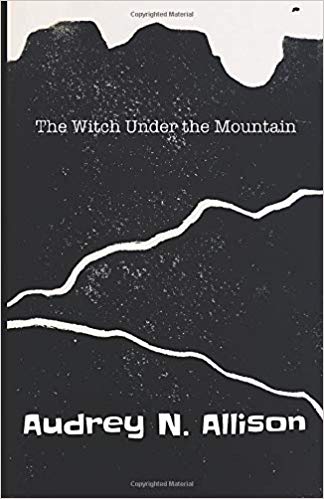
The Witch Under the Mountain, by Audrey N. Allison. A father tells his young daughters a bedtime story about an evil witch that proves to be more than just a legend. Fun for all ages, and great artwork too. My full review is here.

The Bone Curse, by Carrie Rubin. The first in Rubin’s Benjamin Oris series, this book is a supernatural medical thriller that forces its protagonist to question whether the horrors he encounters have a rational explanation, or stem from a centuries-old Vodou curse. Serious horror–Stephen King fans will love it. Full review here.

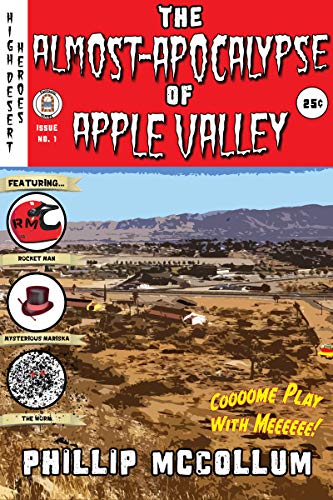
The Almost-Apocalypse of Apple Valley, by Phillip McCollum. Another one for Stephen King fans, this book combines ’80s nostalgia with supernatural horror, as four kids must confront a horrible evil plaguing their town. I’ve not done a full review of this book, but here’s my mini-review: It’s very good.

Jersey Ghost Stories by Erren Michaels and Noah Goats. A collection of ghost legends from the island of Jersey. Some are creepy, some are gruesome, some are poignant, and all are haunting. My full review.

The Friendship of Mortals by Audrey Driscoll. Book 1 in Driscoll’s splendid reimagining of H.P. Lovecraft’s Herbert West character, this book tells the story of a scientist obsessed with revivifying the dead, as told by his less gifted, but more moral friend. My full review.

The Raven and Other Tales by Joy V. Spicer. A collection of short stories, some of which are re-imaginings of classic tales and poems. Haunting and evocative–perfect for Autumn. My full review is here and Lydia Schoch’s is here.

If you have other suggestions, please let me know. Happy October! Keep the home jack-o’-lanterns burning.

Bird of PreyReviewing a sequel is always difficult, because the deeper I get into a series, the more spoilers from previous books there are that I have to be careful not to reveal in summarizing the plot of the latest installment. I won’t dwell too much on plot elements here. Let it suffice to say that Capt. Robbin Nikalishin is sufficiently recovered from the trauma in his past that he embarks on a new chapter in his life, but one that brings with it new challenges.

Taylor’s world-building continues to be first-rate—I particularly enjoyed her depiction of the Martian colony and the delightful term she uses for the Red Planet’s settlers: “humartians.” The sprawling world is rich with plenty of detail and a huge cast of supporting characters.

There are more philosophical asides in this book than in earlier installments—commentary from the narrator on the protagonist’s highly questionable and emotional decision-making. This is more of a romance than the previous ones. Maybe “romance” isn’t quite the term—it’s a true biographical novel, as the subtitle implies. As I was reading it, I realized that in many ways it’s a throwback to an older style of novel: the long, winding sort of tale popular in the Victorian era. Except, of course, set in the 28th century.

There’s a hint of spirituality woven in, too—as in one scene where Nikalishin and a character by the name of Fedaylia High Feather speak with a priest—or “prayst,” as he is called in the Eirish dialect. It’s a powerful scene, and reveals a lot about the characters. I won’t say much about Fedaylia High Feather. How can you resist wanting to meet a character with a name like that for yourself, eh? But I will say this: I think it’s interesting that we are informed she was born on April 30, a date which followers of this blog may recognize as the semi-obscure holiday of Walpurgis night, a sort of Spring equivalent of Halloween. And Nikalishin, of course, was born on Halloween itself. Whether the author had this in mind when choosing these dates, I don’t know, but I thought it was interesting.

As previously, Nikalishin’s pathetic inability to form normal relationships with women continues to be a problem for him, and made me want to shout “Oh, grow up, man!” And to be clear, this is a criticism of the character, not of the writing.  Taylor succeeds quite well in crafting a careful portrait of Nikalishin’s extremely irregular psychology. 

I would love to talk at length about all these peculiarities of Nikalishin’s, as well many other things, but the fact is, more people need to read these books first, and I won’t risk spoiling them for others by discussing details here, when there is a very real chance this may be the first time some readers learn of their existence. The world of The Man Who Found Birds Among The Stars is one that more science fiction lovers need to discover for themselves.

Summer's OverI’ve had this book on my TBR list for some time, but it was Lydia Schoch’s review that motivated me to read it. I wish I hadn’t waited so long—this is a fantastic collection of creepy short stories centered around California amusement parks.

Let me give you an idea of the strange and disturbing worlds the book presents: There are cultists who ride roller coasters. There’s a creepy family of Disney fanatics trailing people around Disneyland. (I may be in the minority here, but I think almost everything about Disney is creepy anyway, so this seemed quite plausible.) A trip to Knott’s Berry Farm and an attraction that transports visitors into an apocalyptic nightmare. A young man whose father takes him to a mysterious section of Seaworld with a distinctly Lovecraftian flavour. And finally, an opening day at Universal Studios that takes immersion in the world of movies to an extreme.

All the stories are short and engaging, with narrators who are instantly interesting and relatable. There is a smattering of typos, but nothing that obscured the meaning or detracted from the story.   

These are exactly the kind of short horror tales I enjoy: weird, mysterious, eerie and—with the exception of the Universal Studios one—not too gory. Think The Twilight Zone and you’ll have a good idea of what to expect. While the stories are short, I felt each one gave me a good sense of who the characters were, while leaving a bit of a mystery to ponder as well.

Highly recommended for fans of weird fiction. And now is the perfect time to read it!

Spellbound SpindleThis fantasy novel begins with a group of magical beings known as “gem elves,” who are betrayed by one of their own, Marlis, who has become a servant of a dark goddess named Gadreena. 

Marlis slays one of the elves, and flees into the mortal world. There, she curses a child. The curse mandates that the child will fall into an endless sleep once they turn 16 years of age and touch an accursed spindle. 

The gem elves provide help to the family that raises the child, but they are unable to track down Marlis, whom they cannot sense in the mortal world. Eventually, sixteen years later, the gem elves and the mortal families are again drawn into conflict with Marlis, who has been hiding in another kingdom, and seducing their king with her dark magic.

I don’t read a lot of fantasy, partly because so often it’s very slow-going. Refreshingly, this book, like Spicer’s other novels, moves at a brisk pace and doesn’t bog down. There are perhaps some elements that could have been more fleshed-out, and there is a rather large cast of characters. As Lydia Schoch noted in her review, it’s helpful to make notes of all the characters to keep track.

As with Spicer’s other books, I appreciate the sparse descriptions that allow the reader to imagine the world for themselves. 

My favorite parts were the chapters about Marlis who, though undeniably evil, isn’t simply a cardboard villain, but shows flashes of real emotion that make her understandable, if not exactly sympathetic.

This is a fun read, filled with references to mythology and legend, as well as some good old-fashioned sword and sorcery in the climactic showdown. A good book for anyone who enjoys fantasy.


HuralonI hardly know where to begin with this review. There’s so much I love about this book, from its well thought-out and detailed futuristic world-building, to its treatment of how the history of present-day Earth is reconstructed in the distant future, to the way it blends political intrigue, action, romance and just a dash of humor into an effective story.

The novel follows the crew of ESS Springbok, a powerful military spaceship. The Springbok becomes entangled in an battle precipitated by a powerful politician’s son. From there, the crew takes on a group of rough but honorable space marines, and sees more than their share of ground and space combat as they fight through more conflicts created by the political machinations of scheming politicians and bureaucrats.

The characters are great. There’s the honorable Captain Evander McCray of the Springbok and his lover, the lethal super-spy Aja Coopersmith. The villains are eminently hate-able, and there are other characters who are neither all good nor all bad. Captain Chahine, who commands a huge ship that battles the Springbok, was a particular favorite of mine.

There are also some great references to history sprinkled throughout. Captain McCray’s interest in piecing together Earth’s history starts out as just an amusing bit of comic relief, but it ultimately becomes key to the climactic battle sequence when, inspired by Hannibal’s use of elephants, he…

Ah, no; I can’t spoil it. Because it’s brilliant. An ingenious bit of world-building that becomes important to the plot, that’s all I’ll say.

I do quibble with the number of times that secondary female characters are forced to suffer at the hands of the villains. Female characters who exist just to let baddies prove their badness is a bit of a pet peeve of mine; although I can hardly argue with its effectiveness in making readers hate the villains.

Apart from that, this is basically a perfect book for me. It came recommended by Audrey Driscoll, and as with Lorinda Taylor’s Man Who Found Birds Among the Stars series, I’m so grateful to her for bringing it to my attention. It’s another wonderful example of how to do sci-fi, using an imaginary futuristic world both as a vehicle for exploring deep ideas about society and human nature as well as envisioning new technologies. And it does all that while still telling a gripping story with memorable characters.

If you like sci-fi, especially military sci-fi—and I know many people who read this blog do—you have to read this book. It’s a gem of the genre, pure and simple.

Now, I have a question only an economist would ask. And the fact that I’m even asking this question is a testament to the world-building here.

The citizens of the Egalitarian Stars of Elysium use the barter system. Supposedly, this makes them more advanced than the primitive Madkhal, who use fiat currency. We’re to believe that nanites and additive manufacturing eliminate the need for currency in such a developed civilization.

Maybe it’s a failure of my imagination, but I have trouble buying this. (No pun intended.) If their manufacturing capabilities are really so good as that, then they haven’t made fiat currency obsolete, they’ve made trade obsolete. Either people have items of different worth for trading, or they don’t. If they do, than they need a reliable medium of exchange and store of value to express it. If they don’t, then they don’t need to trade. If you and I both have the ability to produce for ourselves everything that we need, we have no reason to trade with each other. Tell me if I’m wrong about this.

Again, it’s a credit to how invested I became in this universe that I was even thinking about this issue. So don’t let it stop you from buying—or, for that matter, bartering for—this fantastic book.

Okay, this is a little different.

I normally review modern novels and short stories. This was written in the 14th century, and it’s describing events in the 2nd and 3rd centuries. It’s not really a novel, and definitely not a short story. It’s more along the lines of something like the Iliad–a combination of historical account and mythology.

And of course, it was originally written in Chinese. In fact, it’s one of the most famous works of ancient Chinese literature. I read the 1925 translation by Charles Brewitt-Taylor. There are more recent translations, but I deliberately chose an older one because a translator can’t help coloring his translation with his own impressions.

Brewitt-Taylor was an Englishman, and his translation shows a rather Victorian sensibility. So this is looking at a historical-mythopoetic account of ancient China through the lens of an early 20th century Briton. What better way to view one past empire than through the eyes of another?

The book is vast and sprawling, covering numerous battles, political intrigues and other events. The core characters are Liu Bei and his brothers Guan Yu and Zhang Fei. Brothers by sworn oath rather than blood, the trio participate in countless battles and grand historical struggles.

7th century depiction of Liu Bei. Via Wikipedia.

Liu Bei is the closest thing to a hero in the story–wise, capable and humble, he usually manages to extricate himself and his brothers from a variety of dangers.

There are shifting alliances and Machiavellian intrigues on every page. (Can I say “Machiavellian” when the events depicted predate Machiavelli by about 1400 years? Discuss.) Also, huge battles and reports of troop movements that are pretty hard to follow for one as ill-trained on Chinese geography as I am. I have at least read Sun Tzu, who is referenced briefly here.

Also, note that the word “romance” in the title is being used in the classic sense, of a medieval legend. Think the stories of King Arthur. Because it’s almost completely devoid of romance in the sense we think of it today. Marriages are arranged strictly for political purposes, and wives and concubines are treated as property.

Of all the hundreds of characters, I believe there are three women who have actual lines of dialogue. These are all rendered in weirdly submissive third-person terms: e.g. a character will refer to herself as “thy unworthy handmaid.” It’s pretty shocking to a modern sensibility. But I suppose everything about life in ancient times would be.

The central theme of the book is the struggle for power. Constantly, nobles and generals are scheming for ways to take power, and to hold it once they’ve got it.

The exception to this is Liu Bei. Despite being supremely capable, he remains humble and unassuming. One would almost say unambitious, and yet he continually rises, by virtue of his ability to positions of command which he hardly thinks himself worthy.

As depicted in the legend, Liu Bei essentially embodies the Confucian concept:

“The ancients who wished to illustrate illustrious virtue throughout the Kingdom, first ordered well their own states. Wishing to order well their states, they first regulated their families. Wishing to regulate their families, they first cultivated their persons.”

This is sometimes paraphrased as, “To set the nation in order, first set ourselves in order.”

The real Liu Bei of course is somewhat more complex than the character of legend, although he still seems well-regarded by history.

That said, the most fun parts are the translator’s renderings of the condemnations heaped upon Liu Bei’s enemy, the villainous minister Cao Cao. For instance:

“Thus Cao Cao is the depraved bantling of a monstrous excrescence, devoid of all virtue in himself, ferocious and cunning, delighting in disorder and reveling in public calamity.”

The version of the book that I have includes the Chinese Hanzi next to the English translation. For fun, I tried looking up the words in the quote above with this miraculous site, to see if it would render Brewitt-Taylor’s translation back into Chinese in anything like the same characters. But the translation didn’t seem to match up with what I was seeing. Even with the hint, via Wikipedia, that this: 曹操 is “Cao Cao,” I still struggled to match what I read on the page with the translation.

However, learning Chinese is not necessary to use this book as a window into a fascinating period in history–several periods, in fact. Given its massive length, it will probably be a while before I tackle Volume 2, but I’m glad I read this one.

tumbleTumble is a short story about a young woman named Elle Winterson. Elle has lived a sheltered life, homeschooled, in a small rural house. She has no memory of her mother. Her father is the only other person she knows. Other than occasional trips to town, she is cut off from the outside world.

But one night, she is awakened by a strange noise, which makes her curious about the outside world. She begins exploring, and soon makes a strange discovery, which only increases her curiosity. And this in turn leads to more revelations which I won’t spoil here, except to say that it builds to a conclusion that makes the reader re-evaluate the whole story.

I loved the atmosphere, and I could really relate to the protagonist. I, too, was a homeschooled only child who grew up in an isolated rural house. This made the story extra-fun for me, as this isn’t a common life experience, and reading about a character with a similarly unusual background was quite a treat.

But I think anyone who enjoys stories that evoke feelings of isolation and mystery will enjoy this tale. Part of me wished it could have been longer–it feels like there’s more story to tell here; like it’s all part of a larger world that we readers are only glimpsing.  Nevertheless, it delivers a very satisfying ending.

Cactus FlatsI love Weird Westerns. So as soon as I read Lydia Schoch’s review of this book, I knew I had to check it out. And it’s everything a story set in the Weird West should be: cowboys, prospectors, gunfights with shotguns and six-shooters, and of course, manifestations of supernatural horror, which I won’t describe in detail here.

The description in the book itself is minimal, which in my opinion is a good thing. In horror, you want to leave things to the readers’ imagination. But, still there’s more than enough information to get a sense of what the protagonist, a deputy named Jed, is facing by the time he’s loading up with weaponry and dynamite and heading to an abandoned mine to confront the horror.

In the beginning, there were a few little things that didn’t sit right with me–like the prospector being named Pete, which is about the oldest western cliché ever, or the fact that Jed is unfamiliar with using a single action revolver. These are minor points, but I noticed them… and in the end, it turns out there are excellent reasons for details like these. I take my hat off to the author for how he managed the ending of this book; it’s very well done.

Like Lydia, I’d have appreciated a bit more world-building, but at the same time, I can understand why the story had to be focused and fast-paced. And it makes for a very satisfying adventure, even before the final plot twist.

This has all the elements a good short story needs: it’s fast, easy to get into, and it leaves you feeling really satisfied with the ending.   I think anyone who enjoys horror or adventure stories will like it, and if you’re a fan of the Weird West like I am, I’d call it a must-read.