John_Quidor_-_The_Headless_Horseman_Pursuing_Ichabod_Crane_-_Google_Art_Project
The Headless Horseman Pursuing Ichabod Crane, by John Quidor (1858)

“The Legend of Sleepy Hollow” is a short story, originally published in The Sketch Book of Geoffrey Crayon, Gent. “Geoffrey Crayon” being a pseudonym of Washington Iriving.

It tells the story of Ichabod Crane, a schoolteacher in a region of New York known as Tarrytown in the early 19th-century. He is—if I may cut through the florid 19th-century lingo—kind of a jerk. He’s mean to his students, unless he sees an opportunity of mooching free meals off their mothers or flirting with their older sisters. 

Eventually, Ichabod’s fancy is caught by Katrina Van Tassel, the daughter of the wealthy Baltus Van Tassel. One thing  that’s interesting is that Ichabod seems to be interested in her largely for a wealth—whether he has affection or even mere lust for her seems beside the point.

But another of Katrina’s suitors, the large, vigorous, Brom Bones (actually Brom Van Brunt, but his nickname is Brom Bones) does not take kindly to the girl he’d been wooing spending all her time with the awkward schoolmaster. 

These are the three main characters, and they’re all kind of humorously unlikable. Ichabod is a selfish moocher, Katrina is a vapid tease, and Brom is what we would today call a jock frat boy. The main body of the story is more like a sit-com than a ghost story.

The ghost aspect comes from the setting—Tarrytown, a sleepy, dreamy village in the Hudson valley where, Irving tells us:

“…population, manners, and customs remain fixed, while the great torrent of migration and improvement, which is making such incessant changes in other parts of this restless country, sweeps by them unobserved. They are like those little nooks of still water which border a rapid stream where we may see the straw and bubble riding quietly at anchor or slowly revolving in their mimic harbor, undisturbed by the rush of the passing current.”

In other words, it’s a place that seems removed from modernity—modernity, in this case, being 1820. Even when Irving wrote the story, “Sleepy Hollow” was hearkening back to an earlier era. No doubt he was targeting those 1790s kids who felt nostalgic for their childhood.

Anyway, things culminate with Ichabod going to a large harvest party at the sprawling Van Tassel farm, where folks swap ghost stories, such as the one about “The woman in white that haunted the dark glen at Raven Rock, and was often heard to shriek on winter nights before a storm, having perished there in the snow.” And finally, of course, the region’s most popular legend: the story of a ghostly Hessian soldier who, having lost his head to a cannonball in the war, rides forth each night in search of a replacement. 

Ichabod, who is a devoted reader of Cotton Mather, is much troubled by such tales. He leaves the party in a state of agitation, and our narrator suggests that perhaps Katrina has dumped him, although this is ambiguous. At any rate, Ichabod is riding home alone, feeling rather miserable when he encounters a huge, headless rider mounted upon a black horse.

Furiously, Ichabod urges his own horse towards the old church bridge, which, according to a story of the horseman related by Brom Bones, the horseman will not cross. Ichabod successfully manages to cross the bridge and turns just in time to see the horseman hurling his head at him. 

Yes, that’s right—his head. The horseman carries his severed head with him on his saddle. And this is where the story becomes a bit ambiguous because the next day, as the townsfolk investigate Ichabod’s sudden disappearance, they do not find a head at the old church bridge, but do find the shattered remains of a pumpkin. 

The story is deliberately vague after that—while Ichabod is never seen again in Tarrytown, some say he simply moved, and is alive and well in another part of the country. Brom Bones—who, we are told, marries Katrina, looks “exceedingly knowing” whenever anyone brings up the subject of Ichabod, suggesting that perhaps the notorious prankster had simply disguised himself as a headless horsemen, seeking to frighten off his rival.

Of course, the more superstitious residents of the town believe that Crane became a victim of the ghostly Hessian. And after all, since we already have strong reason to think Ichabod was spurned by Katrina at the party, why would Brom have even needed to pull such an elaborate stunt? (Unless he was just adding injury to insult, which would be exactly the kind of move we might expect from Brom.)

This brings me back to what I think is the most curious thing about this story: it plays out like a romantic comedy—or more accurately, one of those anti-romantic comedies where all the characters seem self-absorbed, and the comedy results from the interplay of their attempts to get what they want. In fact, if you take away all the supernatural elements and think of it in modern terms, it’s basically a mean-spirited high-school comedy, where the rich cheerleader and the superstar quarterback screw over the know-it-all nerd.

Which seems like the sort of thing that might actually happen, and indeed almost makes me wonder if the eponymous “Legend of Sleepy Hollow” isn’t the thing about the headless ghost at all, but rather the legend of a love triangle that ended in a bizarre prank. In other words, it seems almost like the sort of thing that could have actually happened. Apparently, Irving did know people named “Ichabod Crane” and “Katrina Van Tassel.” Real-life Ichabod Crane was a captain in the army, not a schoolteacher, but real-life Katrina seems to have been more or less like the character in the story, which again makes me wonder how much of this was based on real events or gossip Irving picked up. 

But obviously, it’s the ghost aspect that has made this story famous. And is it ever famous! It’s one of the first and most iconic pieces of post-revolution American literature, and has been adapted many, many times. (More about that later this month.) There are places all over the country named “Sleepy Hollow.” Ichabod and the ghostly Hessian are commemorated on postage stamps and in statuary. Most people know the story even though they never read the original. It’s the quintessential American ghost story.

October is my favorite month, and Halloween is my favorite holiday. If you’re like me, you probably want some good books to read for the season. Here are a few recommendations.

Harvest: A Short Story from the Pumpkin Patch by Jason H. Abbott. This is a fun short story, a little bit spooky and a little bit sweet, about a couple of characters who find they have a lot in common. Here’s my full review.  

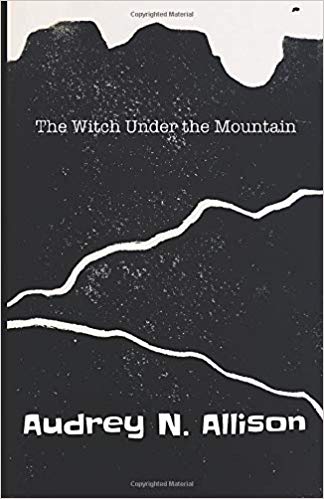
The Witch Under the Mountain, by Audrey N. Allison. A father tells his young daughters a bedtime story about an evil witch that proves to be more than just a legend. Fun for all ages, and great artwork too. My full review is here.

The Bone Curse, by Carrie Rubin. The first in Rubin’s Benjamin Oris series, this book is a supernatural medical thriller that forces its protagonist to question whether the horrors he encounters have a rational explanation, or stem from a centuries-old Vodou curse. Serious horror–Stephen King fans will love it. Full review here.

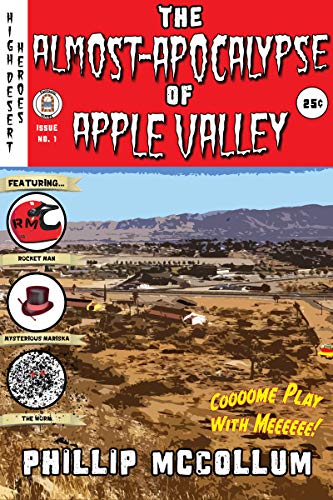
The Almost-Apocalypse of Apple Valley, by Phillip McCollum. Another one for Stephen King fans, this book combines ’80s nostalgia with supernatural horror, as four kids must confront a horrible evil plaguing their town. I’ve not done a full review of this book, but here’s my mini-review: It’s very good.

Jersey Ghost Stories by Erren Michaels and Noah Goats. A collection of ghost legends from the island of Jersey. Some are creepy, some are gruesome, some are poignant, and all are haunting. My full review.

The Friendship of Mortals by Audrey Driscoll. Book 1 in Driscoll’s splendid reimagining of H.P. Lovecraft’s Herbert West character, this book tells the story of a scientist obsessed with revivifying the dead, as told by his less gifted, but more moral friend. My full review.

The Raven and Other Tales by Joy V. Spicer. A collection of short stories, some of which are re-imaginings of classic tales and poems. Haunting and evocative–perfect for Autumn. My full review is here and Lydia Schoch’s is here.

If you have other suggestions, please let me know. Happy October! Keep the home jack-o’-lanterns burning.

HarvestHarvest is a short story that packs a lot of content into few words. It tells the story of a man named Edgar, who, due to some very evil circumstances, has been given a pumpkin for a head–and that’s just the tip of the iceberg.

As Edgar is grappling with this horrible situation, a woman named Emelia and her pet approach, and she fills Edgar in on what has brought him to this state, and what can be done about it. Emelia, speaking in a pleasant, folksy twang, helps Edgar come to terms with his plight. I won’t spoil it–like I said, it’s very short, and providing more detail would give too much away. The fun of the story is in seeing how it works out, and discovering exactly what the characters are, how they came to be that way, and, most of all, what they will do next.

I absolutely adored this story. As you all know, I love scary stories, I love pumpkins, and I love the Halloween season generally. This wonderful tale captures everything that makes it special. It’s got just the perfect blend of scares, mischievousness, and fun that the holiday is all about. You can bet I’ll be re-reading it come October.

So, since it’s a seasonal tale, why am I blogging about it now, instead of waiting until autumn? Well, I happened to stumble across this author thanks to this poignant exchange with Lorinda J. Taylor* on Twitter, and frankly, this case illustrates why I think it’s especially important to support indie authors at this time, more than ever.

There are so many people all across the world who work to create art in their spare time, even after all the daily pressures life puts upon them. Even at the best of times, it’s not easy, and these are hardly the best of times. So when I find work that I like, I think it’s important that I share it. And of course, you can surely tell from the cover alone that this would be something I like. Directly upon seeing that lovely scene, I knew I had to read it, and I was not disappointed.

Harvest is a perfect short story for anyone who loves a good Halloween atmosphere. Some may prefer to read it in season, and that is surely when it will be best enjoyed–in a pumpkin patch, on a warm October’s evening, as the sun is sinking behind the trees, I should say–but true Halloween addicts such as myself can enjoy it all year round.

*For those keeping score, this is now two wonderful authors I’ve discovered thanks to Lorinda, the other being Lindy Moone. Thank you, Lorinda!

Pumpkins2019_1.jpgTrue story: earlier this morning (12:00AM, to be exact) I was standing in a dark field, surrounded by a bunch of glowing jack-o’-lanterns, with a thick fog rolling in and the only sounds were that of a distant train horn and a few birds and insects chirping in the distance. If that isn’t what Halloween is all about, I don’t know what is.

For those who can’t get enough of pictures like the one on the right, I’ll be tweeting various Halloween-ish stuff throughout the day. Whether you love this holiday as much as I do or not, I hope you have a great Halloween. Thanks, as always, for your support.

Now then… there is the matter of the traditional Halloween poem.

I spent a lot of the time I ordinarily spend on the annual poem working on Vespasian Moon, so I kind of ran out of time this year.

Or so I thought. But then, I had an idea.

I’m working on a story that includes a character who writes songs, and one of the songs I’d drafted for him seemed to fit the mood, so I decided to use it. I just couldn’t bring myself to let the streak of posting a Halloween poem end. If, someday, you see this same poem published as part of a larger story… well, all I can say is, Poe did the same thing. I know, I know; the tired old “Edgar Allan did it!” defense.

Herewith, then, is the 2019 Ruined Chapel by Moonlight Halloween poem

***

(more…)

I returned to the old cemetery that I posted pictures of a couple years ago, this time to make a video. Still doesn’t do it justice, but it’s nice to have it recorded. I wish I’d done this earlier, before so many stones crumbled.

VMFAC
On Amazon and Smashwords

Available as an e-book on Amazon here and, for the first time ever, I’m experimenting with distributing using Smashwords as well. On the latter, I’ve set it up so you can choose your own price. The economist in me is fascinated by this option, and I’m very curious to see if the results of this natural experiment match my expectations. (On Amazon, meanwhile, it’s $0.99)

A bit of background: I got the idea for this story in mid-September, and since it’s obviously a seasonal tale, it was a bit of a race to finish it before Halloween. But, I had a huge amount of fun writing it.

The basic outline of the story, believe it or not, was that I wanted to write a romantic comedy. But of course, it’s a romantic comedy done my way, meaning that the chief obstacles the couple faces come in the form of conspiracies, paranormal mysteries, and a strange man operating an autumn festival in a poor rural county.

It’s 18,710 words, or slightly longer than 1NG4. As far as content, I’d say it ranges from a hard PG-13 to a mild R. There’s sex, profanity, some violence, and references to drug use, but with all that said… it’s not meant to be a dark or gritty tale. It’s really intended as a bit of fun.

The tale was heavily influenced by the Mothman legends of West Virginia, as well as the 2002 film about the same, entitled The Mothman Prophecies. Other influences include H.P. Lovecraft’s The Whisperer in Darkness, Ray Bradbury’s Something Wicked This Way Comes, the video game add-on Point Lookout, and of course, The X-Files.

Despite all this, I don’t think of it as a horror story by any stretch. It’s really my love letter to Halloween, and to autumn generally. I’ve attempted this in passing before a few times, but with this one, I was really striving hard to capture what I love about this season. And, personally, I feel I was finally successful.

A word to my beta readers: there were more of you than I’ve ever had before, and I’m very grateful for your help, especially because the first draft was in such rough shape when I sent it out. I really appreciate that you waded through all the typos and other odd glitches.

Note that I did not incorporate every suggestion that every beta reader made. Please, please, please do not take this to mean I don’t value or appreciate your feedback. I absolutely do, and I read and am appreciative of every comment that each of you made. All of your suggestions are logical and well-considered; in the end, I just have to make the story work as best I can given my vision of it, which means not every suggestion can be incorporated. But one thing I always do for everything I write is to take the feedback and use that as the foundation for new stories. I’ve already got something else in the works based on the comments I received on this one.

As always, I am incredibly thankful for the support of each and every one of my readers.

BtK vs DGo ahead, say that title out loud. (Okay, maybe not if you’re in a public place.) “Billy the Kid vs. Dracula.” The words seem intrinsically strange together, and become even more bizarre when you know that William Bonney, the famous outlaw known as “Billy the Kid,” was shot to death by Sheriff Pat Garrett in 1881, 16 years before Bram Stoker published his Gothic novel of vampire horror, Dracula. 

Now it’s true, Stoker’s vampire was based on Vlad III Dracula, who lived in the 1400s and thus—if he had been an immortal vampire, which most reliable historians seem to feel he wasn’t—might have found his way into a showdown with the famous outlaw.

But as the film begins, it quickly becomes clear that these details do not matter after all, because Billy the Kid isn’t really Billy the Kid—the film apparently is set in some sort of alternate history in which Mr. Bonney abandoned his outlaw ways, did not run afoul of Sheriff Garrett, and instead became foreman at a ranch, where he is engaged to marry the young daughter of the ranch owner.

Careful students of the craft of storytelling may here ask the question, “Why did the writer choose to tell a story about Billy the Kid in which Billy the Kid does not act like Billy the Kid, but somebody else altogether different?” Careful students of the craft of storytelling are advised to take a stiff drink before going any further, because it is also worth noting that the vampire is not once referred to as Dracula throughout the entire film. 

So, it’s Billy the Kid vs. Dracula, except Billy the Kid isn’t Billy the Kid, and Dracula isn’t Dracula. All quite clear? Smashing! We proceed.

The film begins with the vampire, (played by John Carradine who portrayed Dracula well in the surprisingly decent film House of Dracula) descending upon a family of German immigrants traveling by wagon in the American west. He bites the young daughter of the group, but is warded off at the sight of a crucifix.

Later, the nameless vampire comes upon a stagecoach, carrying wealthy travelers towards their ranch, where, he learns, their beautiful niece Elizabeth resides. He is much taken with a picture of young Elizabeth shown to him by the travelers. When the coach stops for an evening, the vampire attacks a young Native American woman camped nearby, sparking the rage of the rest of the tribe. They assume it to be the work of the stage coach’s occupants and retaliate by killing them—allowing the vampire to assume the identity of the ranch owner and Elizabeth’s uncle, Mr. Underhill.

Meanwhile, William Bonney and young Elizabeth are playfully shooting tin cans and flirting with each other, much to the annoyance of the previous foreman, who watches jealously from afar. Apparently, being foreman also entails being Elizabeth’s lover, since apparently Billy took both positions from him at the same time.

Realizing that Elizabeth’s uncle Mr. Underhill is due to arrive in town soon, Billy rides off to meet him at the saloon. He arrives just after the vampire, posing as Underhill, has come to the saloon and taken a room. Moments later, the immigrant family arrives, still shaken by the earlier vampire attack, and are horrified when their daughter recognizes “Underhill” as the vampire who attacked her. However, he is somehow able to convince them that he is not a vampire, and, as a gesture of goodwill, allows them to take his room for the evening while he follows Billy to the Underhill ranch.

But of course, this is all a diabolical trick, and the vampire returns that night to finish the job on the poor immigrants’ daughter. Meanwhile, Billy and Elizabeth ponder the idea that there is something odd about her uncle, although what it is they can’t quite put their fingers on…

Dracula

What could it be?

So, after much riding back and forth, Billy getting into a brawl with the ex-foreman, and the old immigrant woman’s attempt to keep the vampire away failing, Elizabeth is carried off into a makeshift lair the vampire has created in an abandoned mine. Billy rides there furiously, ignoring the town doctor’s advice that to defeat the vampire, he must drive a stake through his heart. Instead, in typical outlaw fashion, he tries to gun him down with his revolver. But the bullets have no effect. 

Okay, look: I know it’s absurd to complain about logic in a film called Billy the Kid vs. Dracula. But I can’t help myself. Bullets are just fast-moving, miniature stakes, right? So why shouldn’t they work on the vampire? Now, you might say, “Well, they didn’t hit his heart, so it didn’t work.” I could buy that… except that then Billy throws his gun at the vampire and hits him in the face and knocks him down!

Seriously, what is this? If being hit with bullets didn’t hurt him, why should being hit with a much slower-moving hunk of metal? I know, you all are thinking I’m being Comic Book Guy at this point, but I have a reason for talking about this, and it’s not because I’m one of those people who is going to go off and start a petition demanding that Billy the Kid vs. Dracula  be remade with proper consultation of a period firearms expert and a close-quarters combat specialist.

The reason is because it’s an important lesson for anyone who writes fiction: there are bound to be illogical things in any work of fiction. That’s a given. If there weren’t, it wouldn’t be fiction. But the important thing is that the logic must be internally consistent. We get to make up our own rules for our fictional worlds, but they must never conflict with each other. 

All right now, where was I? Oh, yes! So, Billy then stabs the vampire through the heart with the doctor’s stake, and releases Elizabeth from the spell the creature placed on her. He then carries her out of the mine, in the words of Wikipedia, “presumably to live happily ever after.” I love that use of “presumably.” Like, we think they’re going to live happily ever after, but who knows? It could be they’ll realize that they’re just two very different people who happened to get involved in this weird vampire business, gradually grow apart, and eventually come to the point where they argue over petty things like who should do the dishes before finally realizing that they need to go their separate ways.

So we’re 1,097 words into this review and you’re wondering, “Berthold, why are you even writing about this random lousy 55-year-old movie?” 

The reason is very simple: I’m fascinated by the Weird Western genre. I like westerns for the desolate desert landscapes and their frequent use of themes of loneliness and revenge, and of course, weird supernatural horror was my first love in fiction, and the combination of the two will always interest me. And so while I’ve made a huge amount of fun of the film, it’s nonetheless, in its own odd way, significant as one of the first Weird Western films. 

I mentioned the title at the beginning because I honestly think that a competent storyteller could make something interesting out of that. Make Billy the Kid be honest-to-God Billy the freakin’ Kid, the ruthless outlaw who boldly escaped from a New Mexico Jail, and have him encounter a vampire while on the run from the law, somewhere in the gorgeous New Mexico landscape. A skilled writer could spin all kinds of compelling yarns about death, murder and revenge out of that.

But, instead we got a move that shows a vampire strutting around in daylight! For shame!

That’s okay, though. They say that once you invite the vampire in, your fate is as good as sealed. And since early Weird Westerns invited the vampires west, it’s paved the way for all sorts of interesting stories to follow.

WitchWhen I was a kid, my dad would tell me stories while I would play on my swing-set. Most of his stories were funny, but I remember some were scary—I recall in particular one about a vampire that he told me at sunset one evening. Our house was across the street from a cemetery, and my dad took full advantage of this fact for his tale.

Reading The Witch Under the Mountain, by the incomparable Noah Goats and his daughters writing as “Audrey N. Allison,” brought back those happy memories. It’s about two young girls and their father, who tells them a tale of an evil witch buried under Temple Mountain—which just happens to be where they are going camping the next night.

The two girls—delightfully named Audball and Ally-cat—are both excited and nervous about the trip, but as more and more elements of their father’s story are verified before their eyes, their fear grows, even while their father remains stubbornly oblivious to all of it.

Soon, it becomes clear that he has fallen under the spell of the evil witch, and it’s up to Audball and Allycat to save him—even if it means confronting dangers like ghosts, bears and walking skeletons.

The Witch Under the Mountain is, of course, a book for children; so the horror is kept at a level acceptable to an eight-to-twelve year old. Even so, it’s effective. There’s no setting I like more than a desert at night with hints of supernatural presences, and that’s exactly what this story delivers. There’s even a scene where the trio is trapped in an old abandoned cabin at night. I love things like that. 

There’s something about scary stories aimed at children—they never completely lose their punch. I think it’s because fear is an unusual kind of emotion that unlike say, love, doesn’t evolve as we get older. The dark is always scary, whether you’re five years old or five hundred, because you don’t know what’s in it. 

A good way to find the essence of something is to imagine explaining it to a child, and that’s why horror tales for children and about children work so well. Even in this tale, which is told with a generous side of Goats-ian humor, the classic tropes of curses and monsters in the night still make for a good atmosphere. My favorite scary stories usually have an element of fun to them—people like to be scared. I’m not sure precisely what biological or evolutionary reason there is for this trait, but it’s undeniable.

The real star of this book, though, is the illustrations. They are simple, black-and-white drawings that look sort of like charcoal sketches. They are simple, but effective and atmospheric. The cover gives you a good idea of the style—it’s stark and memorable. My only complaint was that there weren’t more of these illustrations—that’s how much I enjoyed them!

If you have young children, or if you just want to entertain the young child that lives in all of us, this book is perfect for the Halloween season.

On the twisting paths where red and brown leaves lie,

The tranquil setting merely fools the eye—

For just beyond the peaceful veil, foul demons lurk,

Full of lusting hunger, keen to go berserk.


The babbling brooks between the trees conceal

Undreamt of horrors, hellish and surreal.

Festering, infected wounds in Nature’s orders

That seep across the day-to-day world’s  borders.


Like charming vampires, and alluring succubi,

Horror true conspires to fool the mortal eye. 

What sorcerous chicanery the monsters do employ

As they produce their grand trompe l’oeil!


Ere in search of fun you take your leave,

Recall that “Devils practice always to deceive”,

And entice you in to something worse than dying.

Recall all this, but know: I may be lying.