This is the sort of book I rarely read: a fantasy-quest type of story. But it came recommended by Peter Martuneac, so I figured I would give it a try.
Am I ever glad I did! This is a fantastic tale of adventure set in an ancient Eastern kingdom known as Hosa. The book begins with the death of the protagonist, a warrior named Itami Cho. But Cho is returned to life by an extremely creepy child called Ein.
Ein explains that he has been granted the power to restore the dead to life by a shinigami, a type of malevolent spirit. He is on a quest to kill the Emperor of Ten Kings, and to do so, he is recruiting various “heroes” by returning them to life and binding them to his will, forcing them to aid him. In exchange, he promises to restore them to true life when their mission is complete.
It’s a sort of “Dirty Dozen” scenario, as Ein and Cho assemble a team of strong, though not always honorable, fighters. Together they journey across the land of Hosa, fighting all sorts of enemies, from common thieves to demonic entities known as “yokai”; monstrous perversions of living forms into hideous abominations.
What really makes the book great are the characters. Besides the humble and valorous Itami Cho, you’ve got the skilled-but-untrustworthy bandit Emerald Wind, the powerful, hard-drinking “Iron Gut” Chen, and the wise Master, Bingwei Ma. In addition to these “heroes” (which is what Ein calls them, though some are less heroic than others), there are a host of other supporting characters, including a leprous sharpshooter who joins the party despite still being mortal.
Late in the book, we also meet a military leader called the Steel Prince, and his strategist, Art of War, a mysterious woman whose features are hidden behind a robe and a mask. They’re not in the story much, but I really liked the dynamic between them. The Prince is a brave and charismatic leader who unites his army, and Art of War is the brains behind the scenes, planning strategic maneuvers. Both are essential to the functioning of the entire force.
Ultimately, the book is a story about heroism. Not just about the heroes per se, but also about what it takes to be heroic. In different ways, all the main characters perform great feats of courage and sacrifice, while still coming across as very relatable and human.
It’s a dark and violent tale right from the get-go, with plenty of extremely well-written and bloody battle scenes. The story moves at a brisk pace, and the dialogue and character development are balanced perfectly with the action scenes.
Simply put, this is a marvelous book. I generally don’t bother writing reviews for books that already have hundreds of reviews on Amazon, but this one was so good, I just had to. Even if you’re not big on Epic Fantasy, you should still give this one a try. It’s one of those books that grabs you at the start and never lets go. I’m very grateful to Peter for bringing it to my attention, and I unreservedly recommend it to anyone who likes a good story.
Earlier this year, I reviewed Zachary Shatzer’s The Goose Finder, and said it was one of the funniest books I’d ever read. So when I saw he released a new short story, I eagerly pounced on it.
And yes, if you liked The Goose Finder, you’ll like this too. As with the earlier book, I laughed out loud multiple times reading it. It has the same zany, absurd, laugh-a-minute style as it recounts the history of John Warbly, Chad Crackleman, Portman Humberson, and, of course, Old Man Cornwell, as they combine their musical talents and embark on a wild and tumultuous journey.
Once again, it’s really impossible for me to describe the book, so let me offer a few quotes. Here’s the description of Old Man Cornwell:
“He seldom spoke, and when he did it was usually in a confusing and cryptic way, often utilizing spiritual symbolism and references to ancient mythology. Sometimes he would imply that he was older than time itself, but when asked to further explain his meaning, he would simply chuckle and change the subject to the price of gasoline.”
Or this, when the band has its first hit:
“Despite insisting he wouldn’t let success change him, John instantly let success change him in numerous ways.”
Later, when the band breaks up, Portman takes up a new profession:
“…writing political thriller novels, including but not limited to The President’s Secret Code, Senator/Spy, and The Shadow Government That Covertly Rules the Country and is Run By the Ghost of Warren G. Harding.”
I don’t mind telling you, I really, really want that last book to be real. Maybe Shatzer will consider writing it next.
Maybe none of this makes you chuckle, but if it does, I highly recommend checking this book out. It’s a short read, but given that there’s a laugh on every page, it’s well worth it.
[Audio version of this post will be available as soon as possible.]
Another excellent entry in the Brad Parker and Karen Richmond series of medical thrillers. (See my other reviews here, here, and here.) This one begins with a post-doctoral researcher receiving a note at her late uncle’s funeral, which contains shocking information from the deceased. But before she can act on it, she is murdered, and the note taken from her.
From there, it’s up to Brad and Karen to once again unravel a tangled web, and they gradually find a scandal that goes back decades, and that someone will stop at nothing to keep buried.
As in previous books, Brad and Karen are likable protagonists, and this book gives us a chance to see new aspects of them. There’s one scene where Brad is forced to use a gun to defend himself and Karen. It’s something that does not come easily to a lifelong academic, and I really liked how this haunts him afterwards.
And as always in this series, there are a lot of glimpses into the struggles for power at the uppermost levels of academia. The allure of prestige and power that comes with academic achievement are always in play, and some people are driven to desperate acts by them. I don’t want to spoil the ending, but there is a bit where, to help finally crack the case, Brad’s knowledge of how a scientist would think proves to be key. I really liked that.
I highly recommend this book, and the series as a whole. Besides being extremely entertaining thrillers, they also have a theme running through them about corrupting influences that even some of the best and brightest people can succumb to if they’re not careful.
Oh, and one other thing… the food in this book! Cooper’s descriptions of the delicious New England fare that Brad and Karen dine on while they’re working never fail to get my mouth watering. 🙂
This is the third book in the “His Name Was Zach” series. Be warned, I can’t really talk about what happens in it without spoiling aspects of the first two books.
After helping to inspire a revolution against a tyrannical government, Abby, our protagonist, has retreated into the desert, living alone with only her guilt and trauma. But when the new President summons her back on a mission to scout out the zombie-ravaged American midwest, she takes it, as a chance to finally confront many of her demons.
So Abby, along with her boyfriend Hiamovi and a squad of marines, head out into The Wild, and Abby retraces the steps she took in the previous books in the series, confronting old adversaries and painful memories.
The story is structured explicitly as a quest, and that’s really what it feels like; a band of modern-day knights on an epic journey. Eventually, Abby and the others reach their objective: Chicago, which is doing surprisingly well considering it was the epicenter of the zombie outbreak, and even more when it turns out to be managed by none other than Edmund, a murderous gangster from the first book.
Edmund really is a fascinating character. Read what I said about him in my review of the first book, now imagine such a personality in charge of a whole city. He’s basically a Caesar; and not a good one. He’s much more of a Commodus than a Marcus Aurelius, right down to the gladiatorial matches.
There’s a lot more I could say about Edmund, but it would fall into spoiler territory. Maybe someday, after this series has become a best-seller and everyone has read it, I’ll come back and write a whole essay about this character and what I think he represents. (This is another strange feeling for me; I never think characters represent things. And yet, while I was reading the story, the thought came to me, unbidden, that… well, never mind!)
As noted above, the real core of the book is Abby confronting her demons, including both things that were done to her and things that she did. In that regard, the book reminded me of one of my favorite works of fiction: Knights of the Old Republic II. C’mon, it’s been a while since I brought that up; did you think I could hold off forever? As you’ve probably heard me say a thousand times, it’s a story about a veteran soldier confronting all the horrors of their past. (Or maybe you haven’t heard me say it, in which case you can do so here if you’re so inclined.) It’s a powerful theme for any epic story, and Their Names Were Many is a marvelous take on it.
Abby faces a number of terrifying enemies during her journey. Besides Edmund, you’ve got the mad preacher Isaiah, who has only gotten crazier since we last saw him. Not to mention the zombie hordes that still roam The Wild.
But none of them are the primary antagonist; not even Edmund. No, that role is played by someone else; a truly terrifying being, and Abby’s final confrontation with this… entity… is the most intense scene in the whole series. Not least because of where it takes place.
Taken as a whole, the series went in a very different direction than I expected when I first picked up His Name Was Zach, and I was really impressed by how it evolved. I thought it would be a fairly ho-hum zombie apocalypse tale, but what it became was something much bigger, much more unique, and altogether more memorable. When I first discovered the author’s blog, I remember seeing he was influenced by Tolkien. Which surprised me at first. Why would a fan of a High Fantasy epic be writing a Military Zombie-Apocalypse Dystopia? But in the end, I saw a lot of Tolkien-esque ideas throughout the series, from the smallest things to some of the major themes. Another essay, perhaps, for after these books get famous.
Although the series goes to some dark, dark places, its theme is ultimately an uplifting one, and I’m really glad I read it. I’m sure I’ll remember it for a long, long time.
This is a classic mystery, in the vein of Agatha Christie. We have a brilliant detective, Professor Edwin McGorgol, and his not-so-brilliant, but good-hearted sidekick, George Hockney. There’s a hotel full of suspects, snobbish rich types, a femme fatale, and an escalating series of crimes that put the pressure on them to solve it before it’s too late.
Oh… and did I mention they’re all birds? Well, they are. McGorgol is a sandpiper and Hockney is a seagull. All the characters are different types of fowl that suit their personalities perfectly. Also, the book is illustrated, which only adds to the charm.
And I have to say, while this is obviously designed for kids, the mystery was still well done. I’ve read mystery novels for adults where the solution was more obvious than it is in this one. I had my suspicions, but I was still eager to see how it would all play out.
But the best part of all is the afterword, where we get the story behind the story, of how it all came to be. That story really made me smile.
This is a short book, but it packs lots of lighthearted humor into a small space. It’s a fun read for all ages. I highly recommend it.
Before I talk about Carmilla, I must first introduce you to its author, J. Sheridan Le Fanu. Le Fanu is not a household name today. It is my personal belief that this is to the great detriment of the world of horror fiction, and to restore the field to health, we should recognize his contribution to it. Of course, I’m biased. Le Fanu wrote the first short story that truly scared me, “Green Tea.” To this day I can’t hear the words “green tea” without thinking of it.
So allow me to quote from a theoretically neutral source, Wikipedia, describing his works:
“He specialised in tone and effect rather than “shock horror” and liked to leave important details unexplained and mysterious. He avoided overt supernatural effects: in most of his major works, the supernatural is strongly implied but a “natural” explanation is also possible.”
Ah, one of my own authorial dreams is that someday the same might be said of my works. I admire this style, and I too, in my own horror writing, tried to “leave important details unexplained and mysterious.” But of course, I was only a foolish apprentice and so the effect was to leave readers confused and disappointed. It is not a tool that just anybody can pick up and use effortlessly; but it requires the careful touch of a master. Le Fanu was such a master, and that is why his works deserve to be read.
Now, then… Carmilla.
Carmilla purports to be from the casebook of Dr. Hesselius, Le Fanu’s “occult detective.” It is told from the perspective of a teenaged girl named Laura, who lives in a castle in Styria. She’s been eagerly looking forward to a visit from a friend of her father’s, General Spielsdorf, because he has a niece her own age. But, the general’s niece falls ill and dies. In his grief, he sends Laura’s father a strange letter, cursing some nameless evil which he blames for his niece’s death.
One night, while out for a walk with her father, a carriage crashes in a river on their property. Inside is a young woman about Laura’s age. Her mother hastily explains she is on a journey of great importance, and can’t wait for her daughter, Carmilla, to recover. Laura’s father offers to let the the young woman stay at his home to recuperate.
Laura and Carmilla quickly become friends. After being cooped up alone so long, Laura is delighted to have someone to spend time with, though Carmilla is not without her eccentricities. She rises very late in the day, and is frequently referred to as “languid.”
Illustration by David Henry Friston for “Carmilla”
Meanwhile, a mysterious disease ravages the nearby village, with many townspeople dying with symptoms which include visions of evil visitors in the night. Eventually, Laura herself begins to show signs of the illness.
General Spielsdorf finally arrives for his long-delayed visit, and describes the circumstances of his beloved niece’s death. It seems a beautiful visitor, named Millarca, had come to stay in his home after he met with her mother at a social function. Soon after, strange things began to happen…
I think you can see where this is going. The general sees Carmilla, and instantly recognizes her as the monster who killed his niece. In his research, he has discovered she is the long-dead Mircalla, Countess Karnstein. With the help of a local vampire hunter, the general and Laura’s father, find the vampires grave and destroy the creature in the manner prescribed by tradition. But as the final line of the story suggests, Laura remains haunted by the memory of Carmilla for the rest of her life.
It’s a suspenseful, atmospheric and haunting story. All the tropes are there that we recognize from Dracula, but in a much more concentrated and, in my opinion, more powerful form.
You might be thinking, “Well, did Le Fanu just do a gender swap of Dracula and call it a story? Not impressed.” Yeah, see… Carmilla was written 25 years before Dracula, and it’s well-known to have influenced Stoker while he was writing the novel. I would not accuse Stoker of ‘copying’ as such, as much of the commonalities between the books are just tropes of Gothic fiction. But if anyone were to be accused of copying, it’s Bram, not Sheridan, who gets called to the principal’s office. Imitation is the sincerest form of flattery, though, and if Stoker wanted to write a book like Carmilla, all I can say is he had good taste.
So, then, is there any subtext to Carmilla? Any at all?
She used to place her pretty arms about my neck, draw me to her, and laying her cheek to mine, murmur with her lips near my ear, “Dearest, your little heart is wounded; think me not cruel because I obey the irresistible law of my strength and weakness; if your dear heart is wounded, my wild heart bleeds with yours. In the rapture of my enormous humiliation I live in your warm life, and you shall die—die, sweetly die—into mine. I cannot help it; as I draw near to you, you, in your turn, will draw near to others, and learn the rapture of that cruelty, which yet is love; so, for a while, seek to know no more of me and mine, but trust me with all your loving spirit.”
And when she had spoken such a rhapsody, she would press me more closely in her trembling embrace, and her lips in soft kisses gently glow upon my cheek.
This is the thing about vampire fiction. You can pretty much take anything from any aspect of vampire mythology, and append “… of course, really it’s all about sex.” and you’re well on your way to having a publishable academic treatise. My contention is that not every single thing in every vampire story needs to be about sex. Sometimes, a vampire is just a vampire. However, in Carmilla it’s significant enough that I suppose a few words are neccesary.
It’s clear that Laura and Carmilla have a certain relationship, and it’s a relationship that prudish Victorian authorities would not approve of. And, in fact, don’t approve of.
However, unlike with Dracula, I don’t think you can say that Carmilla’s vampirism is supposed to be a metaphor for some other urge. I say that because it’s, like, very obvious what these urges are. If Le Fanu felt the need to mask it with a metaphor, he wouldn’t have also made it so apparent.
My own interpretation may strike you as laughably simplistic, but I just don’t see the lesbianism as related to the vampirism. Carmilla is a lesbian who happens to be a vampire. Or maybe more accurately, a vampire who happens to be a lesbian? I dunno. Anyway, the point is, the two traits aren’t really related. At least, I don’t think Le Fanu is saying they are. If anything, it’s just a handy plot device to have them both be female, since to the Victorian mindset, having two women hanging around together would attract less suspicion.
And that’s pretty much all I have to say about that. Judging by the lists on Wikipedia, any work of fiction involving a female vampire seems to claim inheritance from Carmilla, even if it’s only of the “Vampire Sorority Babes” variety.
But there’s so much more to Carmilla than that! It’s just a good story, Freudian analysis aside. Moreover, as an antecedent to Dracula, it has put us one step closer to answering the questions raised in earlier posts: what was the first vampire story? And what was the original impetus for the vampire myth?
As far as finding the first vampire story, the trail starts to run colder before Carmilla. There’s The Vampyre, by John William Polidori, and the interminable 1840s penny dreadful Varney the Vampire, but Le Fanu’s main source seems to have been the works of an 18th century Benedictine monk named Augustin Calmet, specifically hisTreatise on the Apparitions of Spirits and on Vampires or Revenants of Hungary, Moravia, et al.
Forgive me for dwelling a little on this book when I’m supposed to be reviewing Carmilla, but it’s a fascinating work in its own right. It may sound bizarre to modern readers, but put yourself in Calmet’s shoes. Imagine you wanted to invent Snopes, except it’s the 18th century and your only authoritative reference source is the Bible. It would be tough.
Calmet reports that these “revenans are called by the name of oupires or vampires,” and that:
“Antiquity certainly neither saw nor knew anything like it. Let us read through the histories of the Hebrews, the Egyptians, the Greeks and the Latins; nothing approaching to it will be met with.”
Calmet has a very confident, “just the facts” manner to him. Lest you think he’s just credulous simpleton, let this passage demonstrate that he is trying to write a serious work separating fact from fiction here, and has no time for nonsense:
“The imagination of those who believe that the dead chew in their graves, with a noise similar to that made by hogs when they eat, is so ridiculous that it does not deserve to be seriously refuted.”
His chapter titles are also very to-the-point, as he deals with each type of case in turn, e.g. Chapter II: “On the Revival of Persons Who Were Not Really Dead.”
Le Fanu seems to have drawn much of the inspiration for his story from this book. In particular, the method of destroying the vampire seems taken almost verbatim from Calmet’s reports.
But given that vampires don’t, you know, exist, what is the meaning of the vampire myth? Why is it so popular? There must be a reason, right?
Prepare yourselves, we are about to go deeper into philosophy than ever before on a Ruined Chapel by Moonlight. I did not know where this series would go when I first began, but I hate to disappoint my readers, and if providing a satisfactory answer to the vampire question means things have to get weird, so be it.
All human existence may be viewed as a constant struggle against death. This is less obvious to us, in our modern, comfortable lives than it would have been in say, the Victorian era or before, but death is always there. The further back you go, the more formidably its presence looms.
In some sense, therefore, every human activity is a way of coping with the inevitability of death. We do not see it as such, and in many cases, the link is not a direct one. But religion, fiction, philosophy and so on are all essentially meditations on what to do about death.
This is probably one reason that the constant emphasis on sex in vampire fiction annoys me. Yeah, there’s a sexual element; sure. But there is a way more significant element that deals with death. Modern Western attitudes about sex are very different than Victorian ones. A modern and a Victorian talking about sexual mores would scarcely even understand one another.
But death? Everyone, from Bram Stoker to me, we all have (or had, in Bram’s case) that hanging over us. Like Warren Zevon sang, “The doctor is in, and he’ll see you now / He don’t care who you are.”
Vampire stories are about death. However, vampires do not represent death. Vampires are rather those who have attempted to cheat death. In a sense, they too are victims. For example, this passage from early in Carmilla:
As we sat thus one afternoon under the trees a funeral passed us by. It was that of a pretty young girl, whom I had often seen, the daughter of one of the rangers of the forest. The poor man was walking behind the coffin of his darling; she was his only child, and he looked quite heartbroken. Peasants walking two-and-two came behind, they were singing a funeral hymn.
I rose to mark my respect as they passed, and joined in the hymn they were very sweetly singing.
My companion shook me a little roughly, and I turned surprised.
She said brusquely, “Don’t you perceive how discordant that is?”
“I think it very sweet, on the contrary,” I answered, vexed at the interruption, and very uncomfortable, lest the people who composed the little procession should observe and resent what was passing.
I resumed, therefore, instantly, and was again interrupted. “You pierce my ears,” said Carmilla, almost angrily, and stopping her ears with her tiny fingers. “Besides, how can you tell that your religion and mine are the same; your forms wound me, and I hate funerals. What a fuss! Why you must die —everyone must die; and all are happier when they do. Come home.”
“My father has gone on with the clergyman to the churchyard. I thought you knew she was to be buried to-day.”
“She? I don’t trouble my head about peasants. I don’t know who she is,” answered Carmilla, with a flash from her fine eyes.
“She is the poor girl who fancied she saw a ghost a fortnight ago, and has been dying ever since, till yesterday, when she expired.”
“Tell me nothing about ghosts. I shan’t sleep to-night, if you do.”
“I hope there is no plague or fever coming; all this looks very like it,” I continued. “The swineherd’s young wife died only a week ago, and she thought something seized her by the throat as she lay in her bed, and nearly strangled her. Papa says such horrible fancies do accompany some forms of fever. She was quite well the day before. She sank afterwards, and died before a week.”
“Well, her funeral is over, I hope, and her hymn sung; and our ears shan’t be tortured with that discord and jargon. It has made me nervous. Sit down here, beside me; sit close; hold my hand; press it hard—hard—harder.”
Of course, the main reason Carmilla is so nervous about this funeral is presumably because she knows all about the “ghost” the poor girl saw. But I think her obvious discomfort at funeral rites is more than just that. It’s also that Carmilla genuinely fears death, which is why she continues to exist as the abomination she is rather than face it.
I put it to you, then, that the real motif of these stories is the attempt to reconcile ourselves to the inevitability of death. And that’s why they resonate with us. The constant struggle against the universal law of entropy is the ultimate uniting force in storytelling. We all relate to it; we all understand it. Even the vampires understand it, for have they not sought to prolong their lives by unnatural means for fear of it?
Vampires do not represent death. They represent our fear of death. They are the seductive desire to give into our fear. To lie to ourselves, to pretend to something we are not. That’s why we all recognize the temptation. Vampire stories are ultimately about coming to terms with our own mortality.
But that, of course, is just my take. You may well see it differently. And of course, not all vampire stories are created equal. By this metric, Twilight isn’t even a vampire story at all, and not just because the blighters sparkle.
I struggle, though, to come up with a more plausible reason for why these same concepts resonate across different times and settings. The art of storytelling is in spinning a tale that speaks to people, and there’s nothing like fear of death to do that.
Of course, to bring all this back around to the very beginning, did Bram Stoker, or Sheridan Le Fanu, or anyone else for that matter, think about any of this stuff when they sat down to write? I’ll bet you they didn’t. Nobody would ever consciously set out to write a complex allegory about death. Rather, they wanted to tell a good story, and in doing so, tapped into ideas that are universal in the human experience.
This is the third book in the Benjamin Oris series. I’ve reviewed the previous installments here and here. If you haven’t read those books yet, be warned that there are certain plot elements of this I can’t discuss without giving away information about the earlier books.
The Bone Elixir begins when Ben Oris learns he has inherited a hotel from his great aunt Clara. Ben, who has his hands full with raising his son and working as an orthopedic surgeon, hardly needs this; but over his holiday break, he decides to go check the place out.
The Abigael Inn is a venerable old building in western Massachusetts. As it’s closed for the season, initially the only people there are Ben, the hotel manager Mandy, and her young son, Jake. But as Ben makes the rounds of his new property, he begins to find things like hidden rooms, containing very old books of unsettling legends and fairy tales. Among these are handwritten notes and demonic drawings. There is also a mysterious room in the basement that adds to the feeling of unease.
Soon, Ben’s grandparents, Frederick and Elizabeth “El” Claxwell arrive. They are a charming couple, and delighted to meet their grandson, from whom they had been long separated due to their estrangement with Ben’s mother, Harmony. Despite Ben’s reluctance, they encourage him to keep the hotel in the family.
And Ben finds part of himself wanting to as well, since it’s certainly a picturesque old place, and once his lover Laurette arrives to spend the week with him, it becomes in many respects very pleasant.
Still, there are odd things. People in the nearby town regard the place with suspicion, particularly a local bookshop owner and the town mystic. The latter is an eccentric woman mockingly dubbed “Ana Bananas,” but nevertheless her warnings about the hotel set Ben on edge.
That’s the setup. From there, let me just say it’s a good old-fashioned Gothic horror story, full of family secrets, ghosts, long-concealed crimes, and nightmarish horrors from realms unknown and unknowable. In the tradition of any good haunted house story, it’s slower paced than the first two books, which moved at breakneck speed. This one is more of a gnawing dread that gradually builds to a crescendo.
It’s probably just because of my love for Gothic horror, but this is definitely my favorite book in the series. It reminded me of some of the best Lovecraft stories, particularly “The Case of Charles Dexter Ward.” It’s creepy and atmospheric and full of good lines. I’ve said it before and I’ll say it again: Rubin has a Chandleresque gift for turning a phrase. For example: “His new role as her boss fit about as well as Spanx on a horse.” Now isn’t that a vivid image?
I recommend the entire Ben Oris series, and this book is a perfect capstone to it. That said, you don’t have to read the whole series to enjoy this one, I don’t think. Or maybe that’s just because we’re so close to October 31st, and this, in my opinion, is such a perfect Halloween read, I think everyone should give it a try. I read it in one day, because I couldn’t put it down once I started. So, if you get it at the time this post is published and your schedule allows, you should be able to finish by Halloween, and if you do, I think you’ll be in the right mood for the holiday.
This is a fast-paced thriller. It starts out as a police procedural muder mystery set in the near future, when technology has begun to dominate our lives even more than it does today; a world where the sky is thick with drones and almost all cars are operated by AI.
Officer Dan Harper and his partner Domingo “Dom” Delgado are investigating a body found at an abandoned quarry. Despite all their high-tech police gadgetry, they are unable to ID the victim, even with the help of Dan’s ex-girlfriend, Dr. Natasha Hendrickson, a forensic pathologist.
Returning to the crime scene, Dan and Dom find themselves in a shootout with a gang of mysterious thugs who seem to appear out of nowhere. After sustaining injuries in the fight, the two officers are sent to the hospital. However, another attack, this time by a huge drone gunship, makes them realize that they have stumbled on to something big.
From there begins a globe-trotting adventure in which the two officers flee from their mysterious pursuers while trying to figure out who is behind it all. Gradually, they uncover an incredible conspiracy and a powerful technology that is controlled by power-hungry maniacs.
The book is gripping and suspenseful. I won’t give away too much about the technology, but let’s just say that the nature of it means nowhere is truly safe. The action scenes are frequent and thrilling, but there is also plenty of time for character development, especially when Dan and Natasha are forced to work together again.
Lurking underneath all the shootouts and chases, though, is a thought-provoking take on how technology changes us, and changes society. The surveillance state it has created, the way we’ve become dependent upon it for almsot everything, and most of all how its unforeseen consequences can shape our very minds. This is a thriller that leaves you with things to ponder after you close the book.
In summary, it’s really, really good. The blending of old-fashioned police work with advanced technology reminded me of one of my favorite mystery novels, Surreality, and the plot is full of twists and turns. It’s a longish book, but I quickly found I couldn’t put it down. It mixes philosophical musings on scientific ethics with pulse-pounding action very nicely.
Pick it up. Heck, maybe even go ahead and get the paperback version… you’ll understand why after you read it. 🙂
This is military sci-fi blended with horror. It has a bit of Starship Troopers, a bit of Doom, a bit of Aliens, and is altogether an intense experience. It’s a short story, only about a 20 minute read, but is it ever action-packed.
The main character is Lyn, a mercenary who is part of a team trying to evacuate colonists from the titular planet. The planet has come under attack by creatures known as “Clickers”. Demonic, sadistic entites that are also very difficult to kill, they leave death and devestation in their wake.
Lyn tries her best to rescue as many colonists as she can, but the fight is hopeless, and soon, becomes a struggle just to survive. Lyn does, but at a heavy price. And eventually, it becomes clear the Clickers are not her only enemy.
The book is fast-paced, dark, and brutal. There are no happy endings here; more of a grim kind of satisfaction. It’s creepy, violent, and dark. Everything a good sci-fi horror story should be, in other words.
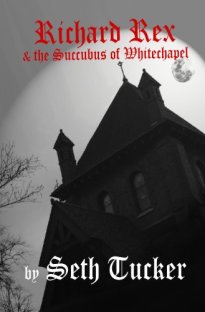
If you described this book to me, I’d have said it sounded too clichéd. A mysterious monster killing people all over Whitechapel, and a private detective hired to track it down? It all sounds too much like a mashup of Jack the Ripper, Sherlock Holmes and Dracula for me.
But Lydia Schoch recommended it, and I trust Lydia. And my trust was vindicated, because this turned out to be a very fun Halloween season short story. It is very short, taking only about 20 minutes to read, but in that short space the author created a whole satisfying plot arc that largely makes sense. Well, almost. There was one thing that didn’t make sense to me. But I can’t get too much into it without spoiling the book. However, it was a minor plot element that didn’t detract from my overall enjoyment of the story.
The Victorian atmosphere is well done and the characters are engaging. It’s true, it doesn’t break any new ground, but that’s not a bad thing. There’s nothing wrong with a good, solid monster story competently told, and that’s what this is.
 This is the sort of book I rarely read: a fantasy-quest type of story. But it came recommended by Peter Martuneac, so I figured I would give it a try.


 This is the third book in the Benjamin Oris series. I’ve reviewed the previous installments
  This is a fast-paced thriller. It starts out as a police procedural muder mystery set in the near future, when technology has begun to dominate our lives even more than it does today; a world where the sky is thick with drones and almost all cars are operated by AI.