To Whom It May Concern:

Well, here we are again. No playoffs, yet again.  Not even a winning record, yet again. Rebuilding, yet again.

I believed in 2010 that you ought to draft Tim Tebow. I also believed you should trade for him last year when Denver was trying to get rid of him.

It’s not like it can get any worse with him on the team, and his value will never be lower than it is right now.  Sure, he can’t throw a ball correctly.  But he has won a postseason game in the last decade, which is way more than can be said for our side.

SF: 38


BAL: 21


I have to be honest, though:  I could see almost anything happening in this game.  Both teams are very unpredictable.  That might make it exciting, except that I’m almost completely indifferent to who wins.  I plan to root for San Francisco, solely because I like their colors.

Well, he’s wrong about a lot of things, actually, but at the moment, I want to address his incorrect claims about football.  Now, his recent column is based on the idea that the game cannot be made concussion free without fundamentally changing the sport.  This is true.  I’ll give him that.

Where he goes wrong is in assuming that this means the talent pool will dry up as parents forbid their children from playing the sport.  It won’t.  It will just make the game less skill based and more strength and speed based.

What’s the first thing kids immediately do when they don’t have to live by their parents rules anymore?  Violate them.  If they can’t play organized football, they’ll play disorganized football.  And ultimately, college and pro football will start recruiting physical freaks of nature like Calvin Johnson and Rob Gronkowski who have little training in the game, but more than enough inherent physical prowess to make up for it.

The game will not be destroyed; it will simply morph back into what it used to be in the 1950s and ’60s.  Only with, as Will notes, bigger players.  There will be less strategy and more sheer strength to it.  I suspect the running game will make a great comeback 10-25 years from now in pro football, because it requires less practice and timing and more physical ability.

There is a dark irony to all this, of course: as people keep their kids out of football,  it encourages the sport to rely more on violent play at its uppermost levels to remain popular, as teams become comprised of untrained, unpracticed hitting machines.

Most football players, when asked, say “this is what we signed up for.”  They don’t mind the risk.  Watch players getting themselves pumped up before a game, and you’ll often see them headbutting each other.  It’s not a full-force collision to be sure, but studies show that it’s by repeated, routine hits that the damage is done.  And here the players are, doing it on purpose, voluntarily, to themselves and their teammates.

The bottom line here is that there is only so much you can do to prevent people hurting themselves if they are really hell-bent on it.  (This lesson applies to so many areas in life.)  Of course, I have previously stated my thoughts on the safest, most viable alternative to dangerous sports, but there are some, probably many, players who will accept nothing less than the real thing.

Football season is upon us!  It’s only pre-season, but still!  Therefore I have prepared some poetry for the occasion.  I wanted to do more haiku since my political ones were pretty popular, and I got the idea to do a football-themed set from Gregg Easterbrook.  Some of them contain an actual prediction, some just make a lousy pun, but all of them contain 5-7-5 syllable goodness!

Atlanta

This will be the year

They win a postseason game.

But only the one.

Arizona

Two great receivers

Never get hands on the ball

If QB’s on ground.

Baltimore

Most boring good team

Will make playoffs, win, then lose.

Wash, rinse and repeat.

Buffalo

Upgraded defense.

But inconsistent passing

Will give the fans “Fitz”.

Carolina

“Cam will change the game”

Maybe so, but then again

We’ve heard that before.

Chicago

Will win division.

And if they can stay healthy

Will reach New Orleans.

Cincinnati
They ought to be good.

Yet, whenever we think that,

They always collapse.

Cleveland

They seem to have been

Re-rebuilding ever since

1999.

Dallas

Poor Dallas Cowboys:

With the biggest screen ever,

And a small window.

Denver

Broadway Joe the Ram

Unitas as a Charger

Condemned to repeat.

Detroit

Don’t blame Megatron;

‘Cover curse’, and their defense,

Put them in cellar.

Green Bay

Defense gets better

But offensive regression

Makes them a fifth seed.

Houston

Just who are these guys?

They lost Mario, but they’ll

Win the Lombardi.

Indianapolis

Well, with any Luck

They will be back into form

Come twenty-fourteen

Jacksonville

They’re gonna be bad.

Like, really, really awful.

As in, not too good.

Kansas City

They might be healthy

This year, and have a good chance

To win Division.

Miami

Major rebuilding.

The last time that they did that

They made the playoffs.

Minnesota

Is it just me who

Believes that “Christian Ponder”

Should be Tebow’s name?

New England

Impressive offense

Figures to run up the score.

Without the “running”.

New Orleans

Team’s united; there’s

No mutiny on bounty.

But still, no Captain.

 New York Jets

Should have signed Owens

And Moss and Ochocinco.

Would be great TV.

New York Giants

They look weak compared

To the Eagles and Cowboys.

Like they did last year.

Oakland

How’ll the West be won?

I don’t know, but it will not

Be by the Raiders.

Philadelphia

Unpredictable

They always surprise people.

Not this year–sixth seed.

Pittsburgh

They tried to Ward off

The ravages of time, but

It’s caught up to them.

San Diego

I think that Turner

Could lose all sixteen games and

Still not get fired.

San Francisco

Will regress a lot

And still win their division

But not NFC.

Seattle

Weird new uniforms

Make them the NFL’s Ducks:

Good, but not elite.

St. Louis

Could surprise some teams,

But Braford’s injury prone.

Can’t beat the Niners.

Tampa Bay

Like the G-Man says:

“Rise and Shine, Mr. Freeman”.

Wrong man in right place.

Tennessee

They appear destined

For second in division

And missing playoffs.

Washington

Griffin next Newton.

Puts up good numbers, but fails

To win seven games.

Over at the Buffalo Bills fanblog “Buffalo Rumblings“, Aaron Lowinger wrote a counter-factual season preview/review of past Bills seasons; that is, a kind of historical fiction or “alternate reality” type of post.  I thought it was a cool idea, but the reaction from most of the site’s readers was pretty negative.  I can sort of see why, too, because even in Lowinger’s fantastic universe, the Bills are still seeking their first championship.  Enhanced misery is not what people want in their daydreams.

I really like the idea, though. I’d like to try it myself in fact.  Allow me, if I may, to borrow Lowinger’s (and Buffalo Rumblings editor Brian Galliford’s) idea, and try to make it into a happier one.  What follows is purely fictional–although it may be factual somewhere in the multiverse…

****

When the ball slipped through the fingers of their most reliable receiver this past January, it shattered many Bills fans’ hopes of doing something done only twice before: three championships in four years.  The Bills, coming off a franchise-best 14-2 regular-season record, had marched down the field for a touchdown to cut the upstart Jaguars’ lead to 31-29, but the two-point conversion fell short with only seconds remaining.

It was a rare miscue for a team accustomed to winning.  After their thrilling 31-28 O.T. win over Arizona in SB 43, the Bills had established a reputation as clutch winners.  Their improbable run to a 34-15 shellacking of that same Arizona team in SB 45 only cemented that reputation, with a thrilling 17-point rally to beat Indy in the divisional round, followed by Trent Edwards’ clutch drive to down favored Baltimore 27-24 in the conference final being the most notable examples.

January’s disappointment aside, the Bills remain a young team with all the major pieces in place for another championship run.  Although they lost star running back Steven Jackson in free-agency, they are confident that Spiller can fill his shoes.  The receiving corps remains intact, as does the offensive line. The addition of Asante Samuel to a strong secondary makes them arguably even more powerful than the #2 defensive unit that led them to their first championship.

****

Well, that was fun, right?  Or maybe not.  Is it just a sad reminder of how bad things are, or an uplifting diversion?  For, after all, sports themselves are meant to be an uplifting diversion.  They really aren’t much good if you let them make you sad.

P.S. Lowinger and Galliford–should you happen to read this, I hope you don’t mind me reworking your idea.  If you do, I’ll gladly take it down.  It’s not exactly Goethe reworking Marlowe’s stuff, but sometimes it pays to take more than one crack at an idea.

Image via Wikipedia

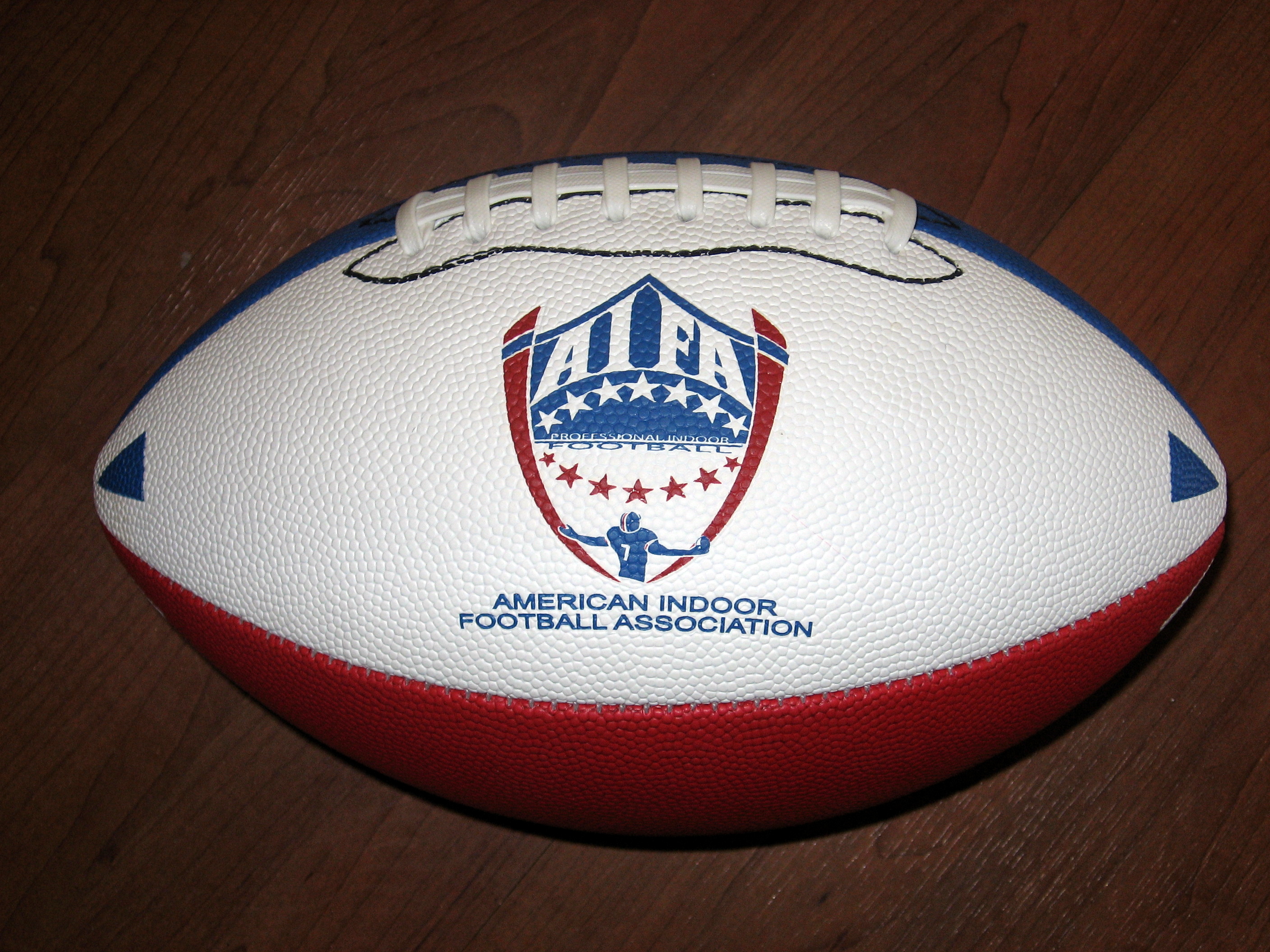
“Gentlemen, this is a football.”  Thus did the famous coach Vince Lombardi supposedly begin every first team meeting of the season, while holding up same.   The point being, you always start off with the basics. However, I don’t know about the AIFA; some of their players might be seeing a football for the first time.

The other day, somebody got to this blog by searching for the terms “how would max weber view american football”. I don’t know if he was even thinking of the same Max Weber I’m so fond of, but regardless, I thought to myself: “Heck, I would like to read that article.”  So, here is a cursory attempt at writing it.

Of course, it’s hard to figure out the answer without a Ouija board and some arcane black magic.  And even then, it would probably only be something simplistic like “the competitiveness reflects the Protestant ethic” or “the Browns are 6 and 10 this year, best case.”

I’m not too familiar with his most famous writings about religion; I’ve mostly studied Weber’s contributions to political thought. Long-time readers probably remember his three types of authority:

  1. Charismatic authority
  2. Traditional authority
  3. Legal authority

Well, I suppose he’d think that coaches like Rex Ryan and players like Tim Tebow have charismatic authority, whereas coaches like Belichick and players like Ray Lewis rely on a sort of traditional authority–they have enjoyed a lot of success, so people are supposed to automatically respect them.  The equivalent to Legal authority is, well, the referees and the commissioner. (As the Saints are discovering.)

But this doesn’t tell us anything about the broader social phenomenon of football. Maybe Weber would note the similarity of the sport to religion.  After all, some fans follow it with the same zeal that people follow religions. They even collect artifacts and relics relating to the heroes of the sport.  And then, of course, there’s the ubiquitous Mr. Tebow. (I know I’m breaking my vow here. I’m sorry. But I promise you one thing: you will never see another blogger try as hard not to mention him as I will try the rest of the off-season.)

I once saw an NFL Films show about the Pittsburgh Steelers championship run in 2005.  It started off with this quasi-hymn or chant-like music that sounded religious and very eerie all at once. Imagine “Duel of the Fates“, only way creepier.  It seemed pretty serious for a bunch of football highlights.  But there are people who definitely see football as nearly as important. (Another Lombardi line, of which there are some variations: “All that matters is your God, your family and the Green Bay Packers”.)

Still, Weber studied religions as a way of highlighting differences in cultures and people’s philosophies.  The superficial resemblance of sports fanatics to religious fanatics is obviously more about the features of fanaticism than religion.  So we’re still at a dead end.

Let’s approach this from a different direction: we know that American football, though wildly popular in the United States, is not the number one sport in any other country. Perhaps the reasons for this are tied to “American exceptionalism”.  But this is more Tocqueville than it is Weber. (Where is that Ouija board?) And unfortunately, I cannot find much that Weber had to say about America.

So once again, I am frustrated.  I leave it to you, blogosphere and distinguished commenters, to sort this problem out.  What would Max Weber think of American football?

For some bizarre reason, and in spite of some confusion, games three and four of the Stanley Cup Final aired on NBC Sports Network. The first two games had been on NBC. Lord only knows where game five will be. They like to keep their fans guessing.

I swear, pro hockey has some of the worst marketing… It’s one thing to air your championship on non-free TV. That’s a mistake, in my opinion, but it can be lucrative, so I get it. But at least be consistent! They can’t even manage that. Why would you put part of the series on one channel and the rest on another? It’s like they are actively trying to make the sport difficult to follow.

Hockey is a great sport, but the way it’s managed is highly questionable. I’ve said it before, and I’ll say it again: If I were in charge, I’d have a 20-game regular season, followed by a single-elimination tournament, televised either on one of the major over-the-air networks or ESPN. The tournament would begin the week after football season ends and be over by mid-March.

It will never happen, though, for obvious financial reasons. But I bet it would increase the popularity of the sport–and hence, the profitability–over the long-run.

My prediction of the demise of real-world sports might have one adverse impact on virtual counterparts: there is no longer the possibility for the thrill of changing the fortunes of a player or team. My Bills may not have enjoyed much real world success, but in video games, I can make them into a 19-0 juggernaut if I want. It’s kind of neat to see your favorite team win it all, especially if they’ve never actually done it. This trailer for MLB 12: The Show “makes its pitch” based on this feeling*:

If there were no more actual sports, this would be less exciting. People would eventually forget who the Chicago Cubs were.

The solution, I think, would be to let people choose backstories for their teams, much as they choose them for their characters in certain RPGs. You could have “reigning champs”, “fading band of superstars”, “up-and-coming”, “rebuilding” or “plucky underdogs”, just for a few examples.

*Hat Tip to Thingy for the video. She’s taken her blog down, so no link, unfortunately. (Come back!)

You all have heard about how the NFL is trying to make the game of football safer. The talk about the trauma sustained by the players is everywhere. There is talk of banning the game in some circles. Even players are saying they don’t want their kids playing the game.

I think football is on its way out, frankly. Hockey and basketball, too. Even baseball’s days are numbered. Safety is only part of the reason. The other part can be seen by watching these two clips:

That’s a game from 1991. Now here is the first gameplay video for Madden 13, which will come out this August:

It’s a big difference. Meanwhile, real-world football is still the same as it was in 1991. Sure, the equipment is a little better, but it’s still pretty similar.

“But,” you object, “there’s a ceiling on how much the game can improve. The best it can do is look just like the real thing, and it doesn’t even do that yet. Besides, we need a real-life version game of football to provide a benchmark for what the video game should be like.”

I used to think that, too. But we have a benchmark, in the form of NFL films historical record. And the Madden games already include a mode in which you can play against virtual replicas of former football stars. People know who those guys are–and the thrill will be playing as your own team, with players named for you and your friends, going up against the ’72 Dolphins or the ’85 Bears.

More to the point, most fans don’t like all real football games. Sometimes, they are “boring”–that is, they are defensive struggles, as opposed to exciting, long-touchdown filled games. Most fans hate that. But video games can fix this problem–you can have 70-63 games if you like.

It goes without saying that you don’t get injured playing virtual football over the internet. Out of shape, maybe, but not “injured”. The  celebrities of football will no longer be the athletes, but people who are unbeatable at the virtual game. And the best part is, way more people can play a video game than can play actual, pro-level football.

We’re already most of the way there. This is where the safety concerns really come into play, because soon, no one will like the actual sport–too much danger. The video games will provide something for all the football experts to go into when the real game is too controversial. Imagine what it would be like to go up against some former player or coach in the video game–it will be incredibly popular.

The same thing will happen with all other sports, too. But I doubt anyone will miss them; they’re too much trouble. Video game sports are more accessible, safer, and can be played year-round.

I read this Slate review of the movie Crooked Arrows, which is apparently a fairly predictable movie about lacrosse. I’d never heard of it till I saw the article. But from this review, it seems that it simply reinforces what I’ve said before about sports movies being dull and predictable.

I still like my idea for a movie about a super dominant team that destroys their plucky opposition. I envision a football movie, about a team on a quest for its second undefeated season in a row. I’m thinking it would be a musical, with the big number sung by the half-Lombardi-esque, half-Belichickean head coach. (I’ve thought about this too much.)

Even that would just be a satire of the sports movie genre, though. It couldn’t be a lasting formula for films, just a one-off. The problem is that sports are dramatic affairs themselves. And they’re more dramatic than movies, because they are harder to predict. If Hollywood had written it, the Cardinals would have beaten the Steelers. The Giants and Patriots wouldn’t have even been in it last year in the movies. The unpredictability is what makes it good.

I think the best sports movies are the ones that involve rigging and corruption in the game. That way, the drama of the game is subjugated to serve the larger drama of behind-the-scenes machinations. Political issues and sports might work, too. I’ve never seen all of Invictus, but I’ve watched some scenes from it, and it seems pretty good because of the larger political issues at stake in the movie. The outcome of the big game doesn’t even matter to the real point of the movie, because it’s more about what the South African rugby team means to the country.

Figures I’d have to find a way to work conspiracies and political intrigue into my sports movies, doesn’t it?