Over at the Buffalo Bills fanblog “Buffalo Rumblings“, Aaron Lowinger wrote a counter-factual season preview/review of past Bills seasons; that is, a kind of historical fiction or “alternate reality” type of post.  I thought it was a cool idea, but the reaction from most of the site’s readers was pretty negative.  I can sort of see why, too, because even in Lowinger’s fantastic universe, the Bills are still seeking their first championship.  Enhanced misery is not what people want in their daydreams.

I really like the idea, though. I’d like to try it myself in fact.  Allow me, if I may, to borrow Lowinger’s (and Buffalo Rumblings editor Brian Galliford’s) idea, and try to make it into a happier one.  What follows is purely fictional–although it may be factual somewhere in the multiverse…

****

When the ball slipped through the fingers of their most reliable receiver this past January, it shattered many Bills fans’ hopes of doing something done only twice before: three championships in four years.  The Bills, coming off a franchise-best 14-2 regular-season record, had marched down the field for a touchdown to cut the upstart Jaguars’ lead to 31-29, but the two-point conversion fell short with only seconds remaining.

It was a rare miscue for a team accustomed to winning.  After their thrilling 31-28 O.T. win over Arizona in SB 43, the Bills had established a reputation as clutch winners.  Their improbable run to a 34-15 shellacking of that same Arizona team in SB 45 only cemented that reputation, with a thrilling 17-point rally to beat Indy in the divisional round, followed by Trent Edwards’ clutch drive to down favored Baltimore 27-24 in the conference final being the most notable examples.

January’s disappointment aside, the Bills remain a young team with all the major pieces in place for another championship run.  Although they lost star running back Steven Jackson in free-agency, they are confident that Spiller can fill his shoes.  The receiving corps remains intact, as does the offensive line. The addition of Asante Samuel to a strong secondary makes them arguably even more powerful than the #2 defensive unit that led them to their first championship.

****

Well, that was fun, right?  Or maybe not.  Is it just a sad reminder of how bad things are, or an uplifting diversion?  For, after all, sports themselves are meant to be an uplifting diversion.  They really aren’t much good if you let them make you sad.

P.S. Lowinger and Galliford–should you happen to read this, I hope you don’t mind me reworking your idea.  If you do, I’ll gladly take it down.  It’s not exactly Goethe reworking Marlowe’s stuff, but sometimes it pays to take more than one crack at an idea.
G4TV has compiled a list of the top 100 video games.  Really, it was far from right of them to do that without consulting me.  I would have put KotOR II in the top spot, just for starters.  And frankly, I thought the list generally placed too much value on historically significant games.  Yes, Pong was indeed a major milestone for gaming, but I refuse to believe that it has anything to offer players that any tennis sim made in the last three console generations cannot.

Lists and rankings like this are fun, aren’t they?  Me and a friend of mine were chatting the other day about the top 5 NFL quarterbacks.  It took some hashing out, but we ultimately agreed that Roethlisberger was #3 and Brees #4.  The post-season records speak for themselves.

I am not sure why rankings matter so much, and indeed oftentimes comparisons are simply inane.  Roethlisberger and Brees have no control over most of the factors which determine their success in the play-offs.  (Both of them played very well in defeats last postseason, after all.)  Likewise, how can you really compare Angry Birds and Metal Gear Solid?   They are in different genres, in different styles, on different platforms–comparison is pretty much impossible if you think about it rationally.  But that doesn’t deter me or lots of other people from doing it. (My personal opinion: Angry Birds has no business being in the top 1,000.)

Image via Wikipedia

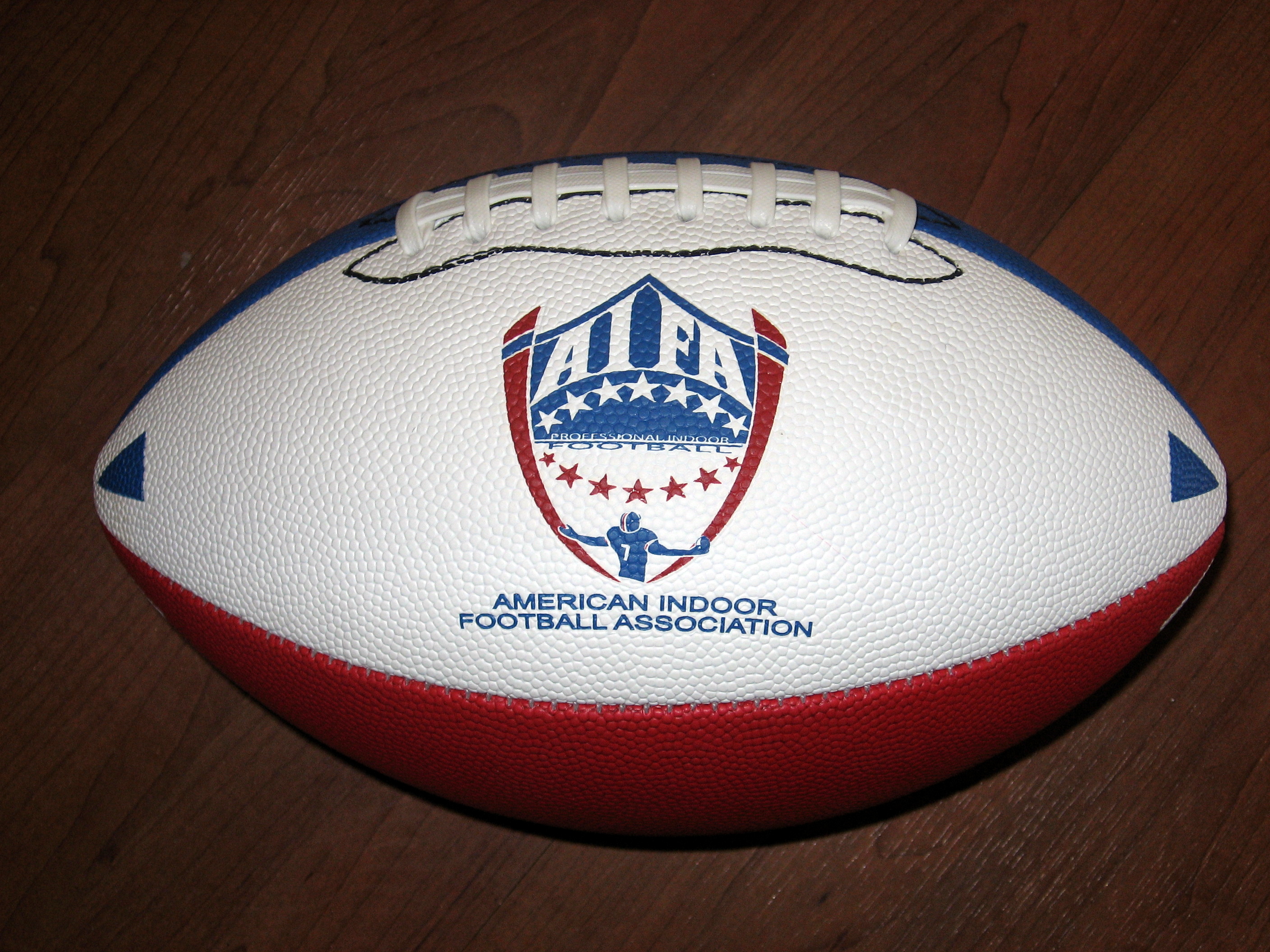
“Gentlemen, this is a football.”  Thus did the famous coach Vince Lombardi supposedly begin every first team meeting of the season, while holding up same.   The point being, you always start off with the basics. However, I don’t know about the AIFA; some of their players might be seeing a football for the first time.

The other day, somebody got to this blog by searching for the terms “how would max weber view american football”. I don’t know if he was even thinking of the same Max Weber I’m so fond of, but regardless, I thought to myself: “Heck, I would like to read that article.”  So, here is a cursory attempt at writing it.

Of course, it’s hard to figure out the answer without a Ouija board and some arcane black magic.  And even then, it would probably only be something simplistic like “the competitiveness reflects the Protestant ethic” or “the Browns are 6 and 10 this year, best case.”

I’m not too familiar with his most famous writings about religion; I’ve mostly studied Weber’s contributions to political thought. Long-time readers probably remember his three types of authority:

  1. Charismatic authority
  2. Traditional authority
  3. Legal authority

Well, I suppose he’d think that coaches like Rex Ryan and players like Tim Tebow have charismatic authority, whereas coaches like Belichick and players like Ray Lewis rely on a sort of traditional authority–they have enjoyed a lot of success, so people are supposed to automatically respect them.  The equivalent to Legal authority is, well, the referees and the commissioner. (As the Saints are discovering.)

But this doesn’t tell us anything about the broader social phenomenon of football. Maybe Weber would note the similarity of the sport to religion.  After all, some fans follow it with the same zeal that people follow religions. They even collect artifacts and relics relating to the heroes of the sport.  And then, of course, there’s the ubiquitous Mr. Tebow. (I know I’m breaking my vow here. I’m sorry. But I promise you one thing: you will never see another blogger try as hard not to mention him as I will try the rest of the off-season.)

I once saw an NFL Films show about the Pittsburgh Steelers championship run in 2005.  It started off with this quasi-hymn or chant-like music that sounded religious and very eerie all at once. Imagine “Duel of the Fates“, only way creepier.  It seemed pretty serious for a bunch of football highlights.  But there are people who definitely see football as nearly as important. (Another Lombardi line, of which there are some variations: “All that matters is your God, your family and the Green Bay Packers”.)

Still, Weber studied religions as a way of highlighting differences in cultures and people’s philosophies.  The superficial resemblance of sports fanatics to religious fanatics is obviously more about the features of fanaticism than religion.  So we’re still at a dead end.

Let’s approach this from a different direction: we know that American football, though wildly popular in the United States, is not the number one sport in any other country. Perhaps the reasons for this are tied to “American exceptionalism”.  But this is more Tocqueville than it is Weber. (Where is that Ouija board?) And unfortunately, I cannot find much that Weber had to say about America.

So once again, I am frustrated.  I leave it to you, blogosphere and distinguished commenters, to sort this problem out.  What would Max Weber think of American football?

You all have heard about how the NFL is trying to make the game of football safer. The talk about the trauma sustained by the players is everywhere. There is talk of banning the game in some circles. Even players are saying they don’t want their kids playing the game.

I think football is on its way out, frankly. Hockey and basketball, too. Even baseball’s days are numbered. Safety is only part of the reason. The other part can be seen by watching these two clips:

That’s a game from 1991. Now here is the first gameplay video for Madden 13, which will come out this August:

It’s a big difference. Meanwhile, real-world football is still the same as it was in 1991. Sure, the equipment is a little better, but it’s still pretty similar.

“But,” you object, “there’s a ceiling on how much the game can improve. The best it can do is look just like the real thing, and it doesn’t even do that yet. Besides, we need a real-life version game of football to provide a benchmark for what the video game should be like.”

I used to think that, too. But we have a benchmark, in the form of NFL films historical record. And the Madden games already include a mode in which you can play against virtual replicas of former football stars. People know who those guys are–and the thrill will be playing as your own team, with players named for you and your friends, going up against the ’72 Dolphins or the ’85 Bears.

More to the point, most fans don’t like all real football games. Sometimes, they are “boring”–that is, they are defensive struggles, as opposed to exciting, long-touchdown filled games. Most fans hate that. But video games can fix this problem–you can have 70-63 games if you like.

It goes without saying that you don’t get injured playing virtual football over the internet. Out of shape, maybe, but not “injured”. The  celebrities of football will no longer be the athletes, but people who are unbeatable at the virtual game. And the best part is, way more people can play a video game than can play actual, pro-level football.

We’re already most of the way there. This is where the safety concerns really come into play, because soon, no one will like the actual sport–too much danger. The video games will provide something for all the football experts to go into when the real game is too controversial. Imagine what it would be like to go up against some former player or coach in the video game–it will be incredibly popular.

The same thing will happen with all other sports, too. But I doubt anyone will miss them; they’re too much trouble. Video game sports are more accessible, safer, and can be played year-round.

I watched a couple of Andrew Luck’s games on TV last year. I’ve only seen highlights of RG III. So this is just a knee-jerk reaction, not backed by any intensive film study or anything like that.

But Luck, every time I watch him play, looks incredibly awkward to me. I don’t know quite how to describe it, but he looks tense. He’s a good player, but there’s just something very odd about the way he plays. Something about his running and throwing motions is very weird looking to me. RG III, on the other hand, looks really confident and comfortable on the field. It’s not just that he’s more athletic; it’s his whole demeanor.

What does this mean? Probably nothing. I’m not a professional scout, so what do I know? We all know Luck is going first and RG III is going second, but I thought I’d mention this. If Luck is a bust and Griffin is the next big star, I can say I saw it early.

I, Mysterious Man, do solemnly swear that I will not write another post about Tim Tebow after this one until he does something of note on the gridiron. After the conclusion of this post, the name of this ridiculously over-hyped athlete shall not appear in these pages again until he performs some feat of either remarkable skill or ineptitude at the sport he is paid to play. I have already spent too much time writing about him, but I just had to say this.

While reading about the Tebow to New York trade, I have observed that people seem to feel one of two ways about him. Either they think he is a sanctimonious jerk with a cult of insane followers who is not fit to play professional football, or else they think he is a Great American and an inspiration to children everywhere whom John Elway and the liberal media have cruelly mistreated–dare I say “martyred”.

The anti-Tebow forces believe his fans will destroy the Jets by clamoring for him to play. The pro-Tebow people think he will win the starting job and go on to win 15 championships.

These views are both wrong. First, let me deal with the anti-Tebow group.

Yes, I think Tebow is sanctimonious. Yes, I think Tebow loves being a celebrity. He is not so different from guys like Chad Ochocinco or, to use a Jets example, “Broadway Joe” Namath, although he goes about building his brand in a different way. That’s my assessment of him, although I can’t be sure. I’ve never met the man.

But it doesn’t matter; I don’t want him to be my friend, I wanted him to play quarterback for my team. His personality isn’t that relevant.

People keep saying that his rabid fans demanding he play now will make Sanchez uncomfortable. So what? If Sanchez can’t play well enough to shut those people up, that’s his problem. And like I thought when my fellow Buffalo fans said Tebow’s apostles would put pressure on Fitzpatrick: the coaches make the decision; not the fans. Coaches are supposed to be smart enough to make decisions based on a calculation of what’s good for the team, not emotional stuff. The fans always want the backup quarterback to go in unless the starter is already an all-star. Coaches know to ignore that.

On the face of it, it looks like madness on Denver’s part to trade a second-year quarterback who turned a team around, won the division, and won a playoff game. The only reason people can excuse it is because Tebow has the most abysmally bad throwing motion that has been seen in the pro game in years. In terms of almost all other factors, he looks like a good prospect.

Personally, I would have rather had Tebow than Manning at quarterback. Obviously, Manning was once great, but he’s getting old and injury-prone. Tebow has a lot of potential and is still young.

As for you Tebow fans: quit acting like your hero has been punished and humiliated by the Denver organization. He’s being paid millions of dollars to play a sport and live in New York City. That’s not really a terribly bad situation for a young man starting out in his career. I am not feeling sorry for him. If anything, the Denver fans are who you should feel sorry for.

Furthermore, there is not a media conspiracy against him. I know many of you somehow believe he is being persecuted for his religion, but the fact is that he was endlessly hyped coming out of college. And if he is perhaps being unfairly criticized for his lousy throwing mechanics now, it’s only because nobody dared criticize him for it in college. I remember in the SEC title game in 2009, he threw one of his dreadful passes into the endzone, where a defender intercepted it. And his receiver was open on the play; it was entirely due to his inability to throw properly. But no one at the time said, “that was an awful pass”.

Tebow is a pretty good runner and a lousy passer who has the potential to become a pretty good starter. There have actually been lots of guys like that throughout the sport; it’s not that unusual. The rest is just kind of a proxy battle in the alleged culture war.

The Mario Williams signing is great, but my thoughts on trading for Tebow remain the same. Now that Manning has signed with Denver, Buffalo has a great opportunity. Apparently, management in Denver thinks Tebow is practically worthless, so they should be able to acquire him cheaply.

Do it.

To whom it may concern:

I have followed this team for years, and I will continue to do so. In all my years of following, I have never seen you make even one playoff appearance. I remember all the attempts at rebuilding, the subsequent tearing down and rebuilding again.

I believed in 2010 that you ought to draft Tim Tebow. Instead, you drafted a running back who you almost never use. Whatever. But rejoice, for Fate has granted you a second chance! For some reason, John Elway doesn’t like Tebow, and is trying to get Peyton Manning or Brandon Weeden.

While I have long thought that Tebow is highly overrated as a quarterback, and the phony religious war that the press tries to create around him is quite tiresome, I nonetheless think he is exactly who the team needs.

This is because he has an indefinable quality–charisma, you might call it–that attracts attention. And attention is what you desperately need as a ball club. Nobody even talks about Buffalo, or if they do, it’s to talk about how lacking it is, both as a city and a place of sporting success.

So, that’s why you ought to trade for Tebow. Trade them the first-round pick if they want it. You probably were planning to use it on yet another running back, anyway. Or, even worse, some overrated wide-receiver. And if they still won’t make with the Chosen One, give them C.J. Spiller. He was effective at warming the bench behind Jackson, so he’s more than qualified to warm it behind Moreno.

It is true that Tim Tebow cannot throw a football correctly. (Personally, I have long suspected that he isn’t really left-handed.) But he has some sort of miraculous ability to excite people beyond reason, and besides that, he has a knack for winning in the 4th quarter, which is something that this team hasn’t had since Frank Reich left.

If Denver signs Manning, get Tebow. If they don’t sign Manning, get Tebow anyway, since they’ve demonstrated they don’t have faith in him. You say you’re committed to Fitzpatrick, but a little competition never hurt anyone. Well, except the loser, but do you really want to be a haven for losers?

Get Tebow. I don’t know if he’ll continue his habit of pulling out miraculous victories, but at least he’s theoretically capable of it. And even if he doesn’t, people will at least pay attention to the team again.

The New Orleans Saints are in rather a lot of trouble for their recently discovered “bounty” program, in which defenders were paid to injure opposing players.

Unsurprisingly, lots of pro players have said that this sort of thing goes far beyond this one team, and is quite common throughout the league. I can readily believe it.

It’s rare for a game to go by without hearing some analyst say “they must rattle the quarterback”, or they must “apply pressure to the quarterback” or something like that. Well, that means they need to try really hard to hit the quarterback. Because he’s an essential player in a team’s offense. That’s an accepted piece of strategy; and how much of a stretch is it from that to paying bounties to injure important players?

The reason New Orleans got caught, I suspect, is that they were too obvious about it. The institutionalized nature of the system was what exposed them. I bet the investigations will discover that such programs exist on other teams, but are less regulated and probably involve less tangible benefits as payments.

Even if the league managed to curtail all forms of material payment for these things, there would still very likely be an unspoken respect for those players who knock out and opponent’s star. It seems, from my outsider’s perspective, that it would be practically inevitable, given how the game works.

Suppose they hadn’t had a bounty system, but had just, in the course of the game, injured Brett Favre anyway in the Conference Championship two years ago. How bad could you feel about it if you were a member of the Saints? I mean, yeah, it would be a shame to hurt a fellow player, but the inescapable fact is that it makes achieving the goal of winning a championship significantly easier.

In criminal cases, the old trope is that the perpetrators need “motive and opportunity”. Well, clearly the motive is to win ball games. And because of the nature of the game, it’s remarkably easy to injure the opponent without appearing to mean to. In fact, it’s a requirement that you take actions that might well injure people to play the game.

Consequently, since all the incentives are there, and since it’s extremely easy to do, it would be kind of surprising if this didn’t go on. Highly lamentable, but not surprising.