And in the section titled “Expression of Sentiments”:
8. RESOLVED, That we favor a constitutional provision limiting the office of President and Vice-President to one term, and providing for the election of Senators of the United States by a direct vote of the people.
They would get both the income tax and the direct election of Senators. It has been about a century since both were enacted via the Sixteenth and Seventeenth amendments to the Constitution. This would have been a few years after the Populist party had disbanded–or, perhaps more accurately, consumed by the Democratic party.
Now, granted; they didn’t get everything they wanted. Like:
9. RESOLVED, That we oppose any subsidy or national aid to any private corporation for any purpose.
Good luck getting rid of that.
But the point is, some of the demands of a third party composed largely of impoverished farmers were implemented 20 years later, and not merely as laws, but as Constitutional amendments. Constitutional amendments are not easy to get.
Just as a successful small start-up company gets bought out by a larger corporation, a successful third party gets taken over by one of the major parties. But it’s still a victory for their ideas–so what if there was no Populist party as such, if the Democrats were accomplishing what the Populists wanted? The Populists set the stage for many of the reforms made in the first half of the 20th Century.
I’ve written recently about books by Upton Sinclair and John Steinbeck—these books, especially the former, were very much in the school of “populist” socialism. Indeed, the big reason for the existence of socialism was the treatment of impoverished workers after the industrial revolution, It was driven by humanitarian and charitable impulses.
But then, you have the other sort of socialism, the one advocated by people like Oscar Wilde, who saw socialism as a way of establishing an intellectual aristocracy—people would be afforded comfortable livings from redistribution of wealth, and so have time for intellectual pursuits. Now, admittedly Wilde saw this as a universal scheme, with the labor to be done by machines. But then you had people like H.P. Lovecraft, who would probably want the division of labor to be based on racial lines, in keeping with their usual prejudices. And people like George Bernard Shaw, who were a bit of both.
Socialism was very much in vogue among intellectuals in the late 1800s and early 1900s, but there were (at least) two distinct kinds of socialist thought: the populists, “help the workingman” socialism and the “socialism is the new aristocracy”, elitist socialism.
These really are two very different aims, and it’s odd that people with these aims should have found common cause. But one of the things people didn’t realize—at least until the 1930s and ‘40s, at great cost—was that “socialism” was really a very flexible concept; which could be used in service of all sorts of ideologies.
Upton Sinclair did not like the meat-packing industry. And so he wrote this book to explain why it–and ultimately the entire capitalist system–was corrupt and evil. The book tells the story of a Lithuanian family who comes to America and finds work in the Chicago meat-packing industry. Every single horrible thing that you can imagine happening then proceeds to happen, and so, through soul-crushing poverty, crime and death, the family breaks up.
The main character is the family patriarch, Jurgis Rudkus, who goes from being an honest working man beaten down by the cruel meat industry to a cynical and selfish criminal to finding the light of socialism, which he then espouses with religious zeal.
I have to admit, though it is about as heavy-handed as it could have been, it nevertheless succeeds somewhat in making you feel sorry for the characters by sheer force of repetition. Sinclair had this irritating habit of writing something along the lines of: “Jurgis went home that night, little knowing that something unbelievably horrible was about to happen.” This kind of kills the suspense, and is dramatically a dreadful device, but it beats you over the head with it so much it sometimes works anyway.
The irony is that though the book is famous for its depiction of the disgusting practices of the meat-packing industry, that was really just a bit of extra detail Sinclair included. His real point was much broader; it was that the workers were oppressed by the bosses. So, he actually accomplished the extremely rare feat of writing a novel that accomplished social change, but it was not the change he wanted. (It wouldn’t shock me if the reason the book is famous for the parts about the food production processes is because those bits are closer to the beginning, and most people quit reading after that.)
Sinclair wrote this novel for a socialist magazine, and this is where it comes to its central problem: the conflict between being a work of propaganda and a work of art. There can be propaganda that is also art, but when a person is writing to make a political point, there is a dilemma between portraying things as they are versus how the ideology requires them to be. So, almost all of the characters in The Jungle are just puppets with which Sinclair makes his political points.
There are vast swaths of the book that don’t really qualify as being part of the story, they are merely long lists itemizing everything that is wrong with meat-packing, or the city of Chicago, or the factories, or whatever. The last chapter of the book is just a huge lecture on the evils of Capitalism and the virtues of Socialism:
“How is the price of an article determined?”
“The price is the labor it has cost to make and deliver it, and it is determined by the first principles of arithmetic. The million workers in the nation’s wheat fields have worked a hundred days each, and the total product of the labor is a billion bushels, so the value of a bushel of wheat is the tenth part of a farm labor-day. If we employ an arbitrary symbol, and pay, say, five dollars a day for farm work, then the cost of a bushel of wheat is fifty cents.”
“You say ‘for farm work,'” said Mr. Maynard. “Then labor is not to be paid alike?”
“Manifestly not, since some work is easy and some hard, and we should have millions of rural mail carriers, and no coal miners. Of course the wages may be left the same, and the hours varied; one or the other will have to be varied continually, according as a greater or less number of workers is needed in any particular industry. That is precisely what is done at present, except that the transfer of the workers is accomplished blindly and imperfectly, by rumors and advertisements, instead of instantly and completely, by a universal government bulletin.”
That’s just a bit of it–to give you the flavor. It reminded me of Ayn Rand’s writing, and almost made me wonder if her books are better once you are familiar with clumsily-written socialist propaganda. Perhaps her sledgehammer approach to philosophical writing was intended as a parody.
There are a ton of obvious questions Sinclair fails to answer in the concluding chapters. Given the benefit of hindsight, the “Socialism is Our Salvation” message of the book is truly ironic. Just in the above passage, you may ask “how exactly will this ‘universal government bulletin’ work?” Or perhaps, if you’re after the big game, you might wonder “if price is determined by labor, wouldn’t that mean something produced with more labor–that is, less efficiently–be more valuable than the same good produced with less labor?”
Ok, that second one is unfair. I’m criticizing Sinclair for repeating Marx’s mistake. But if we just stick to the problems with this as a novel, it’s still pretty bad to end your book with a series of “Marty Stu” characters giving speeches. This Socialist F.A.Q. in the last chapter made me think of a quote from Marx–Groucho, that is. In one of their movies, there’s a bit where Chico is asking and answering his own rhetorical questions and then asks Groucho, “Now so far I’m right?”. Groucho responds: “It’s pretty hard to be wrong when you keep answering yourself.”
Now, don’t misunderstand me–I’m sure a lot of the criticisms Sinclair made of the meat industry were quite valid. It was just the solutions where he went wrong, I think. According to Wikipedia, an employee at the publishing company for The Jungle wrote:
One feels that what is at the bottom of his fierceness is not nearly so much desire to help the poor as hatred of the rich.
Doubtless, Sinclair would say that this employee was just slandering him on behalf of the capitalists in order to crush the glorious proletariat uprising. “Now we see the violence inherent in the system!”
Seriously, though, that person was right that Sinclair hated the rich. He seems to have surprisingly little actual interest in the poor, and besides that, he seems to have had odd little prejudices of his own. (Especially against the Irish–I think nearly all of the bad characters in the book are explicitly noted to be Irish.)
As a novel, it is pretty poor. As a work of propaganda, it is also fairly weak, though it did actually set people thinking and inspire them to take action to make changes in society, even if it wasn’t what the author himself had in mind. It caught the attention of President Theodore Roosevelt–clearly, it was an effective vehicle for getting a message across.
And if nothing else, it made me glad I’m a vegetarian, even though I’m quite certain the meat industry’s practices have improved over the last century.
A guy I know once told me that he thought Star Trek: The Original Series was a “fascist” TV show. I asked him to elaborate, and he listed me some reasons:
They all wear uniforms that signify their rank within the rigid hierarchy.
The main hero, Capt. Kirk, is a Carlyle-esque “Great Man” figure. A masculine paragon of excellence, who often triumphs through a Nietzschean casting aside of Spock’s “logic” in favor of genuine emotion.
I didn’t buy it then and I don’t buy it now, but it’s a fascinating argument. Of course, I made some counterpoints:
The Federation is clearly supposed to be a neo-liberal society, built on tolerance and understanding between different groups. It is more like an idealized version of the United Nations.
The Enterprise’s goal is ostensibly exploration and understanding, not conquest.
The real “fascist” version of Star Trek was shown in the famous “Mirror, Mirror” episode, in which the war-like crew of the parallel universe Enterprise fit the Fascist bill much better.
Besides this, there at least two other episodes where they bump into copies of the original fascists and the most famous of the “modern day” fascists.
The show’s values were generally liberal and progressive, as evidenced by the diverse cast and certain moments like Kirk and Uhura’s kiss, which was very controversial at the time.
Naturally, I think my argument stands up better. However, my friend’s idea is still kind of interesting. After all, despite that “peace and understanding” stuff, the Federation did find itself at war with those swarthy foreigners, the Klingons, awfully frequently. (I think it’s significant that they changed this for The Next Generation.)
What was the deal with the Federation? Were they just a bunch of nice guys, or was something more sinister at work? Does upholding the virtues of tolerance, inclusiveness and diversity except for the primitive and brutal “Others” still get you into the Tolerant Liberal Club, or does it put you in the Conquering Empire with Good P.R. Club?
Somewhere—I can’t find the exact quote, sorry—the radical libertarian Albert Jay Nock wrote that the people who opposed fascism and also supported a “league of nations” seemed to be saying that a drop of something was deadly poison, but a gallon of it was a miracle elixir. What, Nock’s thinking went, was one-world government, a “league of nations”, if not authoritarian nationalism writ large?
Of course, Nock was wrong, at least in the case of the Earth. For if there were a “one-world government” modeled on the United States, with each country being functionally equivalent to a State, it would have no “Other” to make into its enemy. It would not, as far as I can see, have the ultimate hallmark of a fascist nation: the racial or at a heritage-based class system. This does not at all mean a one world government is a good thing, but it is not fascist.
But in Star Trek the Federation did not encompass all known sentient life in the universe, although it did seem that its doors were open to all who would join. There were other systems of government and life-forms. The Federation was just trying to… triumph over them. Fascism!
There is an old quote I’ve seen attributed, probably incorrectly, to Huey Long: “When Fascism comes to America, it will be called anti-Fascism!” I suppose you could say that is what the Federation has done, since they are committed to freedom and tolerance… and will destroy anyone who isn’t.
The new Star Trekmovie Into Darknessespecially seemed to accentuate the fascistic element of the series. The grey uniforms the cadets at Starfleet wear (especially the hats), and the warmongering admiral make it seem like it’s on its way to being the Evil Empire.
I’ve been sort of following the news about the re-enactments of the battle of Gettysburg that are being held for the 150th anniversary of the battle.
Re-enactors provide a valuable service to those interested in history, no doubt, but I can’t help feeling they just can’t imitate the feeling of urgency which the real battle must have had. I imagine it was much more frenetic on that day 150 years ago when Pickett’s men charged across the field.
It’s easy to see now that tactics like that, tactics that led Prussian Field Marshal von Moltke to dismiss the Civil War as simply “armed mobs”, were disastrous and borderline insane. But then, people who were tired and starving and under fire can hardly have been thinking clearly when making these decisions.
(Aside: in the CBS video above, isn’t it ironic that Professor Goodwin and that reporter talk about how Lincoln’s speech was what made the place matter, when in the address itself President Lincoln said: “the world will little note, nor long remember what we say here; while it can never forget what they did here”?)
I went to Gettysburg years ago, and I do remember that it was an eerily peaceful place. Like it had seen enough violence for all its existence, and was exhausted.
It’s also fitting that what was effectively the deciding battle in a war that redefined the United States and ended the institution of slavery that had been such a terrible stain on the country from its birth, ended right before Independence Day. As so many others have noted, there’s something poetic about it.
Ah ha, Charles Fort, you tricky rascal, you! I knew I’d find you one day!
Charles Fort. Image via Wikipedia
Some readers may recall that I did a rather silly post, nearly a year ago now, trying to think of the last name of some philosopher whose first name was “Charles”. Well, the other day I finally stumbled across his Wikipedia page again. That’s one mystery solved.
So, after all that, what was the deal with this Fort guy? He was, from what I read, a bit of an oddball. He didn’t really trust mainstream science much, and had a way of coming up with his own offbeat sort of logic.
Not that he seems to have taken any of that seriously either,and to go by his Wikiquote page, he was a very witty fellow, and it sometimes seems like his interest in weird stuff was an excuse to make clever quips.
So, that’s Charles Fort in a nutshell. (Which, some would say, is exactly where he belongs.) I hope you you found this worth the wait.
My blogger friend Thingy mentioned reading and enjoying Stephen King’s novel 11/22/63 awhile back. I’d never read any books by him, so I decided to give it a try. I’ll try not to spoil it here, but it’s about time-travel and the unintended side-effects thereof.
It’s quite good, all in all. You can tell he made an effort to research the styles and vernacular of the 1960s, and he also does a pretty good job of presenting both the good and the bad aspects of that era. There was also a lot of the hint-don’t-tell kind of cosmic horror in certain parts that I really liked.
The ending was a bit weaker though still good. Again, without giving away too much, there was a part of it that reminded of the book A Clockwork Orange, and that felt kind of cliched. The ending was… I guess, “bittersweet” is probably the best word for it.
I might analyze it more in-depth later, but for now, I just want to recommend reading it.
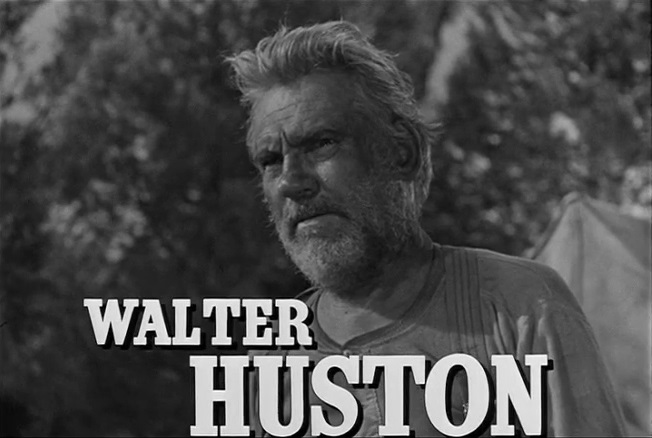
In the trailer for “The Treasure of the Sierra Madre”.
This movie really surprised me. It was made in 1948, around the time of what is called the “Second Red Scare“, when concern about communist infiltration was very high. Given that, the content of the movie is astounding.
Fred Dobbs (Bogart) and Bob Curtin (Tim Holt) are unemployed guys looking for work. They convince an old prospector named Howard (Walter Huston) to help them on an expedition for gold in the Sierra Madre mountains. The first remarkable thing about the movie is a speech given by Howard in his first scene:
Howard: Say, answer me this one, will you? Why is gold worth some twenty bucks an ounce?
Flophouse Bum: I don’t know. Because it’s scarce.
Howard: A thousand men, say, go searchin’ for gold. After six months, one of them’s lucky: one out of a thousand. His find represents not only his own labor, but that of nine hundred and ninety-nine others to boot. That’s six thousand months, five hundred years, scramblin’ over a mountain, goin’ hungry and thirsty. An ounce of gold, mister, is worth what it is because of the human labor that went into the findin’ and the gettin’ of it.
Flophouse Bum: I never thought of it just like that.
Howard: Well, there’s no other explanation, mister. Gold itself ain’t good for nothing except making jewelry with and gold teeth.
What’s so remarkable about that, you wonder? Well, what Howard is describing there is what is known as a Labor Theory of Value–the value of something is determined by the labor put forth to get it. This is an economic idea that is commonly associated with a fellow named Karl Marx. And it’s a response to the claim that gold’s value derives from its scarcity–a major component of non-Marxian, liberal economics.
Also in the trailer for “The Treasure of the Sierra Madre”
So, about twenty minutes into the movie, we have gotten a lecture on Marxian economics. This is all the more interesting because the rest of the movie is devoted to proving over and over that greed for wealth corrupts people–specifically, Dobbs. Howard repeatedly predicts that the gold will drive men to madness, and does it ever.
Dobbs’s inevitable corruption is fun to watch–that Bogart guy was a pretty good actor, you know that?–and Walter Huston is excellent, even though his role is fairly predictable. He is, essentially, an infallible sage, and normally those characters are pretty dull, but Huston imbues him with personality. What is not clear to me is why he bothered to come along, since he believes almost from the outset that the expedition will be a disaster, and it proves to be exactly that.
It was odd to me that the movie’s most famous, yet often mis-quoted, line: “Badges? We ain’t got no badges. We don’t need no badges. I don’t have to show you any stinking badges” was spoken by a rather poorly-acted, bandit character. I thought his character was pretty weak. In fact, I felt that the bandits had too big a role in the film, when all they really needed to do was show up at the end when Dobbs’s luck runs out.
I keep coming back to the economic “moral” of the movie, though. It’s a very socialist message, what with the capitalist who desires to earn for himself being depicted as either a monster or a buffoon, and the character who opens up describing the labor theory of value depicted as a wise and thoughtful figure.
Now, I know what you’re thinking. You’re thinking: “Well, this is it– Mysterious Man has finally gone completely crazy and is now seeing communist conspiracies everywhere. He must have been listening to Glenn Beck too much, and he just lost his tenuous grip on reality.”
1950s anti-communist pamphlet
To be clear, I’m not saying I think this movie was some kind of evil communist-Hollywood indoctrination plot. It was based on a book by a mysterious German called “B. Traven“, who was apparently a socialist. Well, when your movie is based on a book by a German socialist, you can’t be surprised if some German socialism creeps in. I doubt John Huston wanted to make Marxist propaganda; he just wanted to make a Western, and the book he adapted it from had some Marxist propaganda in it.
What surprises me is that, despite how popular accusing people in Hollywood of communism was at the time, the film wasn’t banned or censored, and John Huston wasn’t hauled up before the H.U.A.C. to explain himself. I’m not saying any of that should have happened, I’m just saying it’s weird that the film apparently got released without any censorship or controversy, which is kind of amazing given the zeitgeist.
“We are part of an Anglo-Saxon heritage, and he feels that the special relationship is special,” the adviser said of Mr Romney, adding: “The White House didn’t fully appreciate the shared history we have”.
What a lot of people are talking about is the racial angle (pardon the pun) of this alleged quote. One thing to keep in mind is that Obama is in fact partly English on the side of his mother, Ann Dunham. (Dunham is an English name, for one thing.) But people are thinking this is a not-too-veiled racial attack. I’d have to say I don’t what else the point of such quote could be, although it should be noted that the Romney campaign is saying this quote is inaccurate. Well, if so, they should sue the Telegraph for libel. If they don’t, it might seem like their guy actually said that, and they’re lying to cover it up.
In practice, the “special relationship” seems to work like this: the British give us their culture–actors and actresses, authors, musicians–and we give them help whenever there’s a world war. It’s not a bad system, all told.
Seriously, though: the “special relationship” seems to have been heavily emphasized by Winston Churchill, presumably for the purpose of convincing the U.S. to intervene in World War II. And certainly, since America was founded people who had been British, there’s no doubt the two countries have a lot in common. However, I don’t know that it is really that “special”. Diplomatic relationships are usually forged and dismantled based on financial or military interests, not sentimentality. If–Heaven forbid!–the United States’ relationship with Britain deteriorated, we would no doubt start saying “well, the whole country was founded because of a war with them, after all.”
That’s really the point: a lot of this is contrived stuff for people to argue about that ultimately doesn’t mean very much. Example: Romney says he’ll put a bust of Winston Churchill back in the Oval Office if elected. Big deal. I admire Churchill, but that really doesn’t matter very much in the scheme of things. This is all a lot of pointless fighting over symbolism, as far as I’m concerned.
Everyone is talking about the Supreme Court’s ruling on Obamacare. But I don’t want to talk about that now. I want to address another controversial 5-4 ruling, one that many said was the last one before this to garner such attention. James Fallows alluded to it in his hyperbolic-yet-interesting-but-ultimately-irrelevant pre-ruling post: the curious case of Bush v. Gore.
Since I didn’t start blogging until nine years after that decision, I’ve never really talked about it on here. It’s quite interesting. What does our go-to source, Wikipedia, tell us?
The Court held that the Equal Protection Clause guarantees to individuals that their ballots cannot be devalued by “later arbitrary and disparate treatment”. Even if the recount was fair in theory, it was unfair in practice. The record, as weighed by the Florida Supreme Court, suggested that different standards were seemingly applied to the recount from ballot to ballot, precinct to precinct, and county to county, even when identical types of ballots and machines were used.
So, Florida screwed up the recount, huh? What the heck were they doing, counting in Greek numerals? How can you screw up a simple vote count unless corruption is involved? Well, whatever. Then:
The Court stated that the per curiam opinion’s applicability was “limited to the present circumstances, for the problem of equal protection in election processes generally presents many complexities.”
I have read this over and over. I am no legal expert, but I can read English. I am going to write, in a separate paragraph, in bold, my reading of this. If you are a legal expert, please explain to me if I am making mistake in the following paragraph, for I can see no other interpretation.
The Court had to make sure their ruling applied only in that case, because otherwise it could conceivably call into question many other elections in the history of the United States, and future ones as well. Certainly, every recount was now suspect. According to their findings, known methods of vote counting may have been unconstitutional. I mean, if they couldn’t recount votes in a constitutional manner, how could anyone be sure they had counted them right in the first place?
I am not saying the Court was wrong. I am only saying that if they were right, there existed a possibility that the entire system was fundamentally flawed. At least that’s how I read it. Am I wrong?
However, this part was a 7-2 ruling. The 5-4 ruling was the controversial one, the one that said they couldn’t try a constitutional recount.
A close examination of the ballots found that Mr. Bush would have retained a slender margin over Mr. Gore if the Florida court’s order to recount more than 43,000 ballots had not been reversed by the United States Supreme Court.
The story went on to note:
But[…] Mr. Gore might have won if the courts had ordered a full statewide recount of all the rejected ballots.
Please observe that the story is from 2001. Not 2000. That means that people only found out what would have happened almost a year later. The Court making their decision knowing that if they stopped the recount Bush would win, whereas if the recount continued, it was unknown whether he or Gore would win. Now, we learned after the fact that Bush would have won had they allowed the count in those counties to continue, thus rendering it a moot point, but they did not know that at the time. We must evaluate their decisions based on the knowledge they possessed when they made the ruling:
Stop recount: Bush chance of victory = 100%
Continue recount: Bush chance of victory = x, where x < 100%
I think it’s clear what the dominant strategies are in this case for any political partisan, no?
But the Supreme Court is not political! They are just a machine that ruthlessly interprets the law, not biased in any way, shape or form, right? They wouldn’t decide an election based on anything other than legal precedent. That wouldn’t be logical. What would Vulcan High Command say?
Let’s hear from Justice Scalia on the matter:
There you have it. They had to do it! Everyone was laughing at us!