Most histories of Napoleon’s downfall begin with his disastrous invasion of Russia, and at first glance, this seems appropriate. Napoleon suffered huge losses, failed to gain much of anything, and never won a campaign again after the invasion. It seems like the obvious point where his fortunes turned for the worse.
But the truth is, Napoleon’s downfall started much earlier. And it wasn’t due to any “nearest-run-thing-you-ever-saw” kind of bad luck that happens in battle, either. It was due to the fact that Napoleon didn’t understand economics nearly as well as warfare.
In 1806, the British Empire began a naval blockade against France. In retaliation, Napoleon–who at this point controlled most of continental Europe–enacted an embargo against trade with Britain, forbidding all French-controlled nations from importing British goods.
By all accounts, it didn’t work. Even the Empress Josephine herself purchased smuggled British products.¹ And Britain simply made up the losses in revenue from Europe in other parts of the world.
Finally, it was in an attempt to impose his ban on British goods that Napoleon invaded Russia to begin with! If he hadn’t been trying to enforce the embargo, he would never have had to make such a risky move at all.
At the time, France had a very strong military tradition. Nowadays we tend to stereotype Germany as the most militaristic European nation, but German militarism is heavily rooted in reforms introduced in Prussia following their losses to Napoleon. So in the early 19th century, it was French militarism vs. British capitalism.
Napoleon was a great military strategist and leader, but he seems to have been pretty ignorant when it came to economics and trade. Napoleon fell into the error of regulators everywhere, in that he assumed he could end demand for goods by making them illegal. In fact, all he did was create a lucrative black market for the British and punish his own people simultaneously.
It would have been different if Napoleon had been able to defeat the British Navy. Then he maybe could have enforced the embargo more effectively. But then, if he could defeat the British Navy, the whole problem of Britain would have been solved anyway.
Napoleon was seeing everything in military terms–that was what he was trained to do, after all. British policy was designed more in economic terms, and the military (mainly the Navy) was just a tool used by Britain to secure their material wealth. The results of the differing philosophies speak for themselves: Napoleon got to be in a lot of famous battles, sure; but eventually lost his Empire and died alone on St. Helena. Britain became the dominant superpower in the world for the next century.
Napoleon should have been patient. Yes, the British were constantly financing uprisings against him, but they weren’t working out very well, and they couldn’t keep it up forever.
There are a couple lessons here. First, you can’t ignore the laws of economics, even if you are the greatest military strategist of your time. And second, though it may be more dramatic to depict Napoleon’s downfall with a retreat from a burning Moscow or a failed charge at Waterloo, he sealed his own fate much earlier with a serious error of his own design.
Study Economic policy, or this could be you. (“Fire of Moscow” by Viktor Mazurovsky. Image via Wikipedia)
It’s easy to point to one battle or one bit of bad luck as being “Where It All Went Wrong”, but oftentimes, such events are really just the culmination of a less dramatic, more systematic bad decision made much earlier.
So instead of saying “So-and-so met their Waterloo when…”, look instead for when So-and-so made their Continental System.
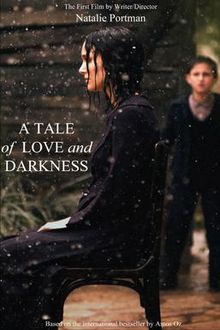
[I saw this film a couple years ago, but never posted a review. I will do so now, for no particular reason. 🙂 ]
I don’t feel fully qualified to review this film, because it’s in Hebrew, which I don’t speak. So I can’t comment on the actors’ delivery of their lines, or even on the script, since I’m basing it off of English subtitles that may not reflect the full meaning.
Even more significantly, Hebrew etymology itself is an important concept in the film, and I can’t be sure to what extent I grasped the word play that goes on. At one point, the narrator alludes to the fact that the Hebrew word for childlessness is related to the word for darkness, which is related to the word for forgetting. This leads me to suspect the title has more meaning in the original. (The film is based on the autobiographical novel of the same name by Israeli author Amos Oz, from which this passage is adapted.)
All that said, I’m going to do my best to review what I can, and let you know when I think my opinions might be colored by my ignorance of the language.
The film is told from the perspective of the young Amos Oz (Amir Tessler) and chronicles his experience growing up in what was then British Mandatory Palestine, which over the course of the film is partitioned by a U.N. Resolution and then falls into civil war.
This political element is mostly shown through glimpses and murmurs in the background, since Amos is a young child, and what he perceives first and foremost are incidents in his own family. His father Arieh (Gilad Kanana) and mother Fania (Natalie Portman, who also directed the film and wrote the screenplay) are his main influences. Both are well-educated and, in their own ways, teach him about language and storytelling. His father, a scholarly and bookish man, frequently lectures him about Hebrew words and their interrelated meanings.
Fania is a more romantic type than her husband, and early sequences show her fantasies as a girl growing up in Europe. envisioning Israel as the “land of milk and honey”, to be settled by heroic pioneers. In keeping with her imaginative nature, she tells young Amos stories—some fanciful and fairytale-like, others more depressing and realistic, such as the story from her childhood of a Polish army officer who committed suicide as she watched.
Amos also overhears things he shouldn’t—such as Fania’s mother berating her, causing the younger woman to slap her own face in shame, or Fania telling another grim tale of her youth in Europe: a woman who committed suicide by locking herself in a shed and setting it on fire.
The film shows these scenes, as imagined by young Amos, and you can’t help feeling these aren’t healthy for a child to hear. At the same time, even if you didn’t realize that Oz grows up to be a writer, it becomes very clear in watching the film that this is his calling—everything in his upbringing leads him towards it.
Gradually, as the film wears on and political upheaval takes its toll, Fania begins to succumb to depression. It’s a grim decline, as we see her slowly wasting away, but the film does a good job capturing the pain and frustration seeing a loved one with a mental health disorder brings upon a family. (Even more heart-wrenching is the fact that the doctors prescribe sleeping pills and other depressants—at the time, proper treatment for such disorders was not widely available.)
Fania goes away to her sisters’ home in Tel Aviv, and there overdoses on sleeping pills. In the closing moments of the film, we see Amos as a young man, meeting with his father at a kibbutz. Finally, we see an elderly Amos writing the word “mother” in Hebrew.
The overall film is haunting and evocative, with a gorgeous soundtrack by Nicholas Britell that captures the gloomy mood of Jerusalem, which Oz at one point likens to a black widow.
I did have some issues with the cinematography. It has that washed-out gray/green palette that is way, way overused in films these days—especially those set in the past. I would have preferred to see it in the normal range of colors.
However, while this was a drawback, I did think it very successfully communicated one thing about Jerusalem: its age. Throughout the film, but especially in the shots of the winding, narrow streets that Amos and his family traverse through the city, I could practically feel the weight of all the accumulated history of this ancient place. The film conveyed the mystical power of its setting, and gave a sense of why it is so important to so many.
Again, I don’t want to comment too much on the acting, since I was reading subtitles rather than listening to the speech, but it seemed very good indeed. Tessler is the standout—he had to carry the immense burden of seeming wise beyond his years while still behaving like a normal child, rather than The Boy Who Is Destined To Become A Famous Writer. And he manages it splendidly from what I can tell.
Small moments, like the sequence in which Arieh is celebrating that all five copies of his new book have been purchased, and Amos later sees all five, still in their wrapping paper, at the house of an author Arieh knows (either a friend or relative; I couldn’t tell which), are what stick in my mind. The man simply closes the shelf lid over the books and gives Amos a look that says “we will not speak of this”, without uttering a word.
I went to this film expecting it to be a downer—I knew that it ended with Fania falling into depression and ultimately committing suicide—and for a large part of the second half, it did feel excruciatingly bleak. Watching someone sit silently in the dark, overcome with psychological torment, while her family members suffer in impotent grief, while perhaps true to life, is not a pleasant cinematic experience, and that’s how the film trends for some time. I was ready to write it off as an interesting picture that drowns in mental anguish in the second half.
And then something amazing happened.
I want to write about it, because I haven’t seen many others address it—but I also hate to spoil it. So I’ll make a deal with you: if you haven’t seen the movie, but think you might want to, stop reading now and watch it. Pay particular attention to the scenes of Fania’s stories—the drowning woman, the woman in the shed, the Polish officer. Then come back and read the rest of this. If you’ve already seen it, or just don’t care to but read this far and want to know it all, read on.
What a crazy idea, to make a comedy about the death of Soviet dictator Joseph Stalin. But there is something about the absurdity of the overly-bureaucratized communist mass-murder machine that lends itself to dark humor—the petty logistical concerns and office politics familiar to white-collar workers everywhere, combined with the matters of life and death that concern a government, particularly a totalitarian one.
The film definitely plays this weird juxtaposition to the hilt right from the opening scene, in which Stalin (Adrian McLoughlin) calls the manager of a concert broadcast live over the radio to demand a recording of it. When the manager learns there is no recording, he frantically tries to reassemble the orchestra to perform it again. The piano player, Maria Yudina (Olga Kurylenko) initially refuses, but ultimately gives in when bribed. After the performance is finished, she places an insulting note to the dictator inside the record sleeve.
Intercut with this are scenes of Lavrentiy Beria (Simon Russell Beale), the head of Stalin’s secret police, dispatching his men to seize people from their homes and torture them in secret prisons. Beria holds immense power in the government, and when Stalin dies—on reading the note Maria has written—Beria is the first into his office, hastily removing important documents before other members of the Central Committee, including Nikita Khrushchev (Steve Buscemi), arrive.
They are reluctant to pronounce him dead, and even the doctors hastily assembled to examine him are hesitant to give their assessment. When they finally do, the Committee proceeds with Georgy Malenkov nominally in charge, but with all of the Committee members, Khrushchev and Beria in particular, jockeying for power.
Stalin’s children, Svetlana (Andrea Riseborough) and Vasily (Rupert Friend), arrive for their father’s funeral. Vasily repeatedly launches into drunken rages, attacks guards and makes wild threats. Beria keeps Khrushchev busy dealing with these matters while he moves to consolidate his power by putting the city under the control of the secret police, increases his popularity by pausing arrests, and seizes control of the train system, preventing people from entering the city.
Beria also reveals that he has the note that Maria wrote to Stalin. She is an acquaintance of Khrushchev’s, and Beria uses this to threaten Khrushchev, implying that he will use the note to incriminate both of them should Khrushchev try to cross him.
In frustration, Khrushchev orders that trains to Moscow resume running, causing people to enter the city and be shot by Beria’s secret police. The Committee argues over whether Beria or his lower-level officers should be blamed for this.
Meanwhile, Marshal Georgy Zhukov arrives in Moscow, annoyed to find his army confined to barracks. Khrushchev secretly strikes a deal with Zhukov to help him remove Beria from power during Stalin’s funeral. Zhukov agrees, on the condition that Khrushchev has the support of the entire Committee, which Krushchev manages to secure by bluffing that he has Malenkov’s backing.
At a Committee meeting after the funeral, Khrushchev signals Zhukov and his men to storm the room and arrest Beria. After much badgering from Khrushchev, Malenkov reluctantly signs off on the summary trial and execution of Beria.
The film ends with Khrushchev watching Maria play at a concert while Leonid Brezhnev (Gerald Lepkowski) looks ominously over his shoulder.
It’s an odd movie, with scenes of slapstick comedy (the Committee members awkwardly transporting Stalin’s body from the floor to his bed) mixed with more subtle satire, as in the sequences depicting Committee meetings, and one unforgettable scene in which Khrushchev and Vyacheslav Molotov (Michael Palin) are speaking contemptuously of Molotov’s presumed-dead wife Polina, who was arrested as a traitor to the Party, only to change their tone mid-sentence to singing her praises as Beria appears with her in tow, having released her from prison to secure Molotov’s loyalty.
The humor throughout is very, very dark: for example, there is a running gag in the scenes in the secret police prisons where we repeatedly hear prisoners off-screen exclaiming “Long Live Comrade Stalin!” followed by a gunshot.
But in addition to the sometimes over-the-top satire, the plot is that of a very tight and coherent political thriller, as Khrushchev and Beria joust for power. I went in expecting it to paint all the Soviet elites as villains in equal measure—and they certainly all do some nasty things—but in my opinion the film pretty firmly sides with Khrushchev as the hero and Beria as the villain. The former is depicted as vulgar and a bit corrupt, but reasonably well-meaning. (He reminded me, in both looks and manner, of a Don Rickles character.) It’s impossible not to root for him over Beria, who, besides all his other crimes as head of the secret police, is a sexual predator of the most evil sort. It is altogether fitting and satisfying that the most graphically violent death in the film is Beria’s execution.
As you might expect, the film is very controversial, and was banned in Russia and former Soviet States. A member of the Russian Culture Ministry stated: “The film desecrates our historical symbols — the Soviet hymn, orders and medals, and Marshal Zhukov is portrayed as an idiot.”
I can’t speak to the hymn, the orders, or the medals, but I will say that while Zhukov is certainly a caricature (he’s played by Jason Isaacs, whose hammy acting works much better here than in Harry Potter), for me, he was one of the most sympathetic characters in the film, after Khrushchev and Maria.
I would like to see a historian specializing in Soviet history do a thorough examination of what is and isn’t accurate in this movie. This article mentions some inaccuracies—notably, that Beria’s downfall was more protracted than the hasty arrest and execution depicted in the film. But that’s the sort of change that can be excused for the sake of the drama. I don’t know much about the Soviet Union post-World War II, but on cursory scanning of Wikipedia entries about the people and events depicted, I was surprised (and quite often disturbed) to learn how much of it was accurate.
Of course, the mark of a really good work of historical fiction is that it’s not just about the time period depicted, but that it contains observations about human nature that are relevant to the present-day. This is why, for example, the historical dramas of Shakespeare are still read and performed today.
So does The Death of Stalin contain any interesting lessons beneath the caricatures of historical enemies of Western capitalism and farcical depictions of Soviet state ceremonies? It’s hard to say. Maybe there is something about the dehumanizing effect that power has upon both those who wield it and those upon whom they exercise it. But that has been pretty well picked-over by people like George Orwell. The absurdity of bureaucrats administering lethal force? Joseph Heller covered that. So I’m not sure this picture brings anything new to the table in that regard.
Would I recommend seeing it? I don’t know. If you’re a Soviet history buff, it might be interesting to see what they got right and what they got wrong. If you like your comedy extremely black, then it might be worth a watch. But if you prefer uplifting cinema, or if you don’t like violence, or if you are offended by swearing, or–above all else– if one of your relatives worked for the Soviet Secret Police, then you should probably skip it.
This is a really weird poster. It looks like they are all hovering in the sky like Mary Poppins or something.
I’ll skip my usual plot-point-by-plot-point synopsis for this one–I think most readers are already familiar with World War II. Darkest Hour chronicles Winston Churchill’s (Gary Oldman) first days as Prime Minister in May 1940. Hitler’s armies are advancing through France and closing in on British forces at Dunkirk.
The film depicts Neville Chamberlain (Ronald Pickup), Churchill’s predecessor as Prime Minister, and Lord Halifax (Stephen Dillane) attempting to force Churchill to negotiate with Hitler. Churchill argues with them repeatedly, as the Nazis draw ever closer to Dunkirk, and the news grows more bleak by the day,
Churchill is on the point of giving in to the calls for negotiations when he makes a spontaneous (and apparently completely invented for the sake of the film) visit to the London Underground, where all the passengers he talks to are strongly in favor of fighting to the bitter end–bricklayers, new mothers, and children all are fiercely opposed to the idea of negotiating.
This is a major over-simplification of how public opinion works. I understand the scene was intended to convey that Churchill was in tune with the spirit of the people, but it just seemed ham-handed and unbelievable, which raises the question of why they bothered to invent the scene at all. Why make something up just to have it be the weakest part of the drama?
His faith in the British fighting spirit restored, Churchill makes his famous “We shall fight on the beaches” speech to Parliament. The evacuation of Dunkirk he ordered is a success, and the film ends with Churchill receiving overwhelming applause for his resolve.
The plot may be a bit thin, and of course, like all historical dramas, is hampered by the fact that we know what’s going to happen, but the performances of the major roles are all quite solid. Oldman does a terrific job, portraying Churchill as a flawed, temperamental man, capable of brilliant oratory as well as moments of confusion and depression. Kristin Scott Thomas is also very good as Churchill’s wife Clementine, although it seemed at times like the writer and/or director didn’t know what to do with her.
The big problems with the film were immersion-breaking things like the scene in the Underground, or another scene where they are playing a film reel to brief the Prime Minister, and the images displayed are fairly obviously what you get if you ask for “stock footage of Nazis”. (Why would Churchill, at a briefing about Dunkirk, need to see footage of Hitler giving a speech?)
Also, the cinematographer applied that grayish blue washed-out color filter that apparently everything set in England is supposed to have these days. This is far from the only movie to do this, so I don’t mean to single it out, but this desaturation business is getting tiresome. Can’t we just have normal colors?
Still, this is one of those movies that hinges on the performances, and those are certainly good enough to make it enjoyable.
In the days before CGI, epic war films were massive and costly undertakings. You wanted a shot of 10,000 guys marching across a field in full battle uniform? Well, you had to get them! You couldn’t just have Johnny the Computer Whiz draw them in after the fact.
As in actual warfare, there are innumerable logistical difficulties with re-creating these battles. You’ve got to have men in position, knowing how to use their equipment, and then film them as they maneuver in the field.
All that’s quite hard enough. But when you are making a film for wide release, you have to have all that plus a story the audience can follow, structured so as to play out in a coherent and satisfying way over the course of two hours.
It’s this last bit that’s really tricky, because while history offers plenty of incredible and compelling stories, they rarely fit into neat three-act schemes that can be concisely portrayed in a couple of hours.
Waterloo starts out well, showing Napoleon’s abdication to Elba in 1814 and subsequent return in 1815. Especially memorable is the moment when the Emperor walks alone to face his former soldiers, now under orders to kill him, and through sheer bravery and charisma wins them back over to his side. This is one part of the Napoleonic legend that seems made for the movies, and it certainly is a high point of the film.
After that, however, problems arise in this dramatization of the final chapter of Bonaparte’s career. There are unnecessary voice-overs in which Napoleon (Rod Steiger) thinks in exposition for the benefit of the audience. Many lines of dialogue uttered by officers on both sides seem like they were lifted from history books and changed to the present tense.
An inordinate amount of time is spent on Wellington’s staff at the Ball hosted by the Duchess of Richmond. This scene also includes the introduction of a totally fictional and pointless love story that goes nowhere. The only upside is the chemistry between Wellington (Christopher Plummer) and the Duchess (Virginia McKenna).
“Old Boney’s advancing on Quatre-Bras… IF you know what I mean.”
The film dwells on things like this, Napoleon’s illness, and some peculiar episode involving a British soldier stealing a pig, and yet glosses over incidents like the Battles of Quatre-Bras and Ligny with a couple lines of dialogue.
It’s not that the film is inaccurate–indeed, they seem to have gone to some lengths to describe things in historically correct fashion. (Except for the romance and a reminiscence about Major-General Ponsonby’s father) The problem is that the film depicts these events in a strange and sometimes incoherent manner.
The biggest technical flaw is probably the mud. The battle was famously delayed by wet ground after a rainy night, and indeed the film states this correctly. Where it falls down is the fact that the ground we see on screen is demonstrably dry, as evidenced by the huge clouds of dust kicked up by the columns of cavalry and infantry.
The end result is the comical visual of a frustrated Napoleon sinking in an obviously artificial mud puddle while all around him is a vast expanse of dry land. The fundamental historical fact is correctly depicted, but not in a dramatically effective way.
There are lots of issues like this. After Marshal Ney’s ill-fated cavalry charge against the famous infantry squares, Napoleon rushes back to the field from his sickbed, crying, “What is he doing? Everyone knows not to make a cavalry charge without infantry support!”
While completely factually accurate, this seems unlikely to be what Napoleon actually said at the time. It comes across as a line delivered for the benefit of audience members who aren’t familiar with the battle of Waterloo.
And this is the other difficult thing about making historical movies: balancing the history lesson aspect with the need to depict real characters, as opposed to instructional puppets designed to illustrate a historical lecture.
Chances are, if someone is watching the movie Waterloo, they are already a Napoleonic history fan. Sure, there might be the occasional viewer who is an ardent follower of Rod Steiger or Christopher Plummer, but if I were overseeing the production, I would make the executive decision that any viewer who doesn’t already know how the battle went is just going to have to piece it together as best they can–no reason the script should go out of its way to help them out.
Despite all of that, the movie isn’t horrible. As an instructional device, it is not bad, and there is something inherently impressive about seeing huge lines of soldiers and horses advancing across a smoky field. It gives you some vague hint of what it might have felt like to be in the battle.
It’s just that the film lacks a dramatic narrative. Napoleon and Wellington don’t “come alive”; they just repeat their famous quotes and stoically watch the battle. Because of this, it feels more like a recording of an elaborate re-enactment rather than a truly epic historical drama.
I don’t have much time to read these days. For this reason, I find audiobooks really convenient–I can listen to them while I’m doing something else. It’s a real time-saver.
So it occurred to me that I’m probably not the only person who doesn’t have time to read much. And that led me to realize maybe my readers would find it convenient to have audio versions of some of my really long posts.
While recording some of the poetry readings I’ve posted, I also recorded a reading of one of my recent posts on geopolitical and religious history. (The original post is here.)
And so now you can listen to me pontificating about various subjects while you are doing other things. It’s like having a little Ruined Chapel RSS feed running in your mind, as if a dystopian government had placed a propaganda chip in your brain.
Uh… bad analogy. Never mind. Anyway, try it out if you like.
Historians are familiar with the “Miracle of Dunkirk”: the fact that Hitler ordered a halt to the Nazi advance, allowing the British time to evacuate men from the port. Some argue that had the British been annihilated at Dunkirk, they would have surrendered to Germany. At any rate, saving all those men was obviously a huge boon for the Allies.
What’s less clear is the reason for the Nazi “halt” order. Some say it was given because Hermann Goering, head of the Luftwaffe, wanted a chance to demonstrate that air power could annihilate the enemy, and wanted ground forces to halt so eh could make his point. (Which he then failed to do.)
Others argue that the order was given because Hitler, being a megalomaniac, wanted to make it clear that he was the one in charge, and by ordering his generals to halt, he could demonstrate supreme authority.
Still others say it simply came down to a matter of logistics. German armor had advanced so far so rapidly that their supply lines were stretched too far, and they needed to stop to be re-supplied.
Still others argue it was because the Nazis, caught up in their pseudo-scientific, quasi-mystical racial delusions, saw the British as being of the same or similar “race”, and were reluctant to annihilate them, preferring they should surrender with few casualties and become part of the Aryan empire they envisaged.
Whatever the reason, the order was given, and it was obeyed. And that’s the part I find interesting.
Image via Wikipedia
The German advance through France had been led by the rather sinister-looking fellow pictured at right, Heinz Guderian. Guderian was famously a proponent of advancing very fast and unrelentingly surprising the enemy with speed. It’s probably partially thanks to his style that the term blitzkrieggot so famous.
Guderian was also not hesitant to ignore orders. Higher-ranking officers were shocked by just how quickly he was moving through France, and ordered him to halt. Guderian would ignore them and advance anyway, looking to press his advantage and not give the French time to regroup.
So, my question is: why did Guderian finally obey the order to halt at Dunkirk, when he had a golden opportunity? It seems wildly out of character for him. Was it simply that an order from Hitler himself he felt he had to obey? Had he in fact stretched his supply lines to the breaking point, and really was incapable of continuing to press the attack?
It’s nothing more than a footnote in the larger historical context, but it’s very interesting to me.
The movie Jackie is only partially about the title character, First Lady Jacqueline Kennedy. (Natalie Portman) Ironically, it is categorized as a historical biopic when in fact it is an exploration of public relations, image vs. reality in politics, and, in some ways, the nature of Truth itself.
That does not mean Mrs. Kennedy is not featured prominently–she is in nearly every scene, and often in extreme close-ups. Especially in the film’s opening half, we see her raw emotion in response to the assassination of her husband.
But as the film makes clear from the framing device–a reporter, (Billy Crudup) interviewing Mrs. Kennedy in the days after the assassination–it is focused on the role of media and appearance in politics, and ultimately in history. During the occasionally combative interview, she explains not only her emotional state, but also the ways in which she sought to shape the perception of her husband’s legacy.
This segues to flashbacks, first to a televised White House tour given by Mrs. Kennedy in which she discusses various historical Presidential artifacts which she has restored to the White House. This tour really did take place, and the filmmakers clearly went to some trouble to recreate it.
From here, the film next shows us the fateful trip to Dallas, and Mrs. Kennedy’s grief and horror in the aftermath. But even in these circumstances, political intrigue continues, as we see glimpses of the tension between Robert Kennedy and the newly sworn-in President Lyndon Johnson.
As Robert and Jackie ride with JFK’s coffin in Washington, she asks staff members if they know anything about Garfield or McKinley. They don’t. She then asks what they know about Lincoln, and they respond that he won the Civil War and freed the slaves. She then decides that she will model her husband’s funeral on Lincoln’s, to ensure his memory lives on as Lincoln’s did.
In one memorable sequence, we see her wandering the empty halls of the White House, listening to John Kennedy’s favorite record, the recording of Camelot, while drinking and taking pills as she is overwhelmed with grief.
Planning for the funeral continues, and Jackie makes clear her desire to have a long procession–a grand spectacle, that will capture the attention of the entire nation watching on television, and preserve Kennedy’s legacy. However, the Johnson administration is hesitant to do so, because of the security risk.
When Oswald is shot by Ruby, it confirms the risk to Mrs. Kennedy, and she decides not to have the procession on foot and go by motorcade instead. She shouts at Robert Kennedy in frustration, berating him (and by extension all politicians), for being unable to know what’s going on or keep anyone safe, despite all their power.
But later, as they are sitting in the empty White House, it is Robert’s turn to rage in frustration at the apparent wasted opportunity of his brother’s tragically ended administration. As she listens, Jackie makes up her mind that his death will not be in vain, and goes to Jack Valenti to tell him the procession will be on foot after all.
Valenti tells her that the problem is that foreign dignitaries–specifically, Charles de Gaulle–are afraid of the risk. Jackie replies that she wishes to let it be known that she will go on foot, but if de Gaulle wishes to ride “in an armored car, or a tank for that matter” she will understand, and pointedly adds that she is sure the national television audience will as well.
Bowing to this implied threat of public humiliation, they accede to Mrs. Kennedy’s wishes and proceed on foot.
Interspersed with all of this, in addition to her exchange with the reporter, are scenes of Jackie conversing with her Priest. (The late, great John Hurt). She is understandably having a crisis of faith, and pours her feelings out to him. He tries to console her, but in the end even he can give no satisfying answer to why God inflicts such suffering as has befallen Mrs. Kennedy and her family.
As their interview concludes, the reporter assures her that she has preserved Kennedy’s legacy as a great President. She tells him there’s one more thing, “more important than all the rest”, and relates the late President’s love of the musical Camelot, quoting the lines: “Don’t let it be forgot/That once there was a spot,/ For one brief, shining moment/That was known as Camelot.”
The film ends with this song playing over flashbacks of the White House tour and the Kennedys dancing together.
II. Review; Praise and Criticism
The film is very powerful, but also strangely disjointed. It can be hard to keep track of where action takes place even in the narrow time frame the film covers, so quick are the cuts to different moments.
Early on, there are many tight close ups on the face of the grieving widow, and long scenes of her cleaning the blood from her face and hair. These scenes are shocking, but seemed unrelated to the film’s larger theme.
The best scenes are those of the journalist interviewing Mrs. Kennedy. There is a tension between the two, who seem to strongly dislike one another, and Mrs. Kennedy’s harsh editing and commentary on what the reporter is and is not allowed to print starkly make the point about using the media to create a narrative–a point that seems especially relevant in light of recent political events.
In general, the acting is quite good. Peter Sarsgaard as Robert Kennedy is terrific, Hurt is very good, as he always was, and Billy Crudup is excellent as the journalist. The only actor who did not really seem right was John Carroll Lynch playing Lyndon Johnson, and this was not really an issue of his acting–which was quite fine–but simply his extreme non-resemblance to Johnson. There were times when I did not know who he was for parts of scenes.
This brings me to the star of the piece. Faithful readers know that Portman is my favorite actress, and it is because she is in this movie that I have followed it so closely.
Her performance is very good, and her Academy Award nomination is well-deserved. That said, all the talk that this is the greatest performance of her career is overblown–indeed, I would argue it is not even her greatest performance in a movie released in 2016. Her roles in Jane Got a Gun and A Tale of Love and Darkness (which Portman also directed) allow her far more range and depth.
There is however one very notable feature of her performance which, despite all the press about it, I have not seen mentioned in any reviews. That is the difference between how she plays Kennedy in the flashbacks and in the “present day” interview with the journalist.
In contrast to the panicked, grief-stricken widow of the immediate aftermath, in the interview scenes she seems about 20 years older, even though only a little time has elapsed. Her tongue is sharper and her attitude more bitter. The contrast is very noticeable, and quite effective at conveying the pain Jackie endured.
The single biggest problem with the film is its script. It is not uniformly bad–it is not even mostly bad–but when it is bad, it is absolutely dire. This might be worse than if it had been bad throughout, because it makes the really terrible lines stick out all the more.
At one point, someone advises Jackie to take her children, leave the White House quietly, and “build a fortress in Boston and disappear”.
Who the hell talks like that?
At another point, Robert Kennedy says that walking by the Lincoln bedroom reminds him that “one ordinary man signed an order that freed millions of people.” This is a rebuttal to Jackie saying it feels “peaceful”.
One scene was so bizarre I almost wonder if it really does have some basis in fact: aboard Air Force One, after the assassination, Jackie is asking about the bullet that killed her husband. “It didn’t sound like a .38” she says. “It sounded like a bigger–what do you call it?–caliber, like soldiers use.”
First of all, I find it hard to believe she would talk about the bullet. Second of all, I find it even harder to believe she would be able to tell if it was a .38 or not. And thirdly, if all that did happen, I think she wouldn’t then say “what do you call it” and be unsure of the word “caliber”.
Another example: when Jackie and Robert are walking through Arlington cemetery to select the grave site, Jackie is obviously having difficulty walking through the mud in her high heels. Robert asks her what’s wrong, and she says her shoes are getting stuck in the mud.
There’s no reason for her to say this. It was clear enough to the viewer; so why include the line?
The Priest says lots of things that I highly doubt any Priest would ever say, least of all to the President’s widow. Even the scenes with the interviewer, strong as they are, have some ham-handed lines, such as when he awkwardly raises the subject of the White House tour film that introduces the flashback.
The musical score is just flat-out weird. It is primarily a growling, synthesized noise that is sometimes appropriately foreboding, but at other times is just annoying. Sometimes it overpowered scenes of the grieving Jackie in instances where silence would have been far more effective. (As if to drive this home, later in the movie many scenes have no soundtrack, and these are much better.)
The cinematography, on the other hand, is very good throughout. There are some beautiful shots of Washington D.C. and the White House interior, and the scenes at Arlington are appropriately grim. And best of all is a scene of Jackie and Robert talking about the funeral in the gloomy November twilight. The scenery, make-up, costumes and acting all make it feel very real and immediate.
This all adds up to a wildly uneven picture. Just when it gets good, some jarring line throws it off, and just as it seems about to run off the rails completely, the cinematography or acting grabs your attention again.
I would be tempted to say it’s a mess with great acting and cinematography. If that were all there was to it, I could end the review now and just say, “See it if you are a Kennedy history buff or a Portman fan; otherwise, skip it.”
But that would ignore something. Which brings me to the third and most complicated aspect of this thing…
Denial is a courtroom drama about the libel lawsuit filed by author David Irving (portayed by Timothy Spall) against Prof. Deborah Lipstadt (portrayed by Rachel Weisz). Irving sued Lipstadt for calling him a “Holocaust denier” in one of her books. Because Irving brought the case in England, the burden of proof is on the accused, and so Lipstadt and her legal team are required to prove Irving knowingly lied in denying the Holocaust.
As part of the research for the trial, Lipstadt and her lawyers go to Auschwitz, where her barrister, Richard Rampton, asks a series of matter-of-fact questions about the camp and the methods of killing. This makes Lipstadt very uncomfortable, but Rampton argues it is necessary to build their case.
As the trial begins, it is clear that Irving is a master of public relations. He acts as his own lawyer, against Lipstadt’s well-financed legal team, to cast himself as an underdog and create a “David vs. Goliath” image.
As part of their strategy, Lipstadt’s lawyers don’t allow her to speak at the trial, or to the press. They also refuse to allow Holocaust survivors to speak, even after Lipstadt is approached by one, pleading with her to allow their voices to be heard.
Lipstadt is greatly distressed by this. But as Rampton explains, these are the sacrifices they must make. “It’s the price you pay for winning,” he tells Lipstadt. The goal is to make the trial not about the Holocaust, but about Irving himself.
The strategy works well, and gradually they begin to expose Irving as an anti-Semite, and his “historical errors” as deliberately calculated to paint Hitler in the best possible light. Ultimately, their strategy succeeds, and Irving is ruled to have knowingly lied to deny the Holocaust.
The victory is satisfying, but Irving remains a genius at the dark art of “spin”–after the verdict is announced Lipstadt watches as Irving is interview on television saying that he obviously beat Lipstadt’s legal team, but was just not forceful enough to convince the Judge.
Although the ending of the film is as upbeat as one could expect, given the subject matter, there is a certain subtext that suggests Irving may have lost in court, but will use his skills as a showman to win with the press. I’m not even sure if the filmmakers intended this, but Irving is portrayed as a shrewd and manipulative man, and the implication seems to be that he–and others like him–could continue to trick uninformed people.
The acting is terrific throughout. Rachel Weisz is brilliant as Lipstadt, right down to her Queens accent. Timothy Spall plays Irving as a man of intelligence and a veneer of “old English gentleman” charm masking a core of hatred. Every performance is excellent.
The script is not bad, but at times tries too hard to be clever and snappy (a common flaw in dramas nowadays), and too often has characters blatantly stating exposition or background information for the benefit of the audience.
The annoying wordiness of the script is compounded by the fact that some of the film’s most powerful scenes are the ones where the characters don’t speak. The scenes at Auschwitz are every bit as powerfully haunting as they should be, without any words being necessary.
Of course, a courtroom drama is bound to have some talking, and the script is certainly good enough when it needs to be. The trial scenes are riveting, even knowing the outcome.
It’s a dark film, and not only because of the Holocaust subject matter, but also because of its depiction of how the bigot Irving advances his agenda with lies and clever manipulation of the press and public alike. The concept of truth itself comes under attack from Irving, and Lipstadt is forced to confront the possibility that to even respond would be to lend him legitimacy.
Overall, a very good and interesting film. I recommend it. It prompted me to do more research regarding Irving, the lawsuit, and the subject of Holocaust denial generally. I have a lot more to write on those topics, but that will be a separate post.
For the second time in a week, I’m posting something I wrote years ago. This one isn’t nearly as fun as “The King”, though.
But first, some background: I got into a debate with someone the other day about the treatment of Germany after each of the world wars. To summarize: her position was that Germany was treated harshly after World War I, leading to the rise of the revenge-based Nazi party, which in turn led to World War II. After that war, the Allies didn’t punish Germany as harshly, to avoid another Nazi-like revenge effort. The lesson, she argued, was that it was better to be charitable to defeated enemies, rather than being vengeful and vindictive.
My view is a little different. And I know a bit more than most about this, because I had to write a term paper about it in college. I’m going to post a section of it here to give my thoughts on this topic. (Be warned, it’s full of irritating jargon as a 19-year-old undergrad tried to write like the professors he’d been reading.)
***
There are several potential reasons for the differences in the treatment of Germany after World War II compared with World War I. The first and most obvious is that Germany suffered far more direct damage as a result of World War II. Many German cities were destroyed in addition to the number of lives lost. In addition, the destruction of the German government was more complete than after World War II; the elites could not be said to be left intact this time. These facts alone may explain in large part why the allies felt the need to aid the German recovery more than they did post-World War I. Also, it may have been thought that in the wake of this utter defeat, the German people had, in essence, learned their lesson. The allies may have felt they had “finished the job”, unlike after World War I.
Another reason is the dynamics of Europe after World War II. The Soviet Union and the United States, though allied in the war, immediately were at odds by the end of it. As the Soviet Union comprised Eastern European countries and even had control of East Germany, the U.S. felt that West Germany was an important strategic zone in the coming “Cold War”, and that Germany could not simply be abandoned but needed instead to be rebuilt in order that the West could have a presence in Europe to counteract the Soviet Union.
A third potential reason is the results of the treatment of Germany in the aftermath of World War I and the now apparent results. The harsh treatment of the German population after the first war had been a major factor that led to the second one, and the allies did not wish to repeat those mistakes by once again giving Germany a reason to want to acquire more territory. Of course, it is questionable, in my opinion, whether this would have been a realistic goal of Germany no matter how they were treated after the war. The devastation brought upon the infrastructure during the war was such that it would have suppressed German aggregate supply. This would mean that, far from wishing to acquire more resources, the Germans would have, without considerable help, been reduced to a poor, almost less-developed country that would be unable to rebuild for war. Furthermore, the demise of much of the population would have a decreasing effect on aggregate demand—the opposite of the scenario described above, in which a growing population increases aggregate demand, thus fueling the desire for “lebensraum”.
Because of the factors outlined above, it was imperative that the allies, led by the U.S., aid in the reconstruction of Germany. In the aftermath of World War II, the allies ordered many businesses in Germany to close. These only slowly, after a licensing process, were reopened. (Berge & Ritschl, 1995, p.9) Initially, a program of “de-Nazification” was implemented, though scholars have questioned both its effectiveness and the allies commitment to it in view of the Soviet threat. (Herz, p.1) The allies disbanded the German army in 1946. The Morgenthau plan was proposed, which essentially would have “returned Germany to a rural state”, in the words of Jeffry Diefendorf.(Diefendorf, p. 244.) The goal of this plan had been to make all industrial centers of Germany “international zones”, with all German territory becoming farmland. This plan was implemented to some extent initially, though later it was phased out, in favor of the Marshall plan. From 1948 to 1951, the U.S. contributed an estimated $1.4 billion to west-occupied parts of Germany under the Marshall plan. (Delong & Eichengreen, 1991, p.14)
[NOTE: I’ve cut out a lengthy section on the economic details of Germany both pre- and post-war. It uses a bunch of jargon and data unrelated to my present point. If you wonder why you see some stuff in the references that’s not cited in-text, that’s why.]
As mentioned above, after World War I, the United States’ desire to get out of the war quickly had led to a Peace that left the German elites intact, with the burden of the punishment for the war falling mainly on the civilian population. In contrast, in the wake of World War II, the German leadership was forced to suffer much more, and the population was given aid to rebuild. This is another key shift in attitude that contributed to the difference in treatment.
It would be remiss to omit the Soviet policy towards East Germany form this paper altogether. The Soviet Union’s treatment of East Germany was fairly harsh, as dismantling programs—discontinued in the West after 1947—continued past that point in the East. From this alone it appears that the Soviet Union, whether due to the nature of economic limitations, or else an unwillingness to do so out of a desire to punish Germany—the Soviet Union approved of and benefited from the harsh Morgenthau plan (Dietrich, p.14)—it appears that the Soviet Union’s treatment of East Germany was unable produce them same results as those produced in the West.
My own analysis, very broadly speaking; is that there are two points of view with regard to the reasons for the difference in treatment—one is of a more optimistic tone, the other pessimistic, or at least cynical. The optimistic explanation is that the allied forces decided that it was necessary to help the Germans to avoid again fostering a sentiment that they had been unjustly punished in some way. In this view, the lesson is that simple defeat is not enough; it is necessary to build relations and help the defeated enemy.
The pessimistic view is that it was necessary that Germany first be indisputably defeated militarily. While it may have helped matters, in the wake of the first War, if, for example, France had not demanded such exorbitant reparations; it would nonetheless be true that Germany had not suffered direct, total defeat, and thus any armistice would have seemed like a surrender. In this view, it was necessary that Germany suffer firsthand the effects of a large war on its own soil, and be defeated completely. In economic terms, the costs of war needed to be extremely high before Germany would ever abandon it. Only after this had occurred could Germany be rebuilt.
References
Berger, Helge & Ritschl, Albrecht. Germany and the political economy of the Marshall plan. 1947-1952: a re-revisionist view. In Europe‘s Post-war Recovery by Barry J. Eichengreen 1995. Published by Cambridge University Press,
Bessel, Richard. Germany after the First World War 1993. Published by Oxford University Press. Page 96.
Burdekin, Richard C.K. & Burkett, Paul. Money, Credit, and Wages in Hyperinflation: Post-World War I Germany. 2007. Economic Inquiry. Volume 30 Issue 3, Pages 479 – 495
DeLong, J. Bradford & Eichengreen, Barry. The Marshall Plan: History’s Most Successful Structural Adjustment Program. In Postwar economic reconstruction and lessons for the East today by Rüdiger Dornbusch. Published by MIT Press
Diefendorf, Jeffry M. In the wake of war 1993. Published by Oxford University Press. Page 244.
Dietrich , John The Morgenthau Plan: Soviet influence on American postwar policy 2002. Algora Publishing.
Statisitsche Reichsamt, Zahlen zur Geldentwertung in Deustchland 1914 bis 1923. Quoted in Bessel, Richard. Germany after the First World War 1993. Published by Oxford University Press. Page 95.
Fischer, Conan. The Ruhr Crisis, 1923-1924 Oxford University Press, 2003
Eichengreen, Barry. Institutions and economic growth: Europe after World War II. In Economic growth in Europe since 1945. Crafts N. F. R, Toniolo, Gianni. 1996 Cambridge University Press.
Heinz-Paque, Karl. Why the 1950s and not the 1920s? Olsonian and non-Olsonian interpretations of two decades of German economic history. In Economic growth in Europe since 1945 by Crafts, N. F. R, Toniolo , Gianni 1996.
Herz , John H. The Fiasco of Denazification in Germany. 1948 Political science Quarterly. Vol. 63. No. 4. pp. 569-594
Keynes, John Maynard. The Economic Consequences of the Peace 1920. Harcourt, Brace & Howe. Inc.
Klein, Fritz. Between Compiegne and Versailles: The Germans on the way from a Misunderstood Defeat to an Unwanted Peace. In The Treaty of Versailles: A reassessment after 75 years. By Manfred Franz Boemeke, Gerald D. Feldman, Elisabeth Gläser Pages 203-220.
Myerson, Roger, B. Political Economics and the Weimar Disaster Journal of Institutional and Theoretical Economics 160 (2004), 187–209
Ritschl, Albrecht. An exercise in futility: East German economic growth and decline 1945-90. In Economic growth in Europe since 1945 by N. F. R, Toniolo , Gianni (Cambridge: Cambridge University Press) 1996.
Ritschl, Albrecht. The Pity of Peace. Germany’s economy at War 1914-1918 and Beyond. December 2003. In The Economics of World War I by Broadberry, S.N. and Harrison, Mark. 2005. Cambridge University Press.
Svenson, Jakob The institutional economics of foreign aid Swedish Economic Policy Review Vol.13 (2006) 115-137
Shuster, Richard J. German disarmament after World War I: the diplomacy of international arms inspection, 1920-1931 2006. Published by Routledge. Page 56.
Taylor, A. J. P. The origins of the Second World War 1996. Simon and Schuster
Footnotes
MV = PY where M = Money in circulation, V = the Velocity of money, P = the Price level, and Y = index of goods. i.e. GDP.
“Militaristic Keynesianism” is the concept of boosting aggregate demand through increasing military expenditures.
 Most histories of Napoleon’s downfall begin with his disastrous invasion of Russia, and at first glance, this seems appropriate. Napoleon suffered huge losses, failed to gain much of anything, and never won a campaign again after the invasion. It seems like the obvious point where his fortunes turned for the worse.


 Despite all of that, the movie isn’t horrible. As an instructional device, it is not bad, and there is something inherently impressive about seeing huge lines of soldiers and horses advancing across a smoky field. It gives you some vague hint of what it might have felt like to be in the battle.

