Colors of the DeadI picked this book up after Kevin Brennan blogged about it. I assumed it was about a planet of zombies or something. I don’t like zombie stories much, but I figured I’d give it a whirl.

My initial impression was kind of off. I was picturing explorers being chased by zombies on a remote planet, and that’s not exactly what happens. There are space explorers, and there are zombies, and there is a remote planet… but it all combines in a surprising and interesting way.

What really stands out to me about this book are the characters: the space explorer Derek Rain, leading an expedition to the distant world of Draconis IV. His girlfriend Lydia Torch back on Earth, trying to cope with the guilt she feels after surviving a horrific space exploration accident of her own. A young orphan boy named Kito being raised by nuns. Prisha, the sister of one of Rain’s expeditionary crew, stuck back on Earth caring for her elderly mother.

Each of these characters’ threads gradually draw together, beginning with Rain and his crew making an unsettling discovery on Draconis IV. Soon, apocalyptic events begin to erupt back on Earth. I wasn’t entirely off-base with my assumptions about this book, and there are some gory zombie apocalypse scenes. There are really two different styles of horror here: the undead-armageddon scenes on Earth and the Alien-esque sense of isolated dread on Draconis IV. There’s also another sequence in the desolate badlands of Earth that has a vaguely Mad Max feel to it. 

The plot is perfectly-paced, with tension escalating in every chapter, and the different strands of the story are expertly balanced. I could picture the action unfolding as I read, and I found myself feeling almost as though I were watching a movie. 

Without spoiling too much, I’ll just say the ending struck just the right note–a satisfying resolution that also leaves the reader pondering what comes next. And it even raises some existential and philosophical questions to think on, in the vein of classic Arthur C. Clarke-style sci-fi.

Now, as I said, I’m not a huge fan of the zombie genre in general, and some of the violent and gory scenes I could have lived without. Not that they were bad; just not to my taste. But the story and characters were so good I could deal with it. And fans of that brand of horror will undoubtedly find this story a real treat. 

Simply put, this is a fantastic book. It has great characters and a magnificently constructed plot. Fans of horror, science-fiction and action-adventure alike can all find plenty to enjoy here. It deserves to be widely-read, and frankly, I’d love to see it adapted for the screen. In addition to Alien and Mad Max, it also had parts that evoked Predator, Jurassic Park, Annihilation and The Mummy. It’s an absolute masterpiece of sci-fi horror.

John_Quidor_-_The_Headless_Horseman_Pursuing_Ichabod_Crane_-_Google_Art_Project
The Headless Horseman Pursuing Ichabod Crane, by John Quidor (1858)

“The Legend of Sleepy Hollow” is a short story, originally published in The Sketch Book of Geoffrey Crayon, Gent. “Geoffrey Crayon” being a pseudonym of Washington Iriving.

It tells the story of Ichabod Crane, a schoolteacher in a region of New York known as Tarrytown in the early 19th-century. He is—if I may cut through the florid 19th-century lingo—kind of a jerk. He’s mean to his students, unless he sees an opportunity of mooching free meals off their mothers or flirting with their older sisters. 

Eventually, Ichabod’s fancy is caught by Katrina Van Tassel, the daughter of the wealthy Baltus Van Tassel. One thing  that’s interesting is that Ichabod seems to be interested in her largely for a wealth—whether he has affection or even mere lust for her seems beside the point.

But another of Katrina’s suitors, the large, vigorous, Brom Bones (actually Brom Van Brunt, but his nickname is Brom Bones) does not take kindly to the girl he’d been wooing spending all her time with the awkward schoolmaster. 

These are the three main characters, and they’re all kind of humorously unlikable. Ichabod is a selfish moocher, Katrina is a vapid tease, and Brom is what we would today call a jock frat boy. The main body of the story is more like a sit-com than a ghost story.

The ghost aspect comes from the setting—Tarrytown, a sleepy, dreamy village in the Hudson valley where, Irving tells us:

“…population, manners, and customs remain fixed, while the great torrent of migration and improvement, which is making such incessant changes in other parts of this restless country, sweeps by them unobserved. They are like those little nooks of still water which border a rapid stream where we may see the straw and bubble riding quietly at anchor or slowly revolving in their mimic harbor, undisturbed by the rush of the passing current.”

In other words, it’s a place that seems removed from modernity—modernity, in this case, being 1820. Even when Irving wrote the story, “Sleepy Hollow” was hearkening back to an earlier era. No doubt he was targeting those 1790s kids who felt nostalgic for their childhood.

Anyway, things culminate with Ichabod going to a large harvest party at the sprawling Van Tassel farm, where folks swap ghost stories, such as the one about “The woman in white that haunted the dark glen at Raven Rock, and was often heard to shriek on winter nights before a storm, having perished there in the snow.” And finally, of course, the region’s most popular legend: the story of a ghostly Hessian soldier who, having lost his head to a cannonball in the war, rides forth each night in search of a replacement. 

Ichabod, who is a devoted reader of Cotton Mather, is much troubled by such tales. He leaves the party in a state of agitation, and our narrator suggests that perhaps Katrina has dumped him, although this is ambiguous. At any rate, Ichabod is riding home alone, feeling rather miserable when he encounters a huge, headless rider mounted upon a black horse.

Furiously, Ichabod urges his own horse towards the old church bridge, which, according to a story of the horseman related by Brom Bones, the horseman will not cross. Ichabod successfully manages to cross the bridge and turns just in time to see the horseman hurling his head at him. 

Yes, that’s right—his head. The horseman carries his severed head with him on his saddle. And this is where the story becomes a bit ambiguous because the next day, as the townsfolk investigate Ichabod’s sudden disappearance, they do not find a head at the old church bridge, but do find the shattered remains of a pumpkin. 

The story is deliberately vague after that—while Ichabod is never seen again in Tarrytown, some say he simply moved, and is alive and well in another part of the country. Brom Bones—who, we are told, marries Katrina, looks “exceedingly knowing” whenever anyone brings up the subject of Ichabod, suggesting that perhaps the notorious prankster had simply disguised himself as a headless horsemen, seeking to frighten off his rival.

Of course, the more superstitious residents of the town believe that Crane became a victim of the ghostly Hessian. And after all, since we already have strong reason to think Ichabod was spurned by Katrina at the party, why would Brom have even needed to pull such an elaborate stunt? (Unless he was just adding injury to insult, which would be exactly the kind of move we might expect from Brom.)

This brings me back to what I think is the most curious thing about this story: it plays out like a romantic comedy—or more accurately, one of those anti-romantic comedies where all the characters seem self-absorbed, and the comedy results from the interplay of their attempts to get what they want. In fact, if you take away all the supernatural elements and think of it in modern terms, it’s basically a mean-spirited high-school comedy, where the rich cheerleader and the superstar quarterback screw over the know-it-all nerd.

Which seems like the sort of thing that might actually happen, and indeed almost makes me wonder if the eponymous “Legend of Sleepy Hollow” isn’t the thing about the headless ghost at all, but rather the legend of a love triangle that ended in a bizarre prank. In other words, it seems almost like the sort of thing that could have actually happened. Apparently, Irving did know people named “Ichabod Crane” and “Katrina Van Tassel.” Real-life Ichabod Crane was a captain in the army, not a schoolteacher, but real-life Katrina seems to have been more or less like the character in the story, which again makes me wonder how much of this was based on real events or gossip Irving picked up. 

But obviously, it’s the ghost aspect that has made this story famous. And is it ever famous! It’s one of the first and most iconic pieces of post-revolution American literature, and has been adapted many, many times. (More about that later this month.) There are places all over the country named “Sleepy Hollow.” Ichabod and the ghostly Hessian are commemorated on postage stamps and in statuary. Most people know the story even though they never read the original. It’s the quintessential American ghost story.

October is my favorite month, and Halloween is my favorite holiday. If you’re like me, you probably want some good books to read for the season. Here are a few recommendations.

Harvest: A Short Story from the Pumpkin Patch by Jason H. Abbott. This is a fun short story, a little bit spooky and a little bit sweet, about a couple of characters who find they have a lot in common. Here’s my full review.  

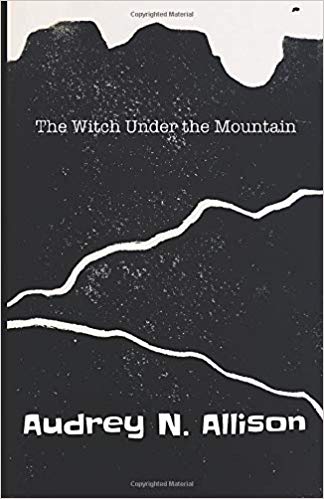
The Witch Under the Mountain, by Audrey N. Allison. A father tells his young daughters a bedtime story about an evil witch that proves to be more than just a legend. Fun for all ages, and great artwork too. My full review is here.

The Bone Curse, by Carrie Rubin. The first in Rubin’s Benjamin Oris series, this book is a supernatural medical thriller that forces its protagonist to question whether the horrors he encounters have a rational explanation, or stem from a centuries-old Vodou curse. Serious horror–Stephen King fans will love it. Full review here.

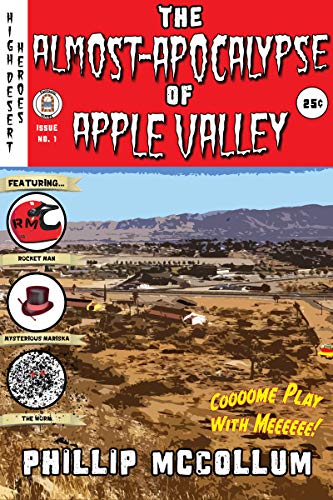
The Almost-Apocalypse of Apple Valley, by Phillip McCollum. Another one for Stephen King fans, this book combines ’80s nostalgia with supernatural horror, as four kids must confront a horrible evil plaguing their town. I’ve not done a full review of this book, but here’s my mini-review: It’s very good.

Jersey Ghost Stories by Erren Michaels and Noah Goats. A collection of ghost legends from the island of Jersey. Some are creepy, some are gruesome, some are poignant, and all are haunting. My full review.

The Friendship of Mortals by Audrey Driscoll. Book 1 in Driscoll’s splendid reimagining of H.P. Lovecraft’s Herbert West character, this book tells the story of a scientist obsessed with revivifying the dead, as told by his less gifted, but more moral friend. My full review.

The Raven and Other Tales by Joy V. Spicer. A collection of short stories, some of which are re-imaginings of classic tales and poems. Haunting and evocative–perfect for Autumn. My full review is here and Lydia Schoch’s is here.

If you have other suggestions, please let me know. Happy October! Keep the home jack-o’-lanterns burning.

Bird of PreyReviewing a sequel is always difficult, because the deeper I get into a series, the more spoilers from previous books there are that I have to be careful not to reveal in summarizing the plot of the latest installment. I won’t dwell too much on plot elements here. Let it suffice to say that Capt. Robbin Nikalishin is sufficiently recovered from the trauma in his past that he embarks on a new chapter in his life, but one that brings with it new challenges.

Taylor’s world-building continues to be first-rate—I particularly enjoyed her depiction of the Martian colony and the delightful term she uses for the Red Planet’s settlers: “humartians.” The sprawling world is rich with plenty of detail and a huge cast of supporting characters.

There are more philosophical asides in this book than in earlier installments—commentary from the narrator on the protagonist’s highly questionable and emotional decision-making. This is more of a romance than the previous ones. Maybe “romance” isn’t quite the term—it’s a true biographical novel, as the subtitle implies. As I was reading it, I realized that in many ways it’s a throwback to an older style of novel: the long, winding sort of tale popular in the Victorian era. Except, of course, set in the 28th century.

There’s a hint of spirituality woven in, too—as in one scene where Nikalishin and a character by the name of Fedaylia High Feather speak with a priest—or “prayst,” as he is called in the Eirish dialect. It’s a powerful scene, and reveals a lot about the characters. I won’t say much about Fedaylia High Feather. How can you resist wanting to meet a character with a name like that for yourself, eh? But I will say this: I think it’s interesting that we are informed she was born on April 30, a date which followers of this blog may recognize as the semi-obscure holiday of Walpurgis night, a sort of Spring equivalent of Halloween. And Nikalishin, of course, was born on Halloween itself. Whether the author had this in mind when choosing these dates, I don’t know, but I thought it was interesting.

As previously, Nikalishin’s pathetic inability to form normal relationships with women continues to be a problem for him, and made me want to shout “Oh, grow up, man!” And to be clear, this is a criticism of the character, not of the writing.  Taylor succeeds quite well in crafting a careful portrait of Nikalishin’s extremely irregular psychology. 

I would love to talk at length about all these peculiarities of Nikalishin’s, as well many other things, but the fact is, more people need to read these books first, and I won’t risk spoiling them for others by discussing details here, when there is a very real chance this may be the first time some readers learn of their existence. The world of The Man Who Found Birds Among The Stars is one that more science fiction lovers need to discover for themselves.

Summer's OverI’ve had this book on my TBR list for some time, but it was Lydia Schoch’s review that motivated me to read it. I wish I hadn’t waited so long—this is a fantastic collection of creepy short stories centered around California amusement parks.

Let me give you an idea of the strange and disturbing worlds the book presents: There are cultists who ride roller coasters. There’s a creepy family of Disney fanatics trailing people around Disneyland. (I may be in the minority here, but I think almost everything about Disney is creepy anyway, so this seemed quite plausible.) A trip to Knott’s Berry Farm and an attraction that transports visitors into an apocalyptic nightmare. A young man whose father takes him to a mysterious section of Seaworld with a distinctly Lovecraftian flavour. And finally, an opening day at Universal Studios that takes immersion in the world of movies to an extreme.

All the stories are short and engaging, with narrators who are instantly interesting and relatable. There is a smattering of typos, but nothing that obscured the meaning or detracted from the story.   

These are exactly the kind of short horror tales I enjoy: weird, mysterious, eerie and—with the exception of the Universal Studios one—not too gory. Think The Twilight Zone and you’ll have a good idea of what to expect. While the stories are short, I felt each one gave me a good sense of who the characters were, while leaving a bit of a mystery to ponder as well.

Highly recommended for fans of weird fiction. And now is the perfect time to read it!

Spellbound SpindleThis fantasy novel begins with a group of magical beings known as “gem elves,” who are betrayed by one of their own, Marlis, who has become a servant of a dark goddess named Gadreena. 

Marlis slays one of the elves, and flees into the mortal world. There, she curses a child. The curse mandates that the child will fall into an endless sleep once they turn 16 years of age and touch an accursed spindle. 

The gem elves provide help to the family that raises the child, but they are unable to track down Marlis, whom they cannot sense in the mortal world. Eventually, sixteen years later, the gem elves and the mortal families are again drawn into conflict with Marlis, who has been hiding in another kingdom, and seducing their king with her dark magic.

I don’t read a lot of fantasy, partly because so often it’s very slow-going. Refreshingly, this book, like Spicer’s other novels, moves at a brisk pace and doesn’t bog down. There are perhaps some elements that could have been more fleshed-out, and there is a rather large cast of characters. As Lydia Schoch noted in her review, it’s helpful to make notes of all the characters to keep track.

As with Spicer’s other books, I appreciate the sparse descriptions that allow the reader to imagine the world for themselves. 

My favorite parts were the chapters about Marlis who, though undeniably evil, isn’t simply a cardboard villain, but shows flashes of real emotion that make her understandable, if not exactly sympathetic.

This is a fun read, filled with references to mythology and legend, as well as some good old-fashioned sword and sorcery in the climactic showdown. A good book for anyone who enjoys fantasy.

Thank you so much for reading The Lurge Robot Factory Adventure. It was a ton of fun to write, and posting it in this chapter-a-week format seemed to work out well.

This is the first time I’ve written a detective story, and I’ll level with you: it was nerve-wracking for me posting it piecemeal. Every week, especially towards the end, I was thinking, “Oh no, what if people hate this next bit?” On the plus side, there was a plot hole that I thought of in early August, which I was able to address before the last chapter went up. In mysteries, especially, one  mistake by the author can ruin the whole thing.

To my great relief, people seem to have enjoyed how the story ended up. I posted the whole thing on one page, with a hyperlinked table of contents, here. There was an issue with the chapter menu I’d created with the blog posts–it didn’t sort the chapters properly, because apparently the algorithm puts “Chapter 10” between “Chapter 1” and “Chapter 2”. It looked silly, so I figured I’d better come up with a more convenient way to read it. I will also look into publishing it on KDP and/or Smashwords at some point in the not-too-distant future.

Once again, thank you all for reading and sharing the story on social media. You are, as always, the best!


HuralonI hardly know where to begin with this review. There’s so much I love about this book, from its well thought-out and detailed futuristic world-building, to its treatment of how the history of present-day Earth is reconstructed in the distant future, to the way it blends political intrigue, action, romance and just a dash of humor into an effective story.

The novel follows the crew of ESS Springbok, a powerful military spaceship. The Springbok becomes entangled in an battle precipitated by a powerful politician’s son. From there, the crew takes on a group of rough but honorable space marines, and sees more than their share of ground and space combat as they fight through more conflicts created by the political machinations of scheming politicians and bureaucrats.

The characters are great. There’s the honorable Captain Evander McCray of the Springbok and his lover, the lethal super-spy Aja Coopersmith. The villains are eminently hate-able, and there are other characters who are neither all good nor all bad. Captain Chahine, who commands a huge ship that battles the Springbok, was a particular favorite of mine.

There are also some great references to history sprinkled throughout. Captain McCray’s interest in piecing together Earth’s history starts out as just an amusing bit of comic relief, but it ultimately becomes key to the climactic battle sequence when, inspired by Hannibal’s use of elephants, he…

Ah, no; I can’t spoil it. Because it’s brilliant. An ingenious bit of world-building that becomes important to the plot, that’s all I’ll say.

I do quibble with the number of times that secondary female characters are forced to suffer at the hands of the villains. Female characters who exist just to let baddies prove their badness is a bit of a pet peeve of mine; although I can hardly argue with its effectiveness in making readers hate the villains.

Apart from that, this is basically a perfect book for me. It came recommended by Audrey Driscoll, and as with Lorinda Taylor’s Man Who Found Birds Among the Stars series, I’m so grateful to her for bringing it to my attention. It’s another wonderful example of how to do sci-fi, using an imaginary futuristic world both as a vehicle for exploring deep ideas about society and human nature as well as envisioning new technologies. And it does all that while still telling a gripping story with memorable characters.

If you like sci-fi, especially military sci-fi—and I know many people who read this blog do—you have to read this book. It’s a gem of the genre, pure and simple.

Now, I have a question only an economist would ask. And the fact that I’m even asking this question is a testament to the world-building here.

The citizens of the Egalitarian Stars of Elysium use the barter system. Supposedly, this makes them more advanced than the primitive Madkhal, who use fiat currency. We’re to believe that nanites and additive manufacturing eliminate the need for currency in such a developed civilization.

Maybe it’s a failure of my imagination, but I have trouble buying this. (No pun intended.) If their manufacturing capabilities are really so good as that, then they haven’t made fiat currency obsolete, they’ve made trade obsolete. Either people have items of different worth for trading, or they don’t. If they do, than they need a reliable medium of exchange and store of value to express it. If they don’t, then they don’t need to trade. If you and I both have the ability to produce for ourselves everything that we need, we have no reason to trade with each other. Tell me if I’m wrong about this.

Again, it’s a credit to how invested I became in this universe that I was even thinking about this issue. So don’t let it stop you from buying—or, for that matter, bartering for—this fantastic book.

TLRFA-Epilogue

“You know, Venus,” Sandra, sipping chablis from her coffee mug, her feet propped on the couch. “I owe you an apology.”

After wrapping things up with Mrs. Lurge and McIntyre—both of whom had exchanged apologies for assuming the worst about the other—the two detectives had been lounging around the office chatting and making a impromptu toast with a bottle of wine they discovered in the back of the office fridge. 

“How do you figure?” said Venus, swishing her wine around in her glass. “You cracked the case, and saved me and Max from ten different kinds of embarrassment.”

“She has a knack for that,” Max added. “Sandra, I know I always say it, but you never fail to dazzle me.”

“Do you always say it? You could say it a bit more and I wouldn’t mind,” she said with a grin, but her expression turned serious again as she looked back at Venus. “No, it’s true; I should have figured it out much sooner than I did. The only reason I didn’t was because of the fact I was so paranoid and so jealous—I saw you as a threat, you know that?”

“A threat? Me?”

“I did. I thought, ‘well, great, Max has brought in this babe to replace me,’ when I should’ve just taken you at your word. And you know, I think it distracted me-I let myself get off my game.”

“Well, you more than made up for it,” said Venus.

“Thank you. Now, you know what would hit the spot right about now?”

“Hmm?”

“Pizza. I seem to recall you mentioning something about cheese pizza.”

Venus practically jumped out of her chair. “Yes! Great idea!”

 “Well, how’s about it, Max?” Sandra asked. “Can you put in the order?”

“What, with company money?” he asked reproachfully. “I don’t know, ladies—I’m already letting you drink on company time.”

“Oh, come on; we’ve earned ourselves a treat after last night!” said Venus.

“Well, yes, but you know I can’t be too much of a spendthrift.”

Sandra winked at Venus. “Well, all right then, let’s just talk about somethin’ that’s been on my mind lately. Somethin’ you said the other day, Max, about this case—it was ‘close to home’ I believe you said.”

“I believe I did.”

“Well, y’know, I been thinking: you’re always doing a million different things, wearing all these hats at once, seems like you know everybody who’s anybody.”

“And you’re wondering just where I am—where does a suave, sophisticated fellow set up a base of operations to juggle all these things at once, right?”

“Well, sorta, yeah,” she said. “But actually—well, no sense beatin’ around the bush: I was wondering if you, uh, let’s say, know anything about a network-distributed crime-fighting artificial intelligence. Charlie said they’d been working on something like that at the Lurge place back in the day. Before that kind of thing was outlawed, of course. That sounds like something you would maybe have, uh, heard about. I mean, an AI like that would be in a predicament similar to Venus’, and would probably feel a heap of sympathy for her. So I was just curious.”

There was a long pause, during which Venus and Sandra exchanged knowing grins and raised their eyebrows expectantly.

“What kind of pizza did you say you want?” Max said at last.

THE END

TLRFA-11

“Where in the wide world is she?” Max demanded.

“She said she needed to get something,” said Venus. “She said she’d explain when she got here.”

Max gave an exasperated sigh. “All right, well, let’s get this show on the road.”

“I hope you will start by explaining why you’ve brought that man here!” Mrs. Lurge was seated once more in the Pallindrone Agency office. This time, however, the opposite guest seat was occupied by Mr. McIntyre. His secretary was there, as well; she hovered nervously behind McIntyre.

“Yes—why have you brought me here?” McIntyre growled. 

“Max has his reasons,” replied one of the policemen who stood guard by the door. 

“He always does—and usually, he’s got another lady with him to run these things.” said the other.

“Guess he traded up for a new model,” the first one whispered in reply.

“Sandra will join us shortly,” Max said, in a tone of rebuke. “Now, Mrs. Lurge what I am about bring up will be painful for you, but I’m afraid I need to ask these questions. First of all, were you aware of your husband’s relationship with Miss Ritter?”

Mrs. Lurge’s face, previously flushed with anger, now turned very pale. “Yes,” she croaked after a pause. “Yes, I was.”

“And his payments to her?”

She lowered her gaze, away from the table on which Max’s comm. base station was located. 

“Yes… that too.”

“Why did you not tell us this pertinent information before?”

“Well, you can see, surely, it’s very embarrassing to…”

“Yes, of course,” said Max, “And yet you know that we were being sent in pursuit of truth, and to find truth, we must have all the facts. Which leads me to another point: why didn’t you tell us that you had been made sole head of Lurge robotics prior to your husband’s death?”

“Well, it… didn’t seem important.”

“Not important! And why not?”

“Surely all the details of my client’s divorce are not pertinent, and I object…” began the attorney.

“Objection overruled,” said Max blithely, and went on. “And why were you so named?”

“The fact is,” the widow said, and now tears were beginning to form in her eyes. “It was Lothar’s idea. He said I’d always been more passionate about the factory than he was.”

“I can affirm that it was at Mr. Lurge’s insistence that the change was made,” the lawyer added. 

“Thank you. Now then, Mr. McIntyre,” Max said, causing the aforementioned to twitch in his seat, “You acknowledge that you were at the Lurge robotics factory on the night in question?”

“I, uh, well,” he said, glancing around for Suzanne. “Yes, I was. At Lurge’s invitation, I should note.”

“So you claim, although we have no proof of this. But you never entered the factory?”

“No—I stopped outside, about halfway, and turned around.”

“Why?”

McIntyre paused. “Well, to tell you the truth, I didn’t like the look of it. Weird noises, you know, coming from the place. It felt odd to me, I couldn’t imagine what Lurge needed to tell me, and I got cold feet.”

“Mm hmm,” Max said. “Understandable, and in light of subsequent events, a good decision. All indications are, the robots were running amok in the factory, and yet,” here Max paused significantly, “The robots could only be activated from Mr. Lurge’s office, and only deactivated by a voice command from factory employees.”

“Well,  they obviously malfunctioned!” Mrs. Lurge exclaimed. “After what this woman,” she gestured somewhat frantically Venus, “told us about last night, it’s obvious they weren’t working properly.”

“Which would lead us to believe that Mr. Lurge’s death was an accident, yes. And yet you, Mrs. Lurge, have gone to some trouble to tell us that it was Mr. McIntyre who killed him.”

McIntyre’s eyes bulged, and he rose from his seat with an expression of fury. “What!” he snapped, “How dare you! How dare you—”

“Calm down, Mr. McIntyre,” Max said coolly. “Getting agitated will only drag this out.”

Mrs. Lurge was sobbing now. “All I know,” she gasped between anguished moans, “Is Lothar was convinced you were up to no good. He was always on about it.”

McIntyre’s expression of rage only deepened. “Listen here, you—” 

“Sorry I’m late!” Sandra called out, breezing into the room, “We had to make a quick stop!”

Trailing behind her, looking a little pale but with the remnants of his familiar smirk, was Charlie. 

Venus gasped. Mrs. Lurge, unaccountably, seemed comforted by Charlie’s arrival.Mr. McIntyre exchanged a puzzled glance with Suzanne. Lurge’s lawyer looked bewildered. The policemen merely waved subdued “hellos” to her. 

Finally, Max spoke. “What took you, Sandy? We’re just about coming to the end of the line here.”

“Sorry I didn’t have time to explain, but I think there’s a fork in the road, Max. Where are we at?” she asked, pulling her desk chair over to join the group. She frowned when she noticed the chair was heaped with paperwork. 

“Well, Mrs. Lurge is unable to account for why she didn’t give us the pertinent facts when we were hired to perform this investigation. I was just asking her to explain her reasons for repeatedly accusing Mr. McIntyre, and again, she is unable to explain. The circumstantial evidence, meanwhile—“

“I didn’t kill him!” the woman burst out. “Oh, we fought, sure, but I would never, never…”

“Mrs. Lurge,” said Sandra, resting a hand on the woman’s shoulder. “Calm down, please. You’re still our client, and we are here to help you, as long as doing so does not interfere with the course of justice. Now, I need you to watch something.”

Through her tears, Mrs. Lurge nodded, and Sandra held up her cell. Venus walked behind the sofa and looked over her shoulder. 

“Why, it’s that ghost video…” said Venus in confusion, her eyes flitting to Charlie, who was sidling over towards McIntyre’s secretary.

Again, they watched as the ghost hunter deployed his ectoplasmic aural spectrometer, and played back the weird noises it recorded. 

Mrs. Lurge looked at Sandra, baffled. “Yes—those ghost hunts were one of our biggest money-makers. Great publicity, too. Lothar was always happy to have them come in, any hour of the day or night.”

Sandra nodded and smiled. “Helped keep the company afloat, and then some, right?”

“Right…” Mrs. Lurge said uncomprehendingly.

“Sandra, where are you going with this?” Max asked. 

“All that ghost stuff—that was really what was keeping ya’ll’s bread buttered, wasn’t it?” Sandra continued. “But, did you ever really know how, Mrs. Lurge?”

Mrs. Lurge shook her head in bewilderment. “All I know is, it became a popular thing, especially in the last couple years or so.”

“Sandra… are you okay?” Venus asked hesitantly. “You look a little tired.”

Sandra shot her a devilish grin. She began to pace, taking a small tube of lip balm from her pocket and applying it liberally.

“Well, yes,” she admitted. “Something came to me as I was going home last night, right after I dropped you off, Venus. And I was lying awake into the wee small hours, thinking it over. And then I had to be up early to get Charlie here and check out my little idea.”

What idea, Sandy?” Max asked, a touch of impatience creeping into his voice.

“Let me back up a little,” Sandra said, pacing back and forth. “Mr. Lurge was making a pretty penny off of the Haunt-omaton tours. Except it’s not so pretty, once you factor in he’s making payments to keep his Miss Ritter up in style. So, he had to up the game a bit—needed to bring in even more revenue.”

 “Now, we must also remember that Mr. Lurge is trying to…” she caught herself. “That the Lurges are divorcing.  But he’s got to keep his Miss Ritter up in style, and giving the Missus half of the robot factory money doesn’t sit too well with him.” 

“So, what does he do? Well, a couple things. First, he enters negotiations to strike a deal with the state to turn the place into a ‘historical site,’ knowing that deal will go through right as Mrs. Lurge is taking over the factory.”

Every eye in the room was on Sandra; even Charlie’s.

“Now, that’s all well and good. He’s got enough socked away he can high-tail it outta town. And that’s where it it turns into a really black-hearted, mean-spirited, vile kind of a scheme.”

Sandra shook her head, and looked out the window thoughtfully. “Crazy. Imagine all the work; all the plotting—and to have it all undone by one simple little oversight.”

“Sandra…” said Max.

She turned back to face her audience.  “Here’s what Mr. Lurge did: he’s put his wife in charge of the company and he’s made arrangements to let the state run their operations. And what’s more he’s gone to some pains to ensure that if any fault is found with the product or the location, the blame will be on the owner.”

She raised an eyebrow at the lawyer. “Isn’t that so?”

“Erm, that is correct, yes.”

Sandra nodded. “And so he decides there will indeed be a fault with the product, in the sense that the robots will suddenly and inexplicably malfunction—and when they do, they will kill Mr. McIntyre—whom our Mr. Lurge invited over for a chat that night. One stone, two birds—Mrs. Lurge ruined, and Mr. McIntyre dead.”

Venus whistled under her breath as she followed Sandra’s explanation.

 Sandra nodded. “And so, Mr. Lurge goes to the factory, leaving the back door unlocked so McIntyre will enter that way. He waits in his office until late that night, and then, at the critical point, he’ll go down and activate the robots, and order them to cut Mr. McIntyre to pieces. Then he’ll flee the scene, with his rival dead, and the company in shambles!”

She paused for breath. Every jaw in the room was hanging open. McIntyre looked at Mrs. Lurge. The policemen looked at each other. Venus looked at Sandra. Charlie looked at Venus. 

“Okay, Sandy,” Max said finally. “I’ll admit that what you’re saying does fit the observable facts, but here’s the thing: if you’re right, then all this just takes us back to what the police said from the beginning—nothing more than an accident. Unless you’re going to tell me Mr. Lurge decided to kill himself.”

Sandra gave a little chuckle. “Well, yes and no, Max. You’re right, it was an accident. But it wasn’t really a problem of faulty technology. More of an, ah, operator error. And that’s where all this ghost business comes in. Charlie!” she called, causing the young man to pull his eyes away from Suzanne.

“Tell us, if you would, how the Lurge infantry assault bots identify friend or foe.” Sandra prompted.

“What? Uh, well, they use a sonic sensor that detects voice patterns to recognize Lurge personnel.”

“And, if there’s some sort of interference?”

“Well, if there’s a strong signal that overwhelms them—yeah, then they go into attack mode. They think they’re being hit with sonic disruptors, like the enemy bots used in the war.”

“And, just to clarify for everybody,” Sandra added. “Those ‘sonic disruptors’ could emit noises that people wouldn’t hear. Just bots, right?”

“Uh… yeah.”

“Thank you very much,” Sandra said with a nod, and then reached into her purse. She extracted a small, silver disk which she set on the table. “All right, Chief of Security, now tell everyone what this is.”

Charlie assumed his smuggest manner. “That is a Lurge security device. Mr. Lurge told me he had ’em made special. Right now, it’s on battery backup, of course.” He glanced around the room, happy to be the center of attention. “Normally, there’s twenty or so like this, all wired into the Lurge factory power system—”

“Which, I should point out, causes the lights outside to flicker when the system is active.” Sandra interjected.

She then set her phone next to it, and pressed the button at the center. There was no immediate result, and the rest of the occupants of the room waited. She held out her phone, and pointed out that its signal strength was at zero.

“Max?” She said. “What do you think?”

There was silence.

“Max?” Venus asked.

Sandra released the button. “How about now, Max?”

“Ah, sorry, Sandy—I lost audio there for a minute. What did you say?”

Sandra was grinning widely now. “See, that’s the key: Mr. Lurge’s ‘security system’ was no such thing. It was actually a broadcasting signal, meant to lure in the spook huntin’ crowd. If we had an ‘ectoplasmic aural spectrometer,’ I have no doubt I’d have recorded a few ghostly voices just now. That’s why I was held up this morning—I grabbed Charlie and we dropped by the old factory again this morning to check it out. Sure enough, when the ‘security system’ and the robots come on at the same time—the bots go bananas.”

“Sandra, that’s… amazing,” said Venus. She ran through what she had just learned for a moment. “So Mr. Lurge found a way to capitalize on the ghost stories about the place.”

Sandra nodded. “No offense to our friend here,” she said with a nod to Charlie, “But I think that’s  why he wanted a guard who was, ah, inclined to believe in the paranormal. He knew he wouldn’t look into it too closely.”

“But, if what you’re saying is true, wouldn’t the bots have freaked out before now?”

Sandra shook her head. “See, those things are only powered up for demos, during the daytime or the scheduled Haunt-omaton tours. And the security system —the ‘ghost’ noise system, in other words—only comes on at night, when nobody but ghost hunters is coming near the place. Isn’t that so, Charlie?”

He nodded. “Yeah… that was what Old M… Mr. Lurge always told me. He said that as night guard, it was my number one job to keep the security system up and running.”

“Mm hmm,” said Sandra. “But what it was really securing was the factory’s reputation for being haunted. When these ghost hunters drop by, they’d get all kinds of weird noises. And so, the factory made a name for itself, and all the tourist money that came along with it. That, by the way, is why Lurge had to cut expenses on things like lights and heating and cooling—it takes a lot of juice to run something to broadcast a signal like that from one of these things.” 

Sandra set aside the little silver device, and then applied a bit more balm to her lip before she continued: “So, there really was no malfunction—Mr. Lurge’s robots performed like you’d expect them to, once they’re being hit from all around by a powerful signal. And so, his plan to ruin his wife, murder his rival, and run off with his mistress all blew up in his face. When he went down there to give his robots orders to take out Mr. McIntyre, they were already going haywire—and all because of a little parlor trick to rake in some extra cash.”

“Well… I suppose that makes sense,” said Max slowly. “But if that’s the case, I would have thought Venus would–ah, that is to say–I mean…” he trailed off, not wanting to say more in front of the others.

Sandra grinned again. “You think Venus would have heard the signal? Yeah, I thought about that too. But for all her outstanding abilities, she’s only human, Max. You can’t expect her to behave like a robot, for goodness’ sakes!”

Venus looked appreciatively at Sandra. Meanwhile, Mrs. Lurge and Mr. McIntyre were both blinking and looking dumbfounded. 

“But…” Mrs. Lurge said at last, “I just can’t imagine Lothar would do that.”

Venus looked her sympathetically and gave her a gentle pat on the shoulder. “Am I right in thinking he did a lot of things you didn’t think he’d do? It can be tough to imagine what… other folks… can get up to.”

Mrs. Lurge nodded slowly.

“Well, personally, I don’t find it a bit weird that the old so-and-so would pull something like this,” McIntyre said. “What I don’t get is how he could have made such a mistake! I mean, really; how could he not have thought of that?”

Sandra spread her hands and shrugged. “Well, I can only hazard a guess, but Charlie over there said that one time Lurge told him, ‘there’s stuff in there I don’t understand.’ I think he was trying to scare the kid a bit, but truth be told, I don’t think our Mr. Lurge was all that savvy about robotics. He took over the company because he had a head for business, not technology. I think he thought the big money was to be made in other ways. After all,” she added, aiming her sweetest smile at McIntyre, “Doesn’t every businessman have to find creative ways to stay afloat?”

McIntyre swallowed and made no reply.

“So ultimately…” said Max slowly, as if summing the case, “Lurge’s greed foiled his vindictiveness.”

Sandra gave another little chuckle. “In some sense, I guess, two wrongs made a right.”