Casca1Before I begin, let me give a special shout-out to my blogger friend and loyal reader, Pat Prescott: yes, Pat; it’s finally happened! I don’t know how many years it’s been since you first told me about this series, but I finally have gotten around to reading it. Many thanks to Pat for the suggestion, and for all his support over the years.

Also, for those of you who don’t want to wade all the way through my long-winded review, I made a short video review for your convenience. (And also just for my own amusement.)

Casca begins with military doctors in war-torn Vietnam finding an American soldier named Casey suffering what should be a mortal wound that miraculously begins to heal. As the doctor examines him, he feels himself drawn into a vivid recollection of the man’s past: a flashback to his time as a Roman soldier, Casca Rufio Longinus, a legionnaire assigned to the province of Judea.

During his time in Judea, Casca torments a prisoner about to be crucified–Jesus of Nazareth, who curses him to an eternity as a soldier of fortune, until the Last Judgment. (Note that in the above video, I mistakenly said Casca stabs him on the way to the crucifixion. I meant to say he guards him on the way, and then stabs him.)

Casca dismisses the curse as the raving of a mad prisoner, but as he fights and receives wounds and does not die, he begins to realize that it truly is his doom to live forever, always moving from one battle to the next.

He is sent into slavery for a time, where he is mentored for by a kindly Chinese man who teaches him martial arts as well as philosophy. Eventually, he makes his way into the gladiatorial arena and battles his way to freedom. Ultimately he rejoins the Legion, centuries after he originally knew it, when Rome has seen many emperors rise and fall, and the once-mighty empire verges on collapse.

The book flashes forward again to the hospital in Vietnam–Casey having gone, and the doctors shaken by the experience. In the final chapter, the action moves to Egypt, where young Israeli soldiers fight alongside a grizzled mercenary–Casey again, who recalls fighting in the same desert many centuries before.

The writing is straightforward with no frills, so the book is a quick read. The description is limited, with most heavily-described parts being those relating to battles and Roman tactics.

There is a lot of violence, naturally, and quite a bit of sex as well. Actually one of the things that bothered me about the book was the sexism–women are described exclusively in sexual terms, and rape is commonplace. The worst part is, this probably is an accurate depiction of attitudes during the time period. There was also one section during Casca’s time as a gladiator about his rivalry with a cruel Numidian (African) gladiator that was dripping with racism (and sexism, in terms of how the man is depicted preying upon women) that rivaled Lovecraft in terms of appalling the modern reader. I could have done without that.

Maybe I shouldn’t be surprised by this from a book written in the 1970s by a man who grew up in pre-Civil Rights America. All in all, Sadler had a strange life–maybe one that would have been worthy of a novel in its own right. His military career was cut short when, to quote Wikipedia, “he was severely wounded in the knee by a feces-covered punji stick“. Before writing Casca, he wrote and performed the patriotic song “The Ballad of the Green Berets”. Later on, he shot and killed a romantic rival, for which he served 28 days in jail. Years later, he himself would be shot–whether accidentally by his own hand or by a would-be killer is unclear.

Honestly, people who don’t like to learn the biographical details of authors are missing out on a lot.

Anyway, back to Casca: for me, the most memorable character in the book was the Chinese slave whom Casca meets when sailing back to Rome. He’s also a bit of a cliché–an Asian philosopher-warrior-monk who dispenses wisdom as well as being a master of martial arts–but it kinda works anyway. Unlike most of the characters, he does a bit of introspection, and seems to grasp the horror of Casca’s curse even before Casca does.

What I liked most about the book was the concept: the idea of a man condemned to live forever is an ancient one. Or, as Harlan Ellison wrote for an episode of The Outer Limits:

“Through all the legends of ancient peoples — Assyrian, Babylonian, Sumerian, Semitic — runs the saga of the Eternal Man, the one who never dies, called by various names in various times, but historically known as Gilgamesh, the man who has never tasted death … the hero who strides through the centuries …”

This idea of an immortal condemned to live through endless cycles of fruitless quests is a great one. It’s the premise for the legendary video game Planescape: Torment, as well as Stephen King’s Dark Tower series. (I’ve also heard some claim that King’s protagonist Roland was influenced by the soldier-of-fortune character “Roland the Headless Thompson Gunner“, from the song by Warren Zevon, which features the line “the eternal Thompson gunner”.) It’s a great premise for exploring themes like the futility of war, “man’s inhumanity to man”, etc.

Because the concept is so fruitful, the Casca series currently spans 47 books and counting, following Casca’s adventures across pretty much every war in recorded history. It surprises me the series was never made into a movie. I could see it very easily being adapted into one of those over-the-top, hacking and slashing and/or guns-blazing action films like they made in the 1980s. Or maybe that’s the problem: the teenage boys who would probably have been the perfect audience for these books in past eras are now spending their leisure time watching action movies and playing online first-person shooting games, and don’t even know about them.


Imperial PassionsImperial Passions is a sweeping historical novel told from the perspective of Anna Dalassena, who at the beginning of the tale is a 14-year-old orphan girl living with her grandparents. Over the course of the novel, she grows up, marries, becomes a mother, and through it all is witness to many major events during a tumultuous time in the Byzantine Empire–emperors and empresses rise and fall, wars are waged, and all the while daily life goes on in what was then one of the most powerful cities on Earth

A major plot thread is Anna’s hatred for Constantine Ducas, a powerful official in the imperial court who viciously abuses his wife, Anna’s cousin Xene. Ironically, by the end of the book, she finds her family in an uneasy alliance with the man–though he is clearly maneuvering to gain power for himself, just as many of the other palace bureaucrats do.

One of the things I liked most about the book is the way the political machinations cause real effects in the characters’ daily lives. Another plot thread is how the government levies taxes on its citizens to build extravagant churches and palaces, while failing to pay soldiers on the empire’s edge. It’s one thing to read that someone is an officious bureaucrat–it’s another when you read that their corrupt tax collection scheme is robbing the main character. (The Econ major in me also liked seeing an early example of Ricardian equivalence.)

The large cast of characters is composed largely of actual historical figures, though in a few cases Stephenson takes understandable liberties, given the relative lack of historical information. Some of the most memorable characters are Anna’s uncle Costas, who teaches her about strategy through their frequent chess games, and the bureaucrat Psellus, a “Vicar of Bray“-like character who manages to retain his high office by constantly courting the favor of the various rulers.

Imperial Passions is a truly ambitious work, and Stephenson clearly has done extensive research. Almost every aspect of Byzantine life is covered–food, clothing, travel, religion, marriage and almost anything else you can think of is discussed in some fashion. As a result, the story is rather slow to unfold. If you like a rapid-fire plot with lots of sudden twists and turns, it might not be your cup of tea. And there are times when the otherwise commendable commitment to authenticity hurts the flow of the tale–for example, since many of the characters are historical figures, there are a lot of duplicate names. I wish I had a solidus for every “Marie” and “Constantine” who crops up.

Also, because there are few historical novels about Byzantium, (compare with how many there are about, say, Tudor England) some readers may be intimidated by the unfamiliar setting and the forbidding Byzantine terminology, although there is a helpful glossary in the back. But it’s well worth sticking with it, even–maybe especially–for readers unfamiliar with the setting, because you will end up learning quite a lot about a fascinating and unjustly neglected period in history.

[Imperial Passions is available here. Also be sure to check out the author’s website for lots more information on the Byzantines.]

abstract beach bright clouds
This white-hot sun symbolizes the rage with which overuse of symbolism fills me. (Photo by Pixabay on Pexels.com)

The other day I went to look up the quote about angel food cake from the end of To Kill a Mockingbird. In the search results, I saw a bunch of study-aid/cliffs-notes style sites addressing the question, “What does the angel food cake symbolize?”

The passage in question is this, when the sheriff is explaining to Atticus why he won’t tell the town what Boo Radley did:

I never heard tell that it’s against the law for a citizen to do his utmost to prevent a crime from being committed, which is exactly what he did, but maybe you’ll say it’s my duty to tell the town all about it and not hush it up. Know what’d happen then? All the ladies in Maycomb includin’ my wife’d be knocking on his door bringing angel food cakes.

The answer the study aids give as to what the cakes symbolize is usually something like this: “the cake symbolizes the townspeople’s compassion.”

This isn’t technically wrong, but it’s way too fancy for my taste. Saying that’s “symbolism” is really over-thinking matters. It’s no more a symbol than any other gift is.

I always hated this “what does [x] symbolize?” question, and I think that nine times out of ten, it’s just a subtle way of asking “Did you actually read the book?”

Well, in English Lit class, that’s something the teachers have to establish, so it’s hard to blame them for asking it. But I wish they could find a different way to do it, because symbolism is an actual thing in literature–but it’s not near as commonplace as English classes would lead you to believe.

True symbolism is subtle, and you have to be alert to notice it. The angel food cake in Mockingbird doesn’t “symbolize” compassion, it’s just an instance of it. Any five-year-old kid could tell you that bringing somebody a cake means you want to show your appreciation for them.

Actually, this is not a bad test for deciding whether something is literary symbolism. If a kid could immediately tell you what something “symbolizes” out of context, then it’s not really a symbol.

In Richard Armour’s hilarious satire of literary analysis, The Classics Reclassified, there’s a note on symbolism in Moby Dick (I’m paraphrasing from memory):The book is full of symbols and allegories. The whale stands for something. The sea stands for something. The reader has to stand for quite a bit, too.” I think this nicely sums up the way most readers feel about books that rely too heavily on symbolism.

Based on this, you’re probably thinking that I hate symbolism. I don’t. I’ve written stories that used symbolism. I just object to the lazy style of literary analysis where everything is a symbol, and a symbol of the most obvious things to boot.

I think we need a better term than “symbolism”. My suggestion is “reinforcement”.

In my opinion, the best use of symbolism in a story is to reinforce the core thematic elements of that story. For example: say you have a story about a guy who goes insane. You might reinforce this by having him look in a cracked mirror that distorts his reflection. It represents his figurative “cracking up” by having him (well, his reflection) literally “crack up”.

That’s just one example. You can use all sorts of things to reinforce a theme—if you write romance, have a rose bush that blooms when the lovers are together and dies when they’re apart. (Yes, I know that’s awfully hackneyed. Now you see why I don’t write romance.)

The point is, all this sort of stuff gets called “symbolism” by authors, literary critics, and academics. But that name is misleading, because it starts artists off thinking about the wrong problem—i.e. “What symbols can I create?”, instead of “How can I reinforce my theme?”

This can lead to pretentious, incoherent art where lots of stuff symbolizes other stuff, but none of it makes much sense or seems meaningful. So instead of asking “What does this symbolize”, lit critics and academics ought to be asking “How does this reinforce the theme?”

I posted about this on Twitter yesterday, but I want to make sure the word gets out to my blog-only followers, as I’m sure they will enjoy these stories as well. Phillip is currently in the middle of a 52 stories in 52 weeks challenge. That’s right; he’s writing one short story per week, for an entire year.

Phillip writes in a variety of genres and styles, and does great work in all of them, but if you asked me to concisely label his work, I’d say his “signature” style lies in sci-fi/fantasy tales, often with ironic twists or unexpected endings. There’s a very Twilight Zone-ish flavor to many of his stories, which I love.

I’ve enjoyed reading his stories from the first in the series on, and he just keeps getting better. Part of the fun of following his work is seeing him challenge himself and grow more ambitious with his writing. His latest, Drafted, is one of my personal favorites because it works on multiple levels—first as a dialogue-driven dark comedy, secondly as an exercise in military sci-fi world-building, and finally as a satire on professional sports.

Another cool thing about Phillip’s work is that for each story, he posts a follow-up detailing his process of writing, the elements that influenced the story, and notes made as he created it. This is a great educational tool for other writers.

And to top it all off, his stories are published on his blog and on Wattpad, so you can read them for free. I don’t know Phillip’s intentions, but my hope is that when this is done, he’ll publish them in book or ebook form. Regardless, his work deserves your attention. So go check out his blog, and join him on this adventure as he creates this eclectic mix of tales.

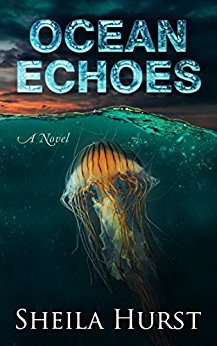
Ocean EchoesI didn’t know what to expect from this book. Glancing at the categories and the description, it didn’t match any genre I was familiar with. I figured it would be a romance set on a scientific voyage. And it kind of is that, but there’s way more to it.

The book follows marine biologist Ellen Upton, an expert on jellyfish whose grant money is rapidly dwindling. In desperate need of a breakthrough to save her career, Ellen ventures out on a research ship into the Pacific, hoping to find something that will earn her more funding.

The majority of the novel is told from Ellen’s perspective, and in many ways, her plunge into the unknown depths of the ocean mirrors her journey into her own equally complex and mysterious psyche. I usually don’t like using such lit-crit terms, but that truly is what happens here, and what’s more, it works. It never feels like an overplayed metaphor, but rather an organic marriage of character and plot development.

Ellen has great difficulty feeling close to others, having gone through a painful break-up when her fiancé stole her research ideas for his own. Unwilling to trust others easily again, she loses herself in her work, much to the disappointment of Ryan, her loyal research assistant.

On the cruise, she meets other scientists and students, including one researcher whose skepticism of man-made climate change sparks a friendly rivalry. She and the other scientists also visit a small island populated with a tribe of welcoming natives, and a family whose patriarch has gone missing at sea. Ellen and Ryan later find him on another island that formerly housed a military installation.

The book is filled with strange vignettes that make Ellen’s experience feel more like a surreal journey into a mystical realm than a scientific expedition. From her encounter with a waiter who speaks of ghosts following her, to the magical rituals performed by the islanders, to the antics of one of the students on the expedition who has a penchant for dressing up as a gorilla, the book gradually builds a feeling of melancholy mystery woven from bizarre, dream-like incidents.

When Ellen finally makes the major discovery she has longed for, it is not a triumph, but rather a frightening experience—one that disturbs her so much she questions her own sanity. As did I, I’ll admit. I wondered if Ellen might be transforming into an “unreliable narrator” of sorts, though the book is written in the third-person.

Hurst’s prose throughout is haunting and hypnotic.  The tale unfolds at a slow pace, but the writing is filled with evocative descriptions and intriguing turns of phrase. At times, it reminded me of Steinbeck in the way it dwells upon seemingly minor things without ever becoming dull or tedious. Little details, like the apparent changing expressions of a rock face the islanders believe represents the moods of the sea, stick in the memory to create a beautifully odd atmosphere. (It reminded me of Mal, the demonic face in the trees in Patrick Prescott’s Human Sacrifices.)

Maybe it’s just because I saw the film adaptation so recently, but the book also put me in mind of Jeff VanderMeer’s Annihilation. Like VanderMeer’s nameless biologist, Ellen’s seemingly cold reserve and preference for biology over human interaction mask a wounded soul with deep emotional scars. And also like Annihilation, Ocean Echoes depicts nature as simultaneously dangerous, mysterious, and eerily beautiful; all while weaving an environmentalist warning of humanity’s potential to unwittingly cause unimaginable harm to our own planet.

Does the book have flaws? A few, yes. Some of the scientific exposition sounds a bit awkward as dialogue, and I swear that a couple times some background information about jellyfish was repeated almost verbatim. Also, the above-noted slow pace of the book may not be to every reader’s taste. If you have a strong preference for fast-paced action, it might not work for you, at least early on.

But even then, I still encourage you to give Ocean Echoes a try. It’s a weird, haunting, hypnotic mystery of a book, a love-letter to the ocean, written with respect for its dangers and fear for its fragility. When it rambles, it rambles in the way the best novels do—with love and understanding of its theme that commands the reader’s attention.

It’s very bold to write and publish a book that doesn’t easily fit into any pre-defined genre, and that goes double for an indie author. And yet some of the greatest works of fiction ever created defy categorization. So I admire Hurst tremendously for going through with it and taking the risk to write this mesmerizingly weird and thought-provoking tale. It may not always be what you expect—but then, what better reason could there be to read it?

This is a longish post, but it makes some important points. Important enough that I want to include an executive summary for those of you too busy to read it all:

  1. There are a lot of petty distractions in day-to-day life. Don’t get obsessed with them. Deal with them, by all means, but don’t ignore your loved ones at their expense.
  2. Writing about an experience is a great way to capture what was most important about it. You will realize things about it that you never would consciously notice otherwise. Writing stuff down, and sharing it with other people, might seem trivial, especially in the age of social media, but don’t underestimate its importance. It’s the most powerful tool we have for preserving who we are and what we care about.

Read on if you want my supporting evidence.

I met my dog Jack on a December day in 2005. My Mom and I were driving on a back country road, and he crossed the street in front of our car. I thought he was a coyote at first. Once we realized he was a dog, we assumed he belonged to someone in the area. When he was still there when we were on the way back, just waiting for someone to pick him up, we realized he’d been abandoned. Mom stopped the car, and I coaxed him in. He was scared, but I think the warmth convinced him to take a chance and get in. It was a snowy, chilly day.

I wasn’t a dog person—or really much of an animal person. But Jack was mostly German shepherd, and I decided I could train him up. Much of that winter, I spent walking him and our basset hound, Bart, around in the woods behind my parents’ house. I wrote this story about that time—I can remember thinking about it while walking with them. I also read Thomas Hardy’s books for the first time around then, and I remember discussing them with my mom while walking with the dogs.

At the time, I didn’t stop to think about any of that stuff—I was mostly focused on studying for the SAT. Walking dogs, reading books, and writing stories were just my leisure time. I had to do well on the SAT in order to get in to college, so it was my main focus.

In retrospect, I realize that what was really important then was the time I spent with my mother, with Jack and Bart, and writing. Those are the things that I’ll remember most, and the ones I’ll wish I could do again. I can’t even remember what I got on the SAT.

I’m not saying tests don’t matter, but they don’t matter near as much as they seem to in the moment. At the time, it was the defining event of my life. Looking back, it was just a hoop to jump through to determine what new series of hoops I would jump through. One way or another, I’d have probably managed to jump through enough hoops to keep going. The world will always give you hoops.

***

Ever since I can remember, I’ve been hearing about how important adaptability is. It’s the sort of thing people say so much I tune it out. What I only recently figured out is why it’s important: because if you are adaptable, you know you can probably navigate whatever series of hoops life throws at you. Which gives you the confidence not to get so hung up on one particular hoop that it drives you to distraction.

As a teenager, I wasn’t smart enough to understand this. “Adaptability” was a meaningless phrase applied to successful people, like “clutch” is to athletes who win big games or “populist” is to virtually all non-incumbent politicians. It was only later that I realized what it really meant: that you had enough faith in your general abilities that you would never become consumed trying to get one thing right.

There are some things in life that are worth being consumed with getting right, of course. But they’re rarely the ones we actually do become consumed with. When I think about it, for everything that I wish I’d focused on more, I usually realize that at the time, there was some other, vastly less important thing that I was focusing on instead.

I tweeted about Paul Graham’s essay “Life is Short” the other day. What he says in there may seem obvious to many people—as he himself admits, saying “life is short” is a cliché. But the way he describes it, breaks it down into quantifiable shortness, resonated with me. And it resonates more and more with the passage of time, especially the part where he points out all the things that life is too short for, and all of them are things that people easily find themselves focusing on.

Maybe these are lessons everyone has to learn as they get older. Lord knows that if I didn’t appreciate the important things in life, it wasn’t for lack of my elders telling me I should. Maybe it’s inevitable that everyone takes things for granted when they’re young. The world seems like it’s always been a certain way, so the mind instinctively assumes it will continue to be that way. And anecdotes and second-hand information won’t alter the perception that the world is a steady-state—only living long enough to see it change can do that.

But I think it’s only partially innate. Environment and upbringing also play a role, in the sense that when you’re young, you get told a lot about what you “should” be doing. In fact, some of the same people who told me to appreciate things also told me to focus on getting ready for college and a career.

And this is probably good, on balance. Children need to be made to do certain things, or else they’ll make bad choices. If you had left ten-year-old me to my own devices, I would have done nothing except eat candy and play video games.

16-year-old me was getting closer to striking the right balance. Thanks to my (his? our?) parents, he was splitting his time between what he needed to do to prepare to earn a living and what he truly liked to do. The only problem was, he didn’t fully appreciate the importance of having the freedom to do the latter.

***

Looking back, I wish I’d been blogging then. I could have documented everything I did at the time, rather than waiting and reporting it now, when it’s just a grainy recollection from long-term storage. Writing about your experiences forces you to get to the heart of what they really mean to you, and it reveals things you noticed without even consciously realizing it. Not to mention that it allows you to share a moment with other people, which—for me, anyway—somehow makes it more consequential. Maybe you’ve never had a dog, or a chance to hike in the woods. But now you’ve at least heard about it from somebody who did.

Again, this is something that wouldn’t seem important to a teenager, but when you write about something, you’re effectively making your experience live on, letting other people in on a moment they otherwise would never experience.

I forgot to mention one other thing I did as a teenager (longtime readers know it already): listened to lots of Gilbert and Sullivan. I had all the 1950s D’Oyly Carte recordings of the Savoy Operas. In fact, Jack was named after Jack Point, the ill-fated jester in The Yeomen of the Guard. Martyn Green played him in those recordings, and in the 1953 film, The Story of Gilbert and Sullivan:

I read Green’s autobiography as a teenager. It’s funny–here was a man semi-famous in the 1940s and ‘50s for playing characters written in the late 1800s, and I was reading his memoir in the early 2000s.

And—as absolutely weird as I know this sounds—I feel like I knew the guy. He died in 1975, but I still listen to his voice and read his words. This is why I like history generally—there is something awesome, in the most profound sense of the word, about the way learning history lets the past live on. I’m not much for belief in the supernatural, but it’s the rational equivalent of being a medium: you channel the thoughts of long-dead minds.

I have two major points to make in writing this essay. One is the same as the point of Graham’s essay: to tell you to savor the things—and especially the people and animals–that matter the most in your life. Someday they’ll be gone, and you’ll wish you’d spent more time with them, instead of worrying about ephemeral things.

The second point is both a means of savoring and of commemorating: write about the things you care about. Your family, your friends, your pets… write it down in some form. It can even be fictionalized, if you want. Alter names and places if it makes you feel more comfortable, as long as it keeps the core feeling of your experience. Ideally, write for some audience besides yourself, just because that will force you recall the experience as best you can. And by sharing it, it allows it to endure.

Most older people probably already grasp this. I’m really writing this for younger people, teenagers like I was, who don’t understand why they need to appreciate life. Well, I can’t make you appreciate it, any more than the adults around me could when I was your age. But I think I can help you savor it, and keep it for later. So maybe one day, you can look back and revisit it. And, even better, you can share it with people who weren’t there, and they can get a sense of who you are, and what you care about.

My dog Jack died today. I am writing this in his memory, and also in the hope that it will encourage people not to make the same mistakes I did. There’s no way to not miss someone you care about after they die, but you can make sure that you got everything you could out of knowing them, and to make it count for something.

Write about the stuff you care about. Record it to share with people who couldn’t experience it with you. It’s not the same as getting to relive your happiest moments again and again, but it’s the closest thing we’ve got.

'Tis Himself
Me and Jack, out for a stroll in the woods. April, 2017

516XMGMHmwL._AC_US218_The Prize is a fast-paced medical thriller with a compelling plot: Dr. Pam Weller has made a Nobel-worthy breakthrough in Alzheimer’s disease research, finding a drug with the potential to cure it. But a more senior researcher in the same field, the ambitious Professor Eric Prescott, will go to any lengths to steal her discovery and gain the Nobel Prize for himself.

And when I say any lengths, I absolutely do mean any—even illegal and immoral methods are on the table for Prescott in his quest to satisfy his ambition. The only thing Pam has to help her against his machinations are her own wits and the help of her boyfriend Jake, a former FBI agent.

So much of the book hinges on its plot that I don’t want to give away too much here. What I found most interesting is how it presents the field of medical research. The researchers rarely seem to think about the implications of curing Alzheimer’s in terms of what it means for humanity at large. For them—both Weller and Prescott—it is a personal challenge with personal rewards. The difference is that Weller is fundamentally an honest person, whereas Prescott is not.

The author is a medical researcher himself, and his experience clearly shows: issues that might seem trivial to the layman, like questions of which author is listed first on a research paper and the details of tenure review processes, take on extreme importance for many of the characters. He captures the nitty-gritty details of research and its associated bureaucratic logistics very well.

My only criticisms of the book are these: first, some chapters are written from the villain’s point of view as he executes his plan, which takes away the suspense. When we already know what he has done, it makes it less exciting when the good characters uncover it. (On the other hand, it was interesting to explore his motivations and see the twinges of guilt he feels as he commits his crimes.)

Second, some of the dialogue was a little awkward and contained lots of exposition. I sympathize with this—it’s very hard to write dialogue that both sounds natural and conveys the information the readers needs to have. This is especially true for a story set in a highly-specialized field like medical research, where there is lots of jargon the characters would presumably know, but that the reader may not.

But these issues didn’t seriously detract from my enjoyment of the book. The Prize is fast-paced and easy to read. If you like medical thrillers, or really thrillers in general, I recommend giving it a try. It will make you look at every press release and news report you hear about “research breakthroughs” in a new light.

Most fiction is treated as entertainment and nothing more. You watch a movie for two hours, maybe talk about it a little with your friends afterward, and that’s it. There are some works here and there that are so dazzling they make a more lasting impression on you. Really spectacular special effects in a movie, or a particularly good line of dialogue, or a moving character death in a novel can do this.

This is as much of an impression as most fiction makes upon its audience. But there is another level on which a story can function. It is the most powerful, and also the hardest to achieve. That is the type of story that actually makes the audience look at the world differently, and act differently as a result.

This is, I think, pretty rare. There may be many stories trying to achieve it, but only a few succeed. And even those that do succeed probably only do so for a small percentage of their total audience.1

Note that when I say “act differently”, I’m not referring to the people who saw Star Wars or Harry Potter and decided to start attending fan conventions in costume, or to name their children “Anakin” or “Hermione”, or to have themed weddings based on the stories. That’s fandom, and can happen with anything.

What I’m talking about is general knowledge that you can apply to a wide variety of situations. And it has to be something that wasn’t obvious or easy, at least not for you. Lots of stories try to have some overarching theme on the order of “You can do anything if you believe in yourself”. Which may be true, but is so obvious most audiences probably have heard it already.

Naturally, the idea for this post began when I asked myself, “What works of fiction changed how I act?” This is the list I came up with. Long-time readers will probably not be surprised by most of the entries:

  • Star Wars: Knights of the Old Republic II. (In a nutshell, the big takeaway is that every action has consequences, often ones we don’t foresee. So choose wisely and think about how your actions will influence others.)
  • Jane Got a Gun. (The lesson here is that you should never assume you know the whole story. You should listen to what other people have to say, even if you think you know better.)
  • Nineteen Eighty-Four by George Orwell. (This one is pretty well known, but for me the lesson is that people try to seize power not only by force, but by controlling the thoughts of others. You have to resist them.)
  • Eating Bull by Carrie Rubin. (The point here is that what people eat is driven by a number of personal, societal and economic factors. Your diet is a more complicated business than you might realize.)

KotOR and Jane changed how I approach day-to-day interactions with people. Nineteen Eighty-Four changed how I read political news and think about government. And Eating Bull changed how I eat.

Obviously, this isn’t an exhaustive list of fiction I consider “good”, though it is a sub-set of it.2 In fact, I was shocked at how short the list is, given how many works of fiction I enjoy in different genres and media.

I am a big fan of weird fiction, but I can’t say I did anything different after reading Lovecraft et al. (Other than trying to write weird fiction myself, I guess.) I love the movies Lawrence of Arabia and Chinatown, but they didn’t change how I approach the world. And the works of Gilbert and Sullivan are also absent from this list, even though it was from a G&S critic, Gayden Wren, that I first learned how to analyze fiction in terms of “levels” of storytelling.

Now, it’s probably true that the stories I listed above weren’t the only way I could have learned these lessons. Maybe the reason I needed fiction to learn them at all is that I’m an especially unobservant person, or else I would have figured them out myself from observing the real world.3

But if so, that speaks to the power of fiction: it can teach people things they would otherwise never have learned.

NOTES

  1. To a degree, it’s a personal thing. The unique circumstances under which somebody sees a film, plays a game, or reads a book, probably play just as much of a part as the work itself.
  1. It’s important to realize that a story can also be pretty bad, from a technical perspective, but still change how people see the world. Many people seem to get life-altering epiphanies from reading Ayn Rand’s novels, but they still have many flaws as works of drama. This raises an important point, which is that some people  “cheat” and try to tell a story about big, powerful themes without first having a solidly-constructed plot and characters. If you do this, you usually just end up making something incoherent and pretentious.
  1. I guess this is the central difference between fiction and non-fiction. Fiction is entertainment, and it’s a bonus if you learn something from it. Whereas every work of non-fiction should teach you something new, or it’s a waste of time.

So, for the last few days, I was agonizing over whether or not to post a poem I’d written. I eventually decided to do it, then had second thoughts, then finally settled on making it a page of its own instead of a regular post. (In the process, throwing off some readers who were linking to the original post. My apologies, Phillip!)

The reason I got so concerned about this, as I mentioned on Twitter, is that the poem is very dark. I hate to inflict this kind of gloomy subject matter on an unsuspecting audience. I myself have very mixed feelings about dark fiction.

So why did I write it then?

Well, first of all–and this is especially true of poetry–these things take on a life of their own. In this case, I started writing with the general concept that I wanted a poem about a Knight writing to his Queen for help. I wanted the Queen to initially seem unsympathetic, but have the Knight (and hopefully the reader) come to understand why she behaves the way she does by the end of the poem.

I didn’t have any specifics in mind of how this would work, and I just let things play out line by line. Rhyme is a major factor too–if I write a line I like, I’ll try everything I can to come up with a respectable rhyme for it rather than cut it. So the words I pick in lines 1 and 2 dictate what happens in subsequent lines.

Why does my subconscious mind tend to go to these dark places so easily? I don’t know. It’s bothered me for a while.

I remember reading an interview with the comedian Danny Kaye, in which he said he would like to make a recording of some Gilbert and Sullivan patter songs. But when he tried, he said, “something goes haywire inside me–and the words go haywire.” The result was he would sing updated parody lyrics.

I think I have a similar condition, only instead of updated lyrics, my words tend to turn into bleak ruminations on the dark side of humanity and the universe.

And the reason I really wonder about this is that, in fact, I have led an extremely blessed and happy life. Probably better than about 98% of the world’s population. I have no tragedies or trauma in my past. The only loved ones I’ve lost are my grandparents, who lived well into their old-age, and pets, most of whom lived to their full life expectancy. These are sad things, but also part of the natural order of the world.

Moreover, I happen to know–either from reading their blogs or from other communications with them–that some of my readers have had to go through much worse things than I ever have. I feel guilty when I inflict made-up horrors and tragedies on people who have almost certainly had to deal with plenty of sadness in real life.

There are times I wish I could be like P.G. Wodehouse, and write brilliant pieces of light entertainment that are funny and fun and make a person feel better while reading them. But, as I’m not a genius like Wodehouse was, when I try it comes off as fake and saccharine.

And on that note, Happy St. Patrick’s Day! Ponder this: why did he cast the snakes out of Ireland but leave the spiders be? Seems like a rotten deal to me.


51GOZPH3rhL._SY346_[I recently read The Friendship of Mortals by Audrey Driscoll, the first installment in her Herbert West series. I absolutely loved it, and sent Ms. Driscoll a few questions about the book, her other works, and her thoughts on writing in general, which she kindly and thoughtfully answered. One note: there are a few minor spoilers for the first book below. Enjoy!]

BG: What was it about Lovecraft’s original Herbert West story that first inspired you to write this series?

AD: I was aware of the story for years before I was able to track down a copy. Its reputation as HPL’s worst story intrigued me. How bad could it be? After I read it, I found myself wondering why Herbert West is so interested in reanimating corpses, especially considering how badly his attempts turn out. HPL calls him a totally rational type, but some of his activities, especially in the later chapters, seem pretty irrational. In other words, I thought Herbert was interesting enough to need a backstory, so I wrote one, incorporating other elements from Lovecraft – the Necronomicon, Miskatonic University, Arkham, Kingsport, and a few others. Not Cthulhu, though.

BG: How did you manage to write the romance scenes and still keep in the Lovecraftian style? Were there any other sources that you looked to for inspiration on that, or to help with writing the early 20th-century setting in general?

AD: As you know, since you’ve read both HPL’s original story and my book, both are narrated by Herbert West’s friend and accomplice. Lovecraft doesn’t give him a name, but I called him Charles Milburn. I pictured him as a lonely, middle-aged librarian (and I’ll just add here that I worked as a librarian for 35 years), telling the story many years later. His somewhat obsessive, confessional style was perfect for the tale, as though the time has come to tell his long-kept secrets, and he can’t wait to pour them out. The romance element lent itself well to this, because Charles’s affair with Alma must be kept secret from their colleagues, and Charles’s romantic impulses toward Herbert are pretty much unacknowledged by him. Once I discovered/decided that Herbert was gay, I read quite a few works by and about gay writers, which helped me to shape the characters.

BG: There are lots of themes in The Friendship of Mortals, but the main one seems to be the narrator’s romanticism vs. West’s materialism. Did you consciously want to explore this conflict, or did it arise organically in telling the story? And do you think the reader should come away favoring one viewpoint or the other, or is it more of a “in the eye of the beholder” sort of thing?

AD: West’s materialism was emphasized by Lovecraft in his original story, so I must have organically decided to make my narrator, Charles Milburn, a Romantic. A certain amount of conflict developed naturally after that, which was a good thing. And since Herbert undergoes a transformation analogous to the process of alchemy, I suppose I expect the reader to follow along and experience that along with him.

BG: There are a few passages in the book that have to do with music. Can you talk a little about how music influences your writing? Do you listen to music while you write?

AD: Yes, definitely! I actually worked some pieces of music I listened to at the time, such as J.S. Bach’s Goldberg Variations and the Allegri Miserere, into the plot of The Friendship of Mortals. Another CD I listened to during that writing was The Mask and the Mirror by Loreena McKennitt. Her setting of “The Dark Night of the Soul” by St. John of the Cross had a profound influence on the novel, sending it in a direction I certainly never intended.

The most musically-influenced of my works is a literary novel entitled Winter Journeys, about Franz Schubert’s song cycle, Winterreise. It’s not historical; the action takes place in the years of its writing, the winter of 2007-2008. I haven’t published it myself as yet, because I still have an idea I might try to get it traditionally published. But I’ve been so taken up with publishing the Herbert West books and writing my current work in progress that I no longer have the mindset necessary for submitting to publishers.

BG: What other authors, besides Lovecraft, have influenced or inspired you?

AD: Stephen King, of course. Both his novels and On Writing, which inspired me to start actually writing, instead of thinking I couldn’t possibly. Peter Straub as well; his approach to horror is more subtle than King’s. The most elegant horror story I’ve ever read, though, is Algernon Blackwood’s “The Willows.” Nothing I’ve written even comes close. Otherwise, among the authors whose works I hold dear are Mary Renault, Elizabeth Goudge, Mervyn Peake and J.R.R. Tolkien. And Leo Tolstoy. And the garden writer Henry Mitchell, whose style I found most appealing.

BG: Besides your literary work, you also blog about gardening. Are there similarities between the two activities? Any gardening wisdom that helps you in writing?

AD: Well, there’s nothing fictional about gardening. It’s as real as can be. That helps to reset my perspective. It’s done outdoors, which means I spend time away from the desk and computer, and it’s physical. Digging up tree roots is extremely physical. So is pruning, especially huge old climbing roses and prickly hollies. I have the scars to prove it. Noticing, observing, and visualizing are necessary in gardening, and are helpful habits for writers to cultivate as well.

BG: Would you be willing to discuss any new literary project(s) that you have in the works?

AD: I have just finished the first draft of a novel which is a sort of sequel to the Herbert West Series. It features a descendant of Herbert’s (and you have to read the entire series to see how that comes about!) The title is She Who Comes Forth. It’s set in Luxor, Egypt and the Theban Necropolis in the autumn of 1962. It will come forth, I hope, later this year.

BG: What has surprised you most about writing/publishing? Was it easier or harder than you expected when you first started?

AD: When I started writing The Friendship of Mortals in November 2000, I was blown away by the experience. That book pretty much wrote itself. I was obsessed with it. The obsession lasted through 2005 and three more books, although each one took longer to finish than its predecessor. Of course, I was trying to get traditionally published during those years, which introduced an element of harsh reality. Maybe that slowed me down. In 2010, I discovered self-publishing via Smashwords and eventually Amazon, and began my blog. I was taken up with those activities for the next seven years, so didn’t start writing another novel until 2017. A year later, I’m still at the raw first draft stage. Of course, I do my own editing and my own formatting — even for print, which is more challenging than ebook formatting. Altogether, though, I like the degree of control I have over the look and feel of my finished books. And as an indie, I can take whatever approach I like to marketing, as long as I adjust my expectations accordingly.

BG: Any advice that you would like to pass on to other aspiring authors?

AD: Writing and publishing are two completely different, although related, operations. Writers should ask themselves why they write, and what they expect from that process. Same for publishing. What constitutes success in each area? Each author has their own answers to these questions.

How much time, effort and money are they prepared to spend in writing and bringing their works to the world’s attention? It is possible to publish well with relatively little monetary expenditure, but that means doing a lot of it oneself. I wouldn’t encourage anyone to go into debt as a first-time self-publisher. Indie authors are a huge market for products and services; there are many hands ready to take one’s money, and not all of them are helping hands. Like so many other endeavours, self-publishing might be summed up this way: good, fast, cheap; pick two.

Writing is a solitary activity, even when done in coffee shops, but it’s immensely helpful to be part of a writing community. The internet is a good place to meet and communicate with other writers, both trad- and self-pubbed. I recommend finding a niche there. WordPress has dozens, if not hundreds, of writers’ blogs. Not every piece of writing/publishing advice you see is relevant or useful, so it helps to exercise one’s critical thinking abilities, and to keep asking the questions I mentioned earlier.

Thank you very much for the thought-provoking questions, Berthold. And for giving me space on your blog.

BG: It was my pleasure! Thank you for your thoughtful answers, and for writing such wonderful books. 

[Audrey Driscoll is the author of the Herbert West series, as well as numerous short stories. Be sure to also check out her blog, where she discusses writing, gardening, and many other topics.]