I read the story “By the Waters of Babylon” by Stephen Vincent Benét (the same guy who wrote “The Devil and Daniel Webster“) It is a good, Twilight Zone-like sort of story–if you don’t want it spoiled, go read it before you click the “read more” button below.
books
Stupid protagonists and obvious plot twists
I don’t know about you, but I find stupid protagonists in stories to be annoying. And there’s nothing more irritating than seeing an obvious plot twist coming down the pike, and having the hero not realize it. This happens in several of Lovecraft’s stories, and I find it to be a real mood-killer.
I assumed for a long time that everyone was like this. But then it occurred to me that maybe some readers enjoy that. There is a certain satisfaction, I guess, in seeing what is going to happen before the characters do. You can feel like you are smarter than somebody else, even if they are only a fictional character. (Having never experienced that first-hand, I wouldn’t know if it’s much fun.)
Personally, I like to be surprised by a story. Which do you prefer: the comfort and satisfaction of knowing what’s coming, or the fun of being surprised by plot twists?
Book review: “The Empire Striketh Back” by Ian Doescher
I received an absolutely wonderful book as a gift from a friend today. It is called The Empire Striketh Back, a re-telling of the story of Star Wars: The Empire Strikes Back as if it were written by William Shakespeare. It is actually written by Ian Doescher, and I must say he did a marvelous job translating the film’s script into the language of the Bard.
There are so many things to love about this–it had me hooked from the “Dramatis Personae” page, done perfectly in the style of the plays. And then the language–well! Let me quote a little bit of the first scene, just to give you an idea:
LUKE: If flurries be the food of quests, snow on,
Belike upon this Hoth, this barren rock,
My next adventure waits.
It is really quite splendid. Probably would have made the movies better if Lucas’s rather awkward dialogue had been re-written this way. I highly recommend it to anyone who has seen the movie (and who hasn’t?) I haven’t enjoyed a parody of Great Literature this much since reading The Classics Reclassified. I highly recommend it.
George Plimpton
There was a good show on PBS last night about George Plimpton, of which the above video is an excerpt. As I have said before, I love his most famous book, Paper Lion, about his time as the “last-string” quarterback for the Detroit Lions. I also enjoyed his book Open Net about playing goalie for the Boston Bruins.
That’s really only the tip of the Plimpton iceberg, though. It would probably be faster to list all the things he didn’t do in life, but just read the Wikipedia synopsis of his career. I don’t think he could ever be accused of not living life to the fullest.
The thing that gets forgotten in the talk of the guts Plimpton had to try (and fail) all these difficult activities, is the fact that he was also a truly great writer. I recommend Paper Lion even to people who don’t care about football in the least, simply because it is so well-written.
“Heart of Darkness” and “Apocalypse Now” and “Far Cry 2” and “Spec Ops: The Line”
[WARNING: This post contains spoilers for all four of the things mentioned in the title.]
About five years ago, I read Joseph Conrad’s novella Heart of Darkness. Then, last year, I played Spec Ops: The Line and Far Cry 2, which are based in part on that book. And then, yesterday, I watched Apocalypse Now, the 1979 movie also based on that book, and which influenced both of those games.
As you may know, it has long been my contention that video games are an art form on a par with books and film. And of these four works, it is my belief that one of the games–Spec Ops–is the best. That said, it is also the most recent, and it uses the expectations built by the preceding tales to weave its narrative.
To begin with, I didn’t really like Conrad’s novella that much. It wasn’t awful, but I didn’t see what was so great about it. So there’s this guy, Kurtz; and this other guy Marlow, has been sent to find him in the Congo. But, turns out, he’s gone nuts and is dying. And the reason this happened to Kurtz is because being in the Congo was brutal, and he couldn’t take it.
It was never clear to me what the point was. I guess it was that it was no fun being in the ivory business in the Congo, and that colonialism was awful, both for the colonized and the colonizers. Well, yes–and I suppose that was more of a shocker in the era when “colonialism” was not a dirty word–but I didn’t really see any major moral depth to it.
Apocalypse Now is an adaptation of the story, set in the Vietnam War, in which Marlow is named “Willard” and has been sent by the U.S. military to assassinate Col. Kurtz who has gone mad. And so he does.
A big problem I had with the movie was that it is really thin. In the first 10 minutes, we are told that Kurtz is insane and ruling over a bunch of the natives. And then, two hours later, we meet Kurtz and find out that, sure enough, he really is insane and ruling over a bunch of the natives. There is a strong implication along the way that the Vietnam war generally is also insane, but that wasn’t much of a revelation to me.
(Aside–the theme of “War Is Insane, And Makes Everyone In It Insane” was done much better, in my opinion, in the movie The Bridge on the River Kwai. It ends with the line “Madness, madness”, which would have fit Apocalypse Now as well.)
Kurtz has no character development. Neither does Willard, really: he starts off as a battle-hardened, PTSD soldier and finishes it as an even more battle-hardened PTSD solider. I guess his crew-mates on his boat are supposed to show the ravages of war taking their toll, but they all had “doomed” written all over them from scene one.
I read on Wikipedia that they considered a different ending, where Willard joins Kurtz and fights off an airstrike on the base. While seemingly impossible logically, that ending would make more sense thematically. Personally, I would have liked to see an ending where Kilgore showed up and destroyed Kurtz’s base. It would at least justify why they spend so much time on his character early in the movie.
(Another aside: Wikipedia also says that “Coppola decided that the ending could be “‘the classic myth of the murderer who gets up the river, kills the king, and then himself becomes the king — it’s the Fisher King, from The Golden Bough'”. For the record–this is the version of the story I remembered, not the one in the 1991 movie of the same name I wrote about a few months ago. But that’s mythology for you.)
(Last aside: this post has too many asides. One of them should be removed.)
I already wrote about Far Cry 2 in this post pretty thoroughly, so I won’t dwell on it overmuch. The short version is that it, like Heart of Darkness and Apocalypse Now before it, is well done, but empty. Although, I suppose it does sort of do what I criticized Apocalypse for not doing, in that there is some vague hint of character development in the sense that the player’s character is being sent to eliminate the Jackal in the beginning and winds up siding with him at the end.
To recap, in Heart of Darkness, we have this guy Kurtz. Nobody is quite sure what his deal is, and we gradually find out that he went crazy in the jungle because everything was brutal. Then, in Apocalypse Now, we have this guy Kurtz who everybody thinks went crazy in the jungle because everything was so brutal–and indeed, so he did. And then in Far Cry 2, we have this guy the Jackal, who goes crazy in the jungle because everything is so brutal.
Now, you will immediately see where Spec Ops is really different–here we have this guy Konrad. And nobody is quite sure what Konrad’s deal is… and he’s in a desert!
Just kidding, that’s not the difference.
My review of “Metro 2033” (the book)
I just finished reading the book Metro 2033 by Dmitry Glukhovsky. I had already played the video game of the same name last year.
I was initially put off from the book because of the post-apocalyptic setting, which frankly I feel has been done to death at this point. But the foreign element–it’s set in the Moscow subway system–made it feel fresh to me. The idea is that after a nuclear war, people settled in the Metro, using the various stations as towns of sorts.
The story is about a man named Artyom who sets off to get help for his home station when it is being attacked by monsters. It is very much a “Hero’s Journey”/Odyssey type of story, that follows Artyom as he stops at many stations within the haunted metro and meets assorted characters who provide their observations and musings.
Although it has many (very well done) horror and thriller elements, the book is actually very philosophical, and there are some sections that are just long speeches, conversations or debates. But it’s never overly didactic, and it never became dull or tedious for me. In particular, there is one conflict towards the end that concerns the meaning and utility of religion in society that I think is absolutely brilliant.
As you can gather, I enjoyed the book very much and highly recommend it. I felt there were a few weak points–Artyom constantly being pulled from Death’s door by Some New Character got a bit repetitive, though usually the character was interesting enough to make me excuse it. Also, there were no really notable female characters, but this isn’t necessarily a problem per se, since the setting sort of implies that the women and children are deliberately kept in the towns, and most of the story takes place in the dangerous Metro tunnels. (I have more issues with how female characters are handled in the video games–maybe I’ll do a post about that.)
The main problem I had was the translation from the original Russian. There were times when the dialogue was rather awkward sounding, and unfortunately the errors become more widespread as the story reaches its otherwise brilliantly-executed climax. There was one key line on the last page where they apparently couldn’t decide whether to write “understand” or “understood” and settled on “understandood”. It kind of killed the tension of the moment, which was superbly built.
All told, I think it is a terrific book, and I actually gained new respect for the game having read it. It is a tough story to adapt to a video game, and I think they did about as well as could have been hoped.
My Top 10 Favorite Scary Works of Fiction

At this time of year, I like to read scary books, watch scary movies, and play scary games. With that in mind, what follows is a list of some of my favorites of each type. I think I’ve blogged about all of these individually before, but I decided to compile them into a list for a convenient reference.
- The Haunter of the Dark, by H.P. Lovecraft. My favorite Lovecraft story. I don’t know what it is exactly, but something about the setting, and the mysterious pull of the distant church that draws the protagonist’s eye really works for me. I feel its one of his best for not over-explaining things.
- The Omen, directed by Richard Donner. (1976) The scariest movie I have ever seen, and the only one that’s ever kept me awake at night. The opening music is, as I’ve said before, absolutely chilling.
- Green Tea, by Sheridan Le Fanu. There are other good stories–notably Carmilla–in the collection “In a Glass Darkly”, but this is the one that stuck with me. I like the idea of overdosing on a commonplace drink causing someone to be haunted.
- The “We Don’t Go To Ravenholm” level of Half-Life 2. I’ve been critical of this game in the past, and even this level has its flaws. Nevertheless, I have to give Valve credit for putting a survival-horror level in the middle of what is otherwise a sci-fi action game. That’s a great way to do horror: drop it in where the audience isn’t expecting it.
- The King in Yellow, by Robert W. Chambers. The best example of a “weird tale” I have ever read. It’s so good that I recommend it even though only the first four of ten stories are actually in the horror genre. They are that good. “The Repairer of Reputations” is particularly memorable.
- The Haunting, directed by Robert Wise. (1963) This is cheating a bit, since it’s based on a book. But the movie is very good. I didn’t like it when I first saw it, but it’s an acquired taste, and after repeated viewings I came to appreciate how subtle and ambiguous it is.
- Quake. In terms of game play, this is just a Doom knock off, which means it’s basically all fighting and no suspense. How does it get on this list, then? Two things: the artwork, though primitive by today’s standards, is very atmospheric and ominous. And the intriguing level names, like “The Haunted Halls” and “The Tower of Despair” evoke a more subtle fear and deserve better than the mediocre gameplay within.
- Gilbert and Sullivan’s Ruddigore. Did you think I could get through ten whole things without mentioning Gilbert and Sullivan? You must be new here. Anyway, yes; this is technically a comic opera. That doesn’t make the scene of the paintings coming to life or the Wagnerian “Ghosts’ High Noon” any less creepy. Gilbert complained that Sullivan’s “ghost music” was too scary for a comedy. He was right–and that’s why it works.
- The Damned Thing by Ambrose Bierce. Horror is what you don’t see and don’t understand. This story probably packed a bigger punch when it was first written; the concept is old hat at this point. Nevertheless, it’s still effective.
- Spec Ops: The Line. I thought long and hard about whether to put this game on here. Unlike everything else on this list, it contains no supernatural elements… or at least, no overt ones. And also unlike everything else here, it is in no way “Gothic”. But it is very dark, very disturbing and above all, a prime example of psychological horror. It does share certain storytelling elements with The Haunting and “the Repairer of Reputations” and is just bizarre enough that I decided to include it.
Lord Dunsany
I have been reading some of the works of Lord Dunsany lately. He was a major influence on H.P. Lovecraft, and I can definitely see some traits in him that Lovecraft would adopt in his writing. I think Dunsany was on the whole a better writer than Lovecraft, but I enjoy the subject matter of Lovecraft’s stories more.
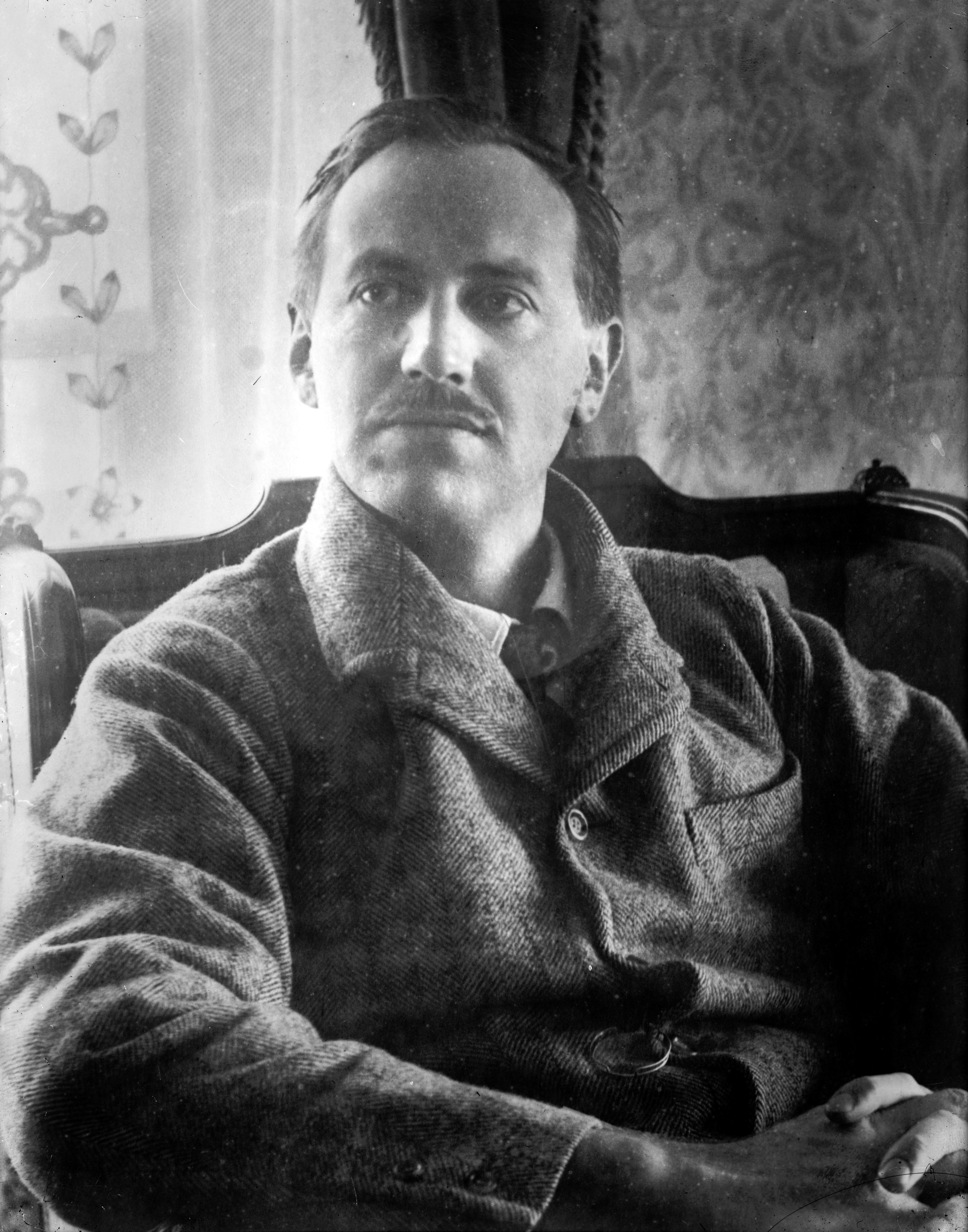
That’s not to say Dunsany’s tales aren’t interesting–it’s just that too many of them are pure fantasy, with the attendant tropes of what we would now call “sword and sorcery”, and I don’t care for that stuff. I guess it’s because it’s hard for me to relate to characters in these medieval-esque fantasy lands. In general, I prefer horror set in a recognizable time and place that actually exists or existed. But that’s just my preference, and there are certainly some exceptions.
Not all the Dunsany stories I’ve read are typical fantasy, though. One that I enjoyed quite a bit was “The Ghosts“. I can’t quite decide what to make of the story–it is alternately kind of scary and kind of funny. I don’t know if both of these effects were intentional. The overall effect is quite weird, but then that is the point of such stories, isn’t it?
“Written Fractals”, part II
P.M. Prescott’s comment on this post reminded me about the concept of “fractal” structure for a piece of literature. I was about to write a post about it, but then I remembered–as with the vampires a few weeks ago–that I’d already done so, two years ago, almost to the day.
He’s right that there’s a limit to how much complexity you can give a character before people will get bored of hearing about it. That’s why the best character development is done through “showing, not telling”, as the old adage says, and having their complexity displayed through the plot-driving actions they take. And maybe best of all is having characters who are ambiguous–that way, the audience will start to make up their own explanations for their motivations–provided you give them enough material to work with.
It’s also true that you don’t need complex characters to have a good story. The characters in Animal Farm, for example, are largely just allegorical caricatures of political figures and parties from the first half of the 20th century. But it’s still a great book.
I guess the real key, whether your characters are nuanced and complex, or simply cut-outs who represent something else, is to make sure it all works together as part of the story you are telling. The characters and incidents need to somehow reflect or represent the larger story.
For example, one of the major of themes of the book Of Mice and Men is loneliness. To quote the Wikipedia article:
Candy is lonely after his dog is gone. Curley’s wife is lonely because her husband is not the friend she hoped for —- she deals with her loneliness by flirting with the men on the ranch… The companionship of George and Lennie is the result of loneliness. Crooks states the theme candidly as “A guy goes nuts if he ain’t got anybody. Don’t make any difference who the guy is, long’s he’s with you.”
Each of the characters and their major issues are somehow related to that theme. That’s what makes it a theme.
Another example of what I’m talking about–not so much with characters, but rather concerning the idea that the individual pieces reflect the whole, is in the Sherlock Holmes stories. Many of them start out with Holmes and Watson talking about some minor curiosity. Holmes then explains it to Watson by using his deductive powers, and shows how he was able to figure out what Watson (and everyone else) would miss.
Then the actual plot of the story, the central mystery, is introduced. It will be resolved in exactly the same way; with Holmes making deductions to solve the case. This is called “foreshadowing”, but it’s just a matter of the micro-elements of the story resembling the macro-elements.
Needless to say, as P.M. noted, this is all really, really hard to write.
Just Write Strong Characters
Thingy pointed out something I haven’t really addressed in my posts about John Steinbeck: that his preponderance of flat, unlikable and (in the case of Cathy from East of Eden) downright evil female characters may not have been simply a reflection of animosity towards women on his part, but symptomatic of the era in which he wrote.
Maybe so. As I said in my comment on Thingy’s blog, I can think of some female characters from other periods who were better than Steinbeck’s, but still, her point is a good one: maybe that was just how things were back then,
I’m glad this came up, because I’d been planning to do a post about this article in The New Statesman by Sophia McDougall. The point of the article is basically that “Strong Female Characters” can be almost as bad as “Weak Female Characters”, in the sense that both imply a dearth of character development. They are equally simplistic and flat as characters.
I don’t like to list “favorite” fictional characters, because you can get to comparing apples to oranges very quickly. Nevertheless, if you forced me to choose, I would say my favorite female character in all fiction is (you guessed it) Kreia from Knights of the Old Republic II. In fact, she’s probably my favorite fictional character, regardless of gender. And the reason is because she’s complicated.
None of Steinbeck’s female characters are that. They are all very one-dimensional. Now, as Thingy said, some of his male characters are pretty much cut-outs as well, but I can’t think of any female of Steinbeck’s who is as interesting as Mac from In Dubious Battle.
But back to Thingy’s point: was that just Steinbeck’s attitude, or was it the spirit of the time? I think probably both, but I also think it’s significant that I couldn’t think of any ’30s-era female characters in books written by males that I’d consider good examples. Perhaps you, dear reader, can think of some?