Another excellent entry in the Brad Parker and Karen Richmond series of medical thrillers. (See my other reviews here, here, and here.) This one begins with a post-doctoral researcher receiving a note at her late uncle’s funeral, which contains shocking information from the deceased. But before she can act on it, she is murdered, and the note taken from her.
From there, it’s up to Brad and Karen to once again unravel a tangled web, and they gradually find a scandal that goes back decades, and that someone will stop at nothing to keep buried.
As in previous books, Brad and Karen are likable protagonists, and this book gives us a chance to see new aspects of them. There’s one scene where Brad is forced to use a gun to defend himself and Karen. It’s something that does not come easily to a lifelong academic, and I really liked how this haunts him afterwards.
And as always in this series, there are a lot of glimpses into the struggles for power at the uppermost levels of academia. The allure of prestige and power that comes with academic achievement are always in play, and some people are driven to desperate acts by them. I don’t want to spoil the ending, but there is a bit where, to help finally crack the case, Brad’s knowledge of how a scientist would think proves to be key. I really liked that.
I highly recommend this book, and the series as a whole. Besides being extremely entertaining thrillers, they also have a theme running through them about corrupting influences that even some of the best and brightest people can succumb to if they’re not careful.
Oh, and one other thing… the food in this book! Cooper’s descriptions of the delicious New England fare that Brad and Karen dine on while they’re working never fail to get my mouth watering. 🙂
This is the third book in the “His Name Was Zach” series. Be warned, I can’t really talk about what happens in it without spoiling aspects of the first two books.
After helping to inspire a revolution against a tyrannical government, Abby, our protagonist, has retreated into the desert, living alone with only her guilt and trauma. But when the new President summons her back on a mission to scout out the zombie-ravaged American midwest, she takes it, as a chance to finally confront many of her demons.
So Abby, along with her boyfriend Hiamovi and a squad of marines, head out into The Wild, and Abby retraces the steps she took in the previous books in the series, confronting old adversaries and painful memories.
The story is structured explicitly as a quest, and that’s really what it feels like; a band of modern-day knights on an epic journey. Eventually, Abby and the others reach their objective: Chicago, which is doing surprisingly well considering it was the epicenter of the zombie outbreak, and even more when it turns out to be managed by none other than Edmund, a murderous gangster from the first book.
Edmund really is a fascinating character. Read what I said about him in my review of the first book, now imagine such a personality in charge of a whole city. He’s basically a Caesar; and not a good one. He’s much more of a Commodus than a Marcus Aurelius, right down to the gladiatorial matches.
There’s a lot more I could say about Edmund, but it would fall into spoiler territory. Maybe someday, after this series has become a best-seller and everyone has read it, I’ll come back and write a whole essay about this character and what I think he represents. (This is another strange feeling for me; I never think characters represent things. And yet, while I was reading the story, the thought came to me, unbidden, that… well, never mind!)
As noted above, the real core of the book is Abby confronting her demons, including both things that were done to her and things that she did. In that regard, the book reminded me of one of my favorite works of fiction: Knights of the Old Republic II. C’mon, it’s been a while since I brought that up; did you think I could hold off forever? As you’ve probably heard me say a thousand times, it’s a story about a veteran soldier confronting all the horrors of their past. (Or maybe you haven’t heard me say it, in which case you can do so here if you’re so inclined.) It’s a powerful theme for any epic story, and Their Names Were Many is a marvelous take on it.
Abby faces a number of terrifying enemies during her journey. Besides Edmund, you’ve got the mad preacher Isaiah, who has only gotten crazier since we last saw him. Not to mention the zombie hordes that still roam The Wild.
But none of them are the primary antagonist; not even Edmund. No, that role is played by someone else; a truly terrifying being, and Abby’s final confrontation with this… entity… is the most intense scene in the whole series. Not least because of where it takes place.
Taken as a whole, the series went in a very different direction than I expected when I first picked up His Name Was Zach, and I was really impressed by how it evolved. I thought it would be a fairly ho-hum zombie apocalypse tale, but what it became was something much bigger, much more unique, and altogether more memorable. When I first discovered the author’s blog, I remember seeing he was influenced by Tolkien. Which surprised me at first. Why would a fan of a High Fantasy epic be writing a Military Zombie-Apocalypse Dystopia? But in the end, I saw a lot of Tolkien-esque ideas throughout the series, from the smallest things to some of the major themes. Another essay, perhaps, for after these books get famous.
Although the series goes to some dark, dark places, its theme is ultimately an uplifting one, and I’m really glad I read it. I’m sure I’ll remember it for a long, long time.
This is a classic mystery, in the vein of Agatha Christie. We have a brilliant detective, Professor Edwin McGorgol, and his not-so-brilliant, but good-hearted sidekick, George Hockney. There’s a hotel full of suspects, snobbish rich types, a femme fatale, and an escalating series of crimes that put the pressure on them to solve it before it’s too late.
Oh… and did I mention they’re all birds? Well, they are. McGorgol is a sandpiper and Hockney is a seagull. All the characters are different types of fowl that suit their personalities perfectly. Also, the book is illustrated, which only adds to the charm.
And I have to say, while this is obviously designed for kids, the mystery was still well done. I’ve read mystery novels for adults where the solution was more obvious than it is in this one. I had my suspicions, but I was still eager to see how it would all play out.
But the best part of all is the afterword, where we get the story behind the story, of how it all came to be. That story really made me smile.
This is a short book, but it packs lots of lighthearted humor into a small space. It’s a fun read for all ages. I highly recommend it.
This is the third book in the Benjamin Oris series. I’ve reviewed the previous installments here and here. If you haven’t read those books yet, be warned that there are certain plot elements of this I can’t discuss without giving away information about the earlier books.
The Bone Elixir begins when Ben Oris learns he has inherited a hotel from his great aunt Clara. Ben, who has his hands full with raising his son and working as an orthopedic surgeon, hardly needs this; but over his holiday break, he decides to go check the place out.
The Abigael Inn is a venerable old building in western Massachusetts. As it’s closed for the season, initially the only people there are Ben, the hotel manager Mandy, and her young son, Jake. But as Ben makes the rounds of his new property, he begins to find things like hidden rooms, containing very old books of unsettling legends and fairy tales. Among these are handwritten notes and demonic drawings. There is also a mysterious room in the basement that adds to the feeling of unease.
Soon, Ben’s grandparents, Frederick and Elizabeth “El” Claxwell arrive. They are a charming couple, and delighted to meet their grandson, from whom they had been long separated due to their estrangement with Ben’s mother, Harmony. Despite Ben’s reluctance, they encourage him to keep the hotel in the family.
And Ben finds part of himself wanting to as well, since it’s certainly a picturesque old place, and once his lover Laurette arrives to spend the week with him, it becomes in many respects very pleasant.
Still, there are odd things. People in the nearby town regard the place with suspicion, particularly a local bookshop owner and the town mystic. The latter is an eccentric woman mockingly dubbed “Ana Bananas,” but nevertheless her warnings about the hotel set Ben on edge.
That’s the setup. From there, let me just say it’s a good old-fashioned Gothic horror story, full of family secrets, ghosts, long-concealed crimes, and nightmarish horrors from realms unknown and unknowable. In the tradition of any good haunted house story, it’s slower paced than the first two books, which moved at breakneck speed. This one is more of a gnawing dread that gradually builds to a crescendo.
It’s probably just because of my love for Gothic horror, but this is definitely my favorite book in the series. It reminded me of some of the best Lovecraft stories, particularly “The Case of Charles Dexter Ward.” It’s creepy and atmospheric and full of good lines. I’ve said it before and I’ll say it again: Rubin has a Chandleresque gift for turning a phrase. For example: “His new role as her boss fit about as well as Spanx on a horse.” Now isn’t that a vivid image?
I recommend the entire Ben Oris series, and this book is a perfect capstone to it. That said, you don’t have to read the whole series to enjoy this one, I don’t think. Or maybe that’s just because we’re so close to October 31st, and this, in my opinion, is such a perfect Halloween read, I think everyone should give it a try. I read it in one day, because I couldn’t put it down once I started. So, if you get it at the time this post is published and your schedule allows, you should be able to finish by Halloween, and if you do, I think you’ll be in the right mood for the holiday.
It’s not easy to categorize this book into one genre. It has historical fiction, horror and psychological thriller elements. The book begins with a couple, Michelle and Tom Cleveland, moving into their new home in South Africa. For a housewarming party, they play with a Ouija board. Soon after, strange things begin to happen to Michelle, and she realizes she and her husband are being haunted by a poltergeist.
The vengeful spirit is named Estelle, a young woman who died in the aftermath of the Second Boer War. Along with her, the house is also haunted by the shades of Estelle’s father, Pieter, a Boer farmer turned soldier, and Robert, a British officer. These two ghosts are not malicious, but all three are intertwined in tragic ways due to the war.
And this is where the historical fiction part comes in: much of the book is told in flashbacks, showing Estelle’s, Pieter’s, and Robert’s experiences in life. As someone who has only very slight knowledge of this period, these passages were fascinating to me, bringing a semi-forgotten time vividly to life.
And believe you me, the Second Boer War was brutal. Did you know that’s when the term “concentration camp” originated? After pursuing a merciless “scorched earth” policy, the British sent their captives to camps, where disease and starvation were rampant.
The book spares no detail in describing the horrors of war and its after-effects. Some passages are so poignant and disturbing they are hard to read. It’s easy to see how Estelle’s spirit came to be so bitter and vengeful.
Meanwhile, in the modern day, Michelle works to piece together the story of the three ghosts. She comes to realize that Estelle has her reasons for choosing to haunt her and her husband, as Tom has dark secrets in his own past.
I won’t spoil how it all ends up. The best way I can say it is to say it’s a story full of horror and forgiveness. Forgiveness is a major theme in the story. Though, come to think on it, I think there are some things that shouldn’t be forgiven.
Yes, that’s right; I’m very sympathetic to many of ghost-Estelle’s arguments, demonic though she may be. I won’t say any more, just that I think the reader will have to decide for themselves whether certain characters can be forgiven for their actions.
Maybe this is a good time to bring up trigger warnings. I don’t always do those, just because it’s tough to know what may be upsetting to different people, but in this case, it’s not hard to guess. Pretty much every disturbing thing you can think of happens here. It’s a book about war, and war is a brutal business, and every kind of trauma is referenced here. This is not for the faint of heart, by any stretch. If you want to know more, email or DM me.
If you’re fascinated by history, as I am, then this will be an excellent introduction to the Boer War Era. I’ve been trying to learn more about the period, which is why this is the second Boer War-based novel I’ve read this year. (Curiously, that book was also about forgiveness.) It’s an unsparing, brutal take on it, that depicts the British Empire’s attempt to seize the resources of the Transvaal as a bloodthirsty conquest. While some low-ranking British soldiers and officers, such as Robert, are portrayed sympathetically, the overall picture of people like Lord Kitchener and other high-ranking officials is very harsh.
The whole thing feels very grim and depressing. Mindless violence and cruelty perpetrated for an empire that no longer exists. Once, while researching the Boer War, I came across a song about it by a singer named John Edmond. The song title and refrain is “What In The Hell Was It For?” This echoed in my head repeatedly reading this. It really is that dark, but it’s to the author’s credit that it feels so real and immediate.
As for the supernatural horror element, I liked how it mostly lurks in the background of the story, only to periodically explode in moments of intense terror. It’s used sparingly, but packs a punch when it needs to.
A few technical notes: first, the book is told in the present tense, which may be off-putting to some readers. It felt odd to me at first, but I got used to it. Second, on the Kindle version, there were a few places where the font-size changes abruptly. I think this is due to the smaller font for the footnotes spilling over into the main text. It may also be a function of my using a very old version of the app.
There were a handful of typos. But we indie authors are all used to that sort of thing and know how hard they are to get rid of, and this is a long book, which just makes it harder. It didn’t bother me overmuch.
The last thing is a stylistic point: the dialogue is not naturalistic. It felt to me more like lines from an opera than dialogue from a novel. Now, there are certainly many different ways of handling dialogue, none of which appeals to everyone. It’s just that at times, it seemed a little too “formal” to me, if that makes sense. However, that may not be everyone’s impression, so don’t let that put you off checking it out.
This is a really moving, poignant book, and it’s clear the author did a huge amount of research for the Boer War setting, and the supernatural elements linking it with the “modern” part of the story were ingenious. You have to be in the right frame of mind for it, but if you are, I recommend it.
This is a fast-paced thriller. It starts out as a police procedural muder mystery set in the near future, when technology has begun to dominate our lives even more than it does today; a world where the sky is thick with drones and almost all cars are operated by AI.
Officer Dan Harper and his partner Domingo “Dom” Delgado are investigating a body found at an abandoned quarry. Despite all their high-tech police gadgetry, they are unable to ID the victim, even with the help of Dan’s ex-girlfriend, Dr. Natasha Hendrickson, a forensic pathologist.
Returning to the crime scene, Dan and Dom find themselves in a shootout with a gang of mysterious thugs who seem to appear out of nowhere. After sustaining injuries in the fight, the two officers are sent to the hospital. However, another attack, this time by a huge drone gunship, makes them realize that they have stumbled on to something big.
From there begins a globe-trotting adventure in which the two officers flee from their mysterious pursuers while trying to figure out who is behind it all. Gradually, they uncover an incredible conspiracy and a powerful technology that is controlled by power-hungry maniacs.
The book is gripping and suspenseful. I won’t give away too much about the technology, but let’s just say that the nature of it means nowhere is truly safe. The action scenes are frequent and thrilling, but there is also plenty of time for character development, especially when Dan and Natasha are forced to work together again.
Lurking underneath all the shootouts and chases, though, is a thought-provoking take on how technology changes us, and changes society. The surveillance state it has created, the way we’ve become dependent upon it for almsot everything, and most of all how its unforeseen consequences can shape our very minds. This is a thriller that leaves you with things to ponder after you close the book.
In summary, it’s really, really good. The blending of old-fashioned police work with advanced technology reminded me of one of my favorite mystery novels, Surreality, and the plot is full of twists and turns. It’s a longish book, but I quickly found I couldn’t put it down. It mixes philosophical musings on scientific ethics with pulse-pounding action very nicely.
Pick it up. Heck, maybe even go ahead and get the paperback version… you’ll understand why after you read it. 🙂
This is military sci-fi blended with horror. It has a bit of Starship Troopers, a bit of Doom, a bit of Aliens, and is altogether an intense experience. It’s a short story, only about a 20 minute read, but is it ever action-packed.
The main character is Lyn, a mercenary who is part of a team trying to evacuate colonists from the titular planet. The planet has come under attack by creatures known as “Clickers”. Demonic, sadistic entites that are also very difficult to kill, they leave death and devestation in their wake.
Lyn tries her best to rescue as many colonists as she can, but the fight is hopeless, and soon, becomes a struggle just to survive. Lyn does, but at a heavy price. And eventually, it becomes clear the Clickers are not her only enemy.
The book is fast-paced, dark, and brutal. There are no happy endings here; more of a grim kind of satisfaction. It’s creepy, violent, and dark. Everything a good sci-fi horror story should be, in other words.
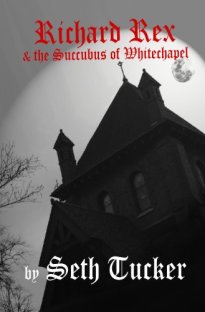
If you described this book to me, I’d have said it sounded too clichéd. A mysterious monster killing people all over Whitechapel, and a private detective hired to track it down? It all sounds too much like a mashup of Jack the Ripper, Sherlock Holmes and Dracula for me.
But Lydia Schoch recommended it, and I trust Lydia. And my trust was vindicated, because this turned out to be a very fun Halloween season short story. It is very short, taking only about 20 minutes to read, but in that short space the author created a whole satisfying plot arc that largely makes sense. Well, almost. There was one thing that didn’t make sense to me. But I can’t get too much into it without spoiling the book. However, it was a minor plot element that didn’t detract from my overall enjoyment of the story.
The Victorian atmosphere is well done and the characters are engaging. It’s true, it doesn’t break any new ground, but that’s not a bad thing. There’s nothing wrong with a good, solid monster story competently told, and that’s what this is.
Dracula is about… oh, who am I kidding? You all know what Dracula is about. Even if you haven’t actually read it, you know the deal: vampire comes to England, mysterious things start happening to a couple of young women. One of them dies, and rises from the grave. Then her friend starts to have similar strange experiences. Eventually, her male friends, with the help of Doctor Van Helsing, realize she is being haunted by an undead monster.
That’s the story. I knew it long before I read the book, mostly because I’d seen the 1931 movie.
One thing I didn’t know was that the book was told as a series of letters among the characters. That was an interesting idea, and made the whole thing feel very immediate. Also, the movie minimizes the coolest scene in the book, the arrival of Dracula’s boat in England.
Now comes the part where I’m probably going to get into trouble: I don’t love the book. It is, in my opinion, just okay.
Part of this is not really anything intrinsic to the book. Dracula is iconic, and as such, most of the elements of it that must have seemed amazing at the time have now become clichés. Alas, there is just no way to read Dracula with the perspective of an 1890s Victorian reader.
Dracula, I’m afraid, doesn’t feel that way to me. It feels dated. That’s not to say it’s bad, because it isn’t at all. It’s fine. More than fine, I suppose. It has become become iconic for some reason. What is that reason?
I’m privileged to know many talented writers and artists. One of the things we often talk about is whether art needs to have a meaning or not. The reason for this question is raised not so much by art, but by the field of art criticism, which follows all art but is never as substantial as art itself, like a mere shadow on a wall.
Is a work of fiction just a pure fragment of imagination? Or are there lessons about the real world that we can take away from fiction?
Is any of this remotely true? Or is it all a bunch of academic navel-gazing?
My feeling is, if you could ask Bram Stoker himself, he’d tell you Dracula was just a cool story about a vampire.
But then… Bram Stoker was a Victorian, and so it is reasonable to suspect that in the process of telling his cool vampire story, he included some elements of himself and the world he knew.
As an example, it is interesting to know that Stoker modeled the character of Dracula after Henry Irving, the most famous actor of the period. Stoker was Irving’s business manager, and it seems he both adored and feared the man. Indeed, he wanted Irving to play the part of Dracula on the stage, but Irving refused, perhaps believing that playing “modern” characters like Dracula (and Sherlock Holmes, BTW) was beneath him.
This is an interesting tidbit, and maybe it tells us something about Victorian society. Maybe the vampire legend’s enduring popularity can tell us other things about society.
Then again, maybe not. Maybe it is just a cool vampire story after all. Either way, though, don’t you want to stick around to find out? 🙂 As I did with the Headless Horseman legend last October, each weekend this month I’m going to take a look at some of the stories related to Dracula and see if there’s anything interesting to be discovered.
Dark Magic is a novella about two groups of magicians: the “Maestros of Magic” and “The Carnival of Conjurors.” The latter begins making a sensation with some truly spectacular performances that seem unbelievable to the Maestros, who investigate and eventually discover that the secret of the Conjurors is in fact real black magic.
What follows is a series of daring episodes of theatrical sabotage, as the Maestros try to thwart their rivals. It’s fast paced and exciting, although still with a few moments to catch your breath and learn something about the characters, all of whom are quite well-drawn, considering how short the book is.
If I have a quibble with the book, it’s that it seemed like the Maestros were a little too willing, too quickly, to jump to some rather dramatic conclusions about the Conjurors. Yes, they turn out to be correct, but even so, it seemed a tad rushed.
That’s a minor point, though. Overall, this is a very fun story with an absolutely perfect ending. I half-guessed it before it was revealed, but even so, it worked quite well. I know I say this about a lot of things, but if you like Twilight Zone type stories, you’ll love this.
I like magic shows and supernatural mysteries, so in that regard, this book was perfect for me. There are a few ways in which it was not perfect for me, however:
I’ll try to say it without spoiling anything, but there are a few references to women meeting violent ends. Nothing particularly graphic, but most readers know that I’m always uncomfortable with female victims as the hook for mystery stories. Give me Stephen Leacock’s “body of an elderly gentleman, upside down, but otherwise entirely dressed” as the victim and I’m much more comfortable. But again, I want to be clear this is not a criticism of the book, by any stretch.
One of the characters suffers from extreme arachnophobia, and this is a major plot point. I’m not quite at the “extreme” stage–I can look at a spider without screaming and running away–but I don’t like them. If the Thought Police ever took me to Room 101, there would certainly be spiders in place of rats. So, reading about them can be a little creepy, although I could really empathize with the character who feared them.
I also am mildly claustrophobic. Mostly, this relates to elevators and an irrational fear I have of being stuck in one. And once again, this book includes a scene with a claustrophobic character who is trapped for some time in a confined space.
Finally, I know I have at least one reader who is not a fan of chainsaws, and there’s one critical scene involving a mishap with one of those.
To be clear, I’m in no way objecting to these things being in the book. Rather, I’m complimenting the book, because it’s such a good story I kept reading despite these things, and found it to be quite a satisfying story overall.
The book description says the author is familiar with the world of stage magic, and that certainly seems to be the case–the descriptions of the life of a touring magic show feel very authentic.
This is a perfect read for the Halloween season–creepy, weird, and tinged with dark humor.
 Another excellent entry in the Brad Parker and Karen Richmond series of medical thrillers. (See my other reviews here, here, and here.) This one begins with a post-doctoral researcher receiving a note at her late uncle’s funeral, which contains shocking information from the deceased. But before she can act on it, she is murdered, and the note taken from her.

 This is the third book in the Benjamin Oris series. I’ve reviewed the previous installments
 This is a fast-paced thriller. It starts out as a police procedural muder mystery set in the near future, when technology has begun to dominate our lives even more than it does today; a world where the sky is thick with drones and almost all cars are operated by AI.
 Dracula is about… oh, who am I kidding? You all know what Dracula is about. Even if you haven’t actually read it, you know the deal: vampire comes to England, mysterious things start happening to a couple of young women. One of them dies, and rises from the grave. Then her friend starts to have similar strange experiences. Eventually, her male friends, with the help of Doctor Van Helsing, realize she is being haunted by an undead monster.