Last year, Lydia Schoch and I made an agreement that January 31 would be “Second Halloween.” Accordingly, I’m observing the day by reviewing a book appropriate for that spooky season.

And look at that cover. How, I ask you, could I possibly not read a book with that cover? Even though it is the sixth book in Boyack’s “Hat” series, and I have not read any of the others, I simply could not resist.

Fortunately, Boyack writes such that you don’t have to read the others to understand it. Maybe a few references went over my head, but I could follow it well enough. It tells the story of a musician named Lizzie, her magical talking hat, and a friend of theirs who has been revivified Frankenstein-style and needs to find medicine to stay alive.

But, finding the medicine means finding the doctor who restored him, and he has fallen into the clutches of the titular monster, the sinister-looking entity pictured above.

The book is fast-paced and action-packed. Lizzie and her friends must mow down waves of pumpkinheaded zombies to reach the Rambler in time. There are also moments of downtime when they gather clues by listening to a paranormal late-night radio show along the lines of Coast-to-Coast AM. As you can imagine, I loved these parts of the story.

This is a fun and enjoyable read for Halloween. Or, in this case, Second Halloween. Which is going to be a thing, by golly! What better way to liven up this dreary time of year?

Robert E. Howard was a popular pulp author in the 1920s and ’30s. Mostly, he is remembered today for Conan the Barbarian, but he wrote a great deal of adventure and sword-and-sorcery stories, many of which appeared in the pages of Weird Tales.

As the subtitle suggests, this book aims to tell the story of Howard’s life through a close analysis of his literary output, using quotes from Howard and his contemporaries.

Literature is a business to me–a business at which I was making an ample living when the Depression knocked the guts out of the markets. My sole desire in writing is to make a reasonable living.

So Howard himself wrote, in the early 1930s. Smith argues that in fact, Howard did have literary ambitions, but that he cloaked them with this sort of practicality.

Howard was a hard-nosed, hard-boiled kind of guy. An amateur boxer and weightlifter, he’d seen more than a little nastiness growing up and, Smith argues, his dark and violent stories reflect his upbringing.

I confess, prior to reading this book, I’d only ever read one thing by Howard: a short story called Ye College Days. It’s a dark comedy, in the vein of Ambrose Bierce, that seems to be satirizing college sports rivalries. Funny, in a macabre sort of way.

Howard, Smith repeatedly tells us, was fixated on physicality and violence in his fiction. His stories tell of fighters and warriors, struggling in mortal combat, either against one another or sometimes against otherworldly demonic entities.

This is in contrast to Howard’s friend and fellow pulp author, H.P. Lovecraft. Howard and Lovecraft corresponded frequently, and Lovecraft’s brand of weird fiction influenced some of Howard’s works.

HPL and REH had their share of disagreements, too, including one over a fairly abstract philosophical point about whether it is better to live in the comfortable regulation of civilization, or the liberated wilds of barbarism.

My favorite parts of the book are the ones about Lovecraft and Howard’s relationship, as they debate and discuss ideas while critiquing each other’s fiction. Unlike Howard, Lovecraft was a quiet, scholarly, would-be aristocrat who had probably never even been in a fistfight, and his characters are much the same; as bookish as Howard’s were barbaric.

The entire Weird Tales community strikes me as a forerunner of internet fandoms and forums. Fans could and did write to Weird Tales, seemingly usually to complain about something. Today, we know Robert Bloch as the author of Psycho, but once upon a time he was a teenaged kid writing angry letters to Farnsworth Wright, the editor.

Speaking of Farnsworth Wright, here’s his take on the readership of his magazine:

While we have many quick-witted and intelligent readers, we also have many whose intelligence is rudimentary.

This is the problem with having a wide readership. Not that Weird Tales was necessarily a blockbuster success, since financial difficulties seem to have been a recurring theme.  On the other hand, at one point we are told that in 1928, Howard:

…earned $186 from his writing, sufficient for him to no longer require other means to support himself and to help with his family’s expenses.

I looked up estimates of the purchasing power of $186 in 1928. Seems it’s equivalent to about $3,000 in today’s dollars, so I’m guessing this was monthly income.

A dream come true, to most of us self-published authors! Imagine if we all made $3K a month. Howard was clearly making a decent living, at least before the depression.

But let’s try to zero in on the specifics of the pulp publishing business. Weird Tales pays Howard $186 a month for his stories. Why? Presumably because they think his stories sell magazines. Of course, since each issue contains stories by multiple authors, there’s no way to precisely know how many sales are due to the presence of a Howard story. But he did have a tendency to be favored with having his story illustrated on the cover. (A fact that annoyed Bloch.)

About those cover illustrations… most of Howard’s tales were illustrated for WT by a woman named Margaret Brundage.  A quick sample of her oeuvre on Wikipedia left me thinking, “More like Margaret Bondage, am I right?” Ms. Brundage’s covers frequently depicted naked women in various sorts of peril, which many Weird Tales contributors were keenly aware of when writing their stories.

Smith writes that Howard “wrote from experience and with a deep respect for history, and the best Conan stories are melancholy with the sharp memories of greater days gone before.” Perhaps, and yet I can’t help wondering if the reason his stories sold was because of the titillating covers that usually accompanied them.

This is a pretty bleak conclusion for anyone looking to draw writerly insights from Howard’s career. Whatever qualities his fiction may have had, was it popular because it provided a basis for many a teenager’s fantasy? If so, what hope is there for authors in a world that also contains DeviantArt?

However, I take a more optimistic view. We still read the Weird Tales authors today, and enjoy the worlds they were able to conjure. The quality of their writing does matter after all!

Imagine if you could tell Howard, or Lovecraft, or any of the others, that in the year 2023, we’d be using a global communications network to discuss their works. I would imagine they’d be delighted.

As I see it, the ironic thing about the pulp community of the 1930s was that they were not thinking big enough. If they had known the future, would they have been grousing over whose story got the cover illustration? No! These trivial concerns melt away when you consider the influence their ideas would one day have in popular culture.

Part of the reason that the words of these authors live on is the community they created. I’ve written before about how Lovecraft’s correspondence with Bloch helped shape one of his best stories. One wonders what they might have done if they’d had the internet at their disposal.

Comes the cynic’s reply: probably waste it by arguing over petty nonsense. A forum is only as good as its members. While I obviously have a great deal of respect for some of their work, there’s no denying most of the major figures at Weird Tales were, well, weird. (Especially Lovecraft. His eccentricities, both the harmlessly amusing ones and the kind of appalling ones, come through clearly in this book.)

As for Howard himself, his own story ended in a rather sad way, the details of which I won’t discuss because they have little bearing on his literary work. All I’ll say is that it would have been interesting to see what he might have produced had he lived to write for a full natural lifetime. Stephen King called much of Howard’s work “puerile.” Smith contests this accusation vigorously, and rightly so, but he never brings up what I consider the most obvious objection: Howard died at the age of 30, and so never could produce more mature works.

After reading this book, I decided to give another of Howard’s stories a try. I read Wolfshead, because Smith seemed to think it’s one of his best early stories.

It’s not bad, I have to say. Of course, for multiple reasons, it is shocking to the sensibilities of modern readers. But it’s got a good atmosphere; a creepy castle in some remote jungle, a cast of interesting characters, and a memorable narrative voice.

Looking through Howard’s works on Wikisource led me to The Battle That Ended The Century, which is a humorous in-joke story, allegedly by Lovecraft, packed with references to various members of the Weird Tales crowd, including Howard, or as he is called in the story, “Two-Gun Bob.”. My favorite line:

[T]he eminent magazine-cover anatomist Mrs. M. Blunderage portrayed the battlers as a pair of spirited nudes behind a thin veil of conveniently curling tobacco-smoke.

Can’t you just picture the sort of scene that’s being described? I bet when you started reading this review, you had no idea who Margaret Brundage was, and now you are able to appreciate inside jokes about her art style that were originally intended for a specific group of writers in the 1930s.

Such is the power of a writing community! Here we are, nearly a century later, and still reading their words. Would anyone in 1936 have dared imagine that the contributors of this strange little pulp would still be remembered? And what will people in 2110 remember about 2023, I wonder? An interesting question to ponder, indeed. But for today, I have gone on too long already.

Spies! Teenage hackers! Nuclear secrets! And above all else, 1990s nostalgia!

All these things are in Phillip McCollum’s short story A Nuclear Family. I can’t really explain how they all fit together without spoiling the whole deal, but what I can do is praise McCollum’s gift for telling a tale. Remember, this is a man who once wrote 52 short stories in a year.

The same blend of teenage tech culture and mysterious goings-on uncovered by the youth of California that formed the theme of McCollum’s The Almost-Apocalypse of Apple Valley are present, but in a more potent, concentrated form. McCollum’s skill at concisely telling a good story is on full display, as is his way with words:

“I was way past wondering if what we’d done was a smart thing–it wasn’t. The question, now, was did we do the dumb thing smartly?”

A question familiar to anyone who has ever been a teenager, I’m sure.

A Nuclear Family is a gripping and suspenseful short story, that keeps you off balance from the start and doesn’t let up. It’s like a Hitchcock movie, updated to the ’90s and in literary form. A Phillip McCollum Special, through and through.

A clever blending of two genres: pulp sci-fi adventure and hardboiled detective mystery, this book tells the story of private investigator Travis Barrett, who is hired to solve the disappearance of a wealthy businessman’s son. His client is the businessman’s daughter, Tina “Trouble” Tate.

Together, the two of them head for Mercury, pursued by the businessman’s goons, Hammerhand and Slick. (Two classic henchmen who have a highly enjoyable dynamic, by the way.) In addition to these two thugs, Travis is also running from something else: his own troubled past. Isn’t every noir detective worth his salt haunted by something? I certainly would never engage the services of one who wasn’t.

Travis and Trouble, together with a host of colorful allies, and at least one person who might be called a “frenemy,” work to uncover the mystery of Tina’s brother and uncover the secrets of the Tate corporation.

The book is fast-paced, with lots of snappy banter and exciting action scenes. It was originally published on Vella, and that’s probably why it’s so pulse-pounding and punchy, with lots of drama and suspense.

If you’ve read Vogel’s other books, his familiar knack for harkening back to adventure yarns of yore is here in force. This book isn’t massively innovative, but it’s not supposed to be. It’s supposed to make you nostalgic for the Golden Age of pulp, and it does exactly that.

I don’t know what else I can say, folks. If my reviews of all Shatzer’s other books haven’t convinced you to try them, I don’t see how this one can.

So I won’t review it as I normally would. Instead, I’ll try some different approaches…

***

Review by an Academic Literary Critic

A Cozy Christmas Murder (Z. Shazter, 2021) satirizes 21st-century capitalism in its portrayal of the independent bookstore operator Roberta Smith and her cat, Mr. Bigfluff, who together represent Messianic figures who protect the town of Quaintville from the avaricious motivations of a criminal who symbolizes the profiteering of the wealthiest classes, while at the same time indulging in a pastiche of various pre-post-modernist textual norms. Smith’s friends, Jeannie and Sheriff James, symbolize conflicting modes of sexuality in a petit-bourgeois milieu…

Review by someone who has only read one very specific type of book

I couldn’t follow this story at all. The characters were not wizards, but seemed to all be non-magical people. I kept waiting for something about a prophecy to explain the plot, but there was nothing. Also, the family bloodlines and lineages were left unexplained, so I couldn’t easily categorize the characters.

Review by someone who is too easily offended

The protagonist of this book is a woman. Are they trying to say that men can’t solve mysteries? Do they want our young boys to grow up believing themselves to be incapable of logic and reasoning? Also, why do they only mention Christmas? Are they suggesting that all the other holidays should be illegal? If so, that is offensive and wrong. 

Review by That Guy; you know the one…

⭐️

To be clear, I love the book itself. The characters are funny and engaging, and the whole thing is a delightful send-up of cozy mysteries. However, I’m only giving it one star because Amazon delivered it three minutes late to my houseboat in the middle of a Category 5 hurricane.

Review by someone whose keyboard only has the letter “h”

hhhhhhhhhhhhhhhhhhhhhhhhhhhhhhhhhhhhhhhhhhhhhhhhhhhhhhhhhhhhhh

Review by someone who is overly nostalgic

They don’t write books like this anymore. I say that because this book was written in the past, which is not the present, and therefore by definition is not being written now. You couldn’t write a book like this today. People would say it had already been written, and in a way, they’d be correct. Because we can only move through Time in one direction. Still, if you want to pretend that it isn’t now but the past, then you should read this book in your near future!

***

Yuck, what was in that eggnog?

Anyway, I hope you enjoyed this silliness. Definitely give Shatzer’s books a try if you haven’t already. Merry Christmas, Happy Holidays, and to all a good night!

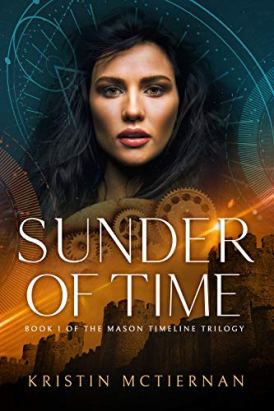
The story of why I read this book begins with a tweet. The author asked what people thought of the cover.

I have to say, I don’t love the cover. Not that it’s bad; because it isn’t. Rather, it just looks like every other cover out there. I feel like a lot of books have faces on the cover, and small wonder, because the eye is instinctively drawn to human faces. The problem is, book marketers have learned this.

But I was impressed that the author was even asking about this. And so I decided, why not pick the book up and give it a try?

I didn’t expect to like it. Early on, it felt like the sort of book I’d put aside and not re-open, as it begins by introducing us to the rather irritating Isabella Jaramillo, a rich, famous, and altogether spoiled professional time traveler. She has the world at her fingertips, and yet she’s rude, angry, and greedy.

But something made me keep going. I got interested as Isabella’s equally unlikable husband decided to strand her in the past as an act of revenge. Isabella started having to make her own way in a world totally alien to her.

The characters of the medieval town to which she is exiled all felt extremely real, too. The characters were well-written and nuanced, and none of them felt flat or clichéd. I felt like I could understand and sympathize with them, even the antagonists. They are a different people, shaped by the harshness of the time and place they were born into, but still complicated and human. And slowly, Isabella starts to be shaped by it, too.

Then the book shifted back to the future and the time-traveler organization, where Isabella’s father Alfredo is frantically trying to find out what’s become of his daughter. But he too has a murky past, and slowly it becomes clear that there are many conflicting agendas at play. The past, or perhaps I should say the pasts, begin to catch up with the powerful men who play at being Gods.

McTiernan displays a wonderful skill at knowing just when to switch from what plot thread to another, keeping the reader hooked on every development, waiting to see what happened next. In other words, by the time I was a third of the way in, the book had totally won me over, and I couldn’t wait to find out what happened next.

In last week’s book review, I mentioned the harshness of life as a medieval peasant, contrasted with the ease of our modern age. Well, this book demonstrates exactly that, as Isabella is forced to cast aside all the privileges and luxuries she once enjoyed and survive in brutal and unforgiving circumstances.

So often, when I read books about the past, they make one of two errors: either they make the past just like the present, only with the thinnest veneer of Middle Ages clichés ill-concealing a modern sensibility, or else they paint the past as miserable and unenlightened, a world of nothing but ignorant stock-characters.

I’m happy to report this book avoids both pitfalls. The people of the past feel real; both in terms of being different from ourselves in terms of values and beliefs, while at the same time having a core of humanity that makes them relatable.

The book is both science-fiction and historical fiction; both an alternate future with some dystopian elements as well a good old-fashioned adventure/romance. It’s also brimming with interesting religious themes, though I’m probably the wrong person to analyze those.

I started off thinking I’d hate this book and wouldn’t finish it, and by the end, I loved it and couldn’t wait to see what happens next. It does end on a bit of a cliffhanger, so you should know that not all the questions it raises will be answered in this volume, but it’s still a fantastic story.

If I made a Mount Rushmore of authors from the millennial generation, it would consist of Peter Martuneac, H.R.R. Gorman, Zachary Shatzer, and Bertocci. I don’t mean to imply they are the only good millennial authors, of course. As Tom Lehrer would say, “there may be many others, but they haven’t been discovered.” It’s just that they are the ones I know about, and each of them, in their own unique ways, captures something about our generation.

And of the four, Bertocci may be the most thoroughly millennial of the lot. Martuneac, Gorman, and Shatzer write of the future and the past, of the supernatural, the fantastic and the bizarre, weaving their millennial themes into their tales. Bertocci, though, writes literary fiction set in the present day, and squarely about millennials.

The Hundred Other Rileys is a perfect example: it follows a woman named Riley who is adrift in life. Here is her description of her job:

[M]y own job is not to understand, it’s to keep track of who’s doing what in Google Sheets and send a lot of emails with exclamation points asking when other people who do things will do them. ‘Riley Bender – Innovation Associate’, my signature reads…

There are versions of me in every sprawling corporation–the hubs, the go-betweens, the copier-pasters and checkers of boxes, whose lot it is neither to know nor to do, but to merely assign, assess, go after, be whatever fills the gap. We look. We circle back. We forward. We facilitate. Sometimes we liaise. We don’t strategize, that’s too serious. We sync. We send updates. We tell ourselves we don’t shuffle papers, it’s all in the digital realm. We thank in advance. No worries if not. We don’t really do what our companies do, but we get on the same page, no worries if not. We do nothing that matters, and we’re all so behind.

Isn’t that dead-on? If you’ve had a job like this, you know how it feels. It isn’t hard… it’s just so blatantly pointless.

But one day Riley sees a picture of a woman who looks like her in an advertisement. And from there, she starts seeing the same stock photo model everywhere, as if mocking her own career’s dead-endedness, alluding to all the other opportunities she missed, all the paths not taken.

What follows is a mind-bending, fourth-wall-breaking, exploration of frustration, stultification and ultimately, how to get past them. There’s even a little bit about writer’s block in it, though I won’t discuss that in detail for fear of spoilers. But every writer I know will want to read it. And that goes double for millennials, to whom Bertocci speaks like no other writer I’ve read.

Be warned, I’m about to speak in broad generalities about an entire generation. Obviously, not every millennial will fit the description I’m about to give. I myself am something of a mixed bag in this regard: in some ways, I fit certain millennial stereotypes to a “t”. In other respects, not so much. So, please don’t think I’m asserting every person born between 1981 and 1996 has all these qualities.

Okay, so what’s up with us millennials? Why, to quote some beloved Boomer family members of mine, are we such whiners? Back in my parents’ day, they had to fight two lions every day… etc. My generation has it so easy!

Well, in a sense, yes, we do have it easy. I was born in 1990. I am much happier I was born in 1990 than in say, 1950, or God forbid, 1850. This is actually an excellent time to be alive in any meaningful historical context.

Are we millennials simply coddled, spoiled, soft, decadent weaklings, like the debased aristocrats of the very late Roman Empire? Are we, or more to the point, all our complaints about society, reflective of nothing but moral turpitude brought on by the proverbial idle hands?

Well, I don’t think so. But I would say that, wouldn’t I?

The problem millennials face is exactly the one illustrated by Riley’s obsession with her doppelgänger: we face too many opportunities. In a world of endless possibilities, we all have to choose one, and it’s hard to be sure which one to take. Thus, we end up either choosing one and regretting it later, or worse yet, staying in a holding pattern too long.

Is this a good problem to have? I think so. Certainly, if Riley had been born a peasant in 1327, she would not face the same problems that she does as young person in the 2020s. And it’s hard to argue that the latter set of problems is not preferable.

What Bertocci has masterfully shown in literary form is that abundance can itself be a problem. It may be a better problem than scarcity, but it’s still a problem. And as a species, we’ve had millennia to learn to cope with scarcity. Abundance? That’s something new, weird, and very much foreign to us.  Because biologically speaking, we’re not much different than the peasants of 1327.

That’s not uniquely a millennial issue, of course. Technological progress took off earlier in the 20th century, before the millennials’ parents were even born. Other things that characterize my generation include a sense of humor that relies heavily on cultural references, and a strong desire not to get beaten down by a nose-to-the-grindstone mentality in our work lives. Whether these are positive or negative qualities is something I leave entirely up to you to decide. What I do know is that this book captures all these aspects of the millennial weltanschauung.

This is why I describe Bertocci as, well, the voice of his generation. In many ways, this is the spiritual sequel to Bertocci’s wonderful Samantha, 25, on October 31, which I consider a masterpiece. This book is every bit a worthy successor to Samantha, and in some ways is even more inventive and original. It’s another splendid work of literary fiction, and deserves to be widely read.

[Note: Special thanks to Richard L. Pastore for reading an early draft of this review and making suggestions on how to improve it.] 

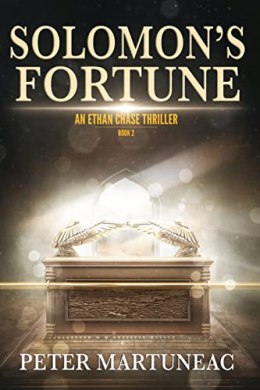
I didn’t get to write a proper review of the first book in this series, Mandate of Heaven, for reasons I explained in my not-quite-a-review post when it was published last month. But I was not a beta reader on Solomon’s Fortune, and that means I get to give it the full Ruined Chapel treatment.

Ethan Chase, and his fellow adventurers Frankie and Mei, once again find themselves on a globe-spanning hunt for a legendary treasure. This time they are seeking the Ark of the Covenant, and their journey takes them from the Middle East to Italy to a mysterious island in the Atlantic. At every step, they are forced to contend with rival treasure hunters, including a wealthy and relentless Russian arms dealer.

Of course, because they’re chasing the sacred Ark, one is tempted to compare the book with Raiders of the Lost Ark. Indeed, much to Ethan Chase’s chagrin, several of the characters draw this parallel. And why not? In my earlier post, I compared the first book to Indiana Jones. Chase’s objections notwithstanding, there’s no question that this series captures that same spirit of adventure, of wise-cracking heroes racing to stay one step ahead of sadistic villains across many exotic and famous locations.

It’s important to remember that Indiana Jones was itself an homage to the pulp adventure serials of the 1930s. We are always nostalgic for a bygone era of adventure, it seems. I’m reminded of something that somebody (Michael Caine, maybe?) said of The Man Who Would Be King: “Even when it was made, people said, ‘they don’t make films like that anymore.'”

And indeed, in our modern world, when the whole surface of the earth is mapped by satellite imagery and everybody has a digital camera in their pocket, can we even keep alive the dreams of forgotten ruins and lost treasures, of ancient mysteries and supernatural secrets, and above all, of heroism and adventure?

I say we can, thanks to books like this. While I was reading it, I found myself instantly absorbed in Ethan Chase’s world. Its themes are timeless, and its characters are likable. Even the villains have some shreds of humanity left in them, which make them all the more interesting.

These books have a vibe to them, is what I’m saying; an ethos that feels familiar and at the same time refreshing. In fact, fittingly enough, I would go so far as to say they are a treasure. If you like good stories, you should read this book, and if you haven’t read the first book in the series yet, you should read them both, and join Ethan Chase on his thrilling expeditions.

Earlier this year, Zachary Shatzer had the idea of creating a new genre called “cozypunk,” as a blend of cyberpunk and cozy mysteries.

I loved this idea, and even thought about trying to write something of the sort myself. But then, when Andrey Popov responded to my call for pleasant, uplifting book recommendations last week, I learned this book existed, and that’s pretty much what it is. And I doubt I could do as good a job of it as Katz does.

This is a short story, set in a “retro-futuristic America.” I was in love already upon reading those words. It follows wandering AI repair technician Clara, whose wanderlust takes her to Seattle, where she meets Sal, a sophisticated robot who manages a small tea shop. Clara soon befriends Sal, but before long, the two are forced to confront a number of challenges, both material and emotional.

The book is a short and sweet sketch of the two major characters, but there was also a sufficient amount of background given to make the world feel grounded. In particular, the threat of violence against sentient AIs helped make the story feel like part of a wider world. It reminded me of Asimov, if Asimov had written lesbian romance.

And it also made me crave tea! I am not even much of a tea drinker; being more of a coffee guy. But every so often, and especially of a rainy November evening, I enjoy a cup of Constant Comment. And that is what I sipped while reading this charming little story. Andrey is exactly right about it; it’s a story that is “kind and full of love.”

Brace up, my friends! Today’s review will be a long one, because today’s book, although small in terms of length, contains vast concepts. Concepts which a mere critic probably cannot adequately address. But, I feel compelled to try anyway. Really, the best decision you could make would be to get this book now and read it before Halloween. Then, come back and read this review if you want. Or better yet, write your own! This is one of those books that I suspect will inspire strong feelings in readers. Lydia Schoch, to whom I owe thanks for bringing this book to my attention, already wrote one yesterday, and I encourage you to read it.

So, what is this book about? Well, as you likely guessed, it’s about a 25 year-old woman named Samantha, born in Ohio and now living in New York City, which she imagined would be glamorous, but is finding her life lacking in purpose and direction. She is unhappy, but she cannot pinpoint exactly why.

Among other things, this book is about millennial angst. The millennials are the generation born between approximately 1981-1996, which makes Samantha one of the last ones.

If you are a millennial, as I am, you probably know what I mean by “millennial angst.” If you’re not, you might be skeptical of this whole phenomenon. And I can’t blame you. It is possible every generation experiences these growing pains, and imagines themselves to be unique when in reality they’re just like their parents, and their grandparents, and so on. When Don McLean sang of “A generation Lost in Space / With no time left to start again,” he wasn’t singing about millennials. But he might as well have been.

So, maybe it’s unfair to call it “millennial angst.” But whatever you call it, this book captures it.

Now, possibly, you are getting nervous. You might be asking yourself, “Is this book part of that sub-genre of literary fiction known as ‘Spoiled People Who Are Unhappy In Vague and Complicated Ways?'” This is a very popular sub-genre among pretentious literary critics and scholars. I hold F. Scott Fitzgerald responsible for this, as his beautifully-written but soulless novel The Great Gatsby taught generations of writers that this is what fiction is supposed to be like.

Gatsby is about unhappy people in New York. Samantha, 25, on October 31 is also about unhappy people in New York. Gatsby is full of symbolism. Perhaps someday the literary critics will get their hands on Samantha, 25, and then they’ll say it’s full of symbolism, too. And perhaps it is, but here at Ruined Chapel we rarely employ such modes of analysis.

Anyway, let me actually answer the question: is this one of those books? No, it isn’t. You might think it is, since it shares common elements, but no. This book is something very different. It is much stranger and much more powerful than that.

Samantha dreams of rediscovering the magic of Halloweens of her childhood. Somehow it slipped away, without her even being aware of it, and now it’s gone and the world is drab and humdrum. This book, then, is not in the tradition of Gatsby, but of Something Wicked This Way Comes and even of Lovecraft’s more esoteric works. I particularly thought of the opening of his never-completed novel Azathoth:

When age fell upon the world, and wonder went out of the minds of men; when grey cities reared to smoky skies tall towers grim and ugly, in whose shadow none might dream of the sun or of Spring’s flowering meads; when learning stripped earth of her mantle of beauty, and poets sang no more save of twisted phantoms seen with bleared and inward looking eyes; when these things had come to pass, and childish hopes had gone away forever, there was a man who traveled out of life on a quest into spaces whither the world’s dreams had fled.

And here, I have written myself into a corner and given lie to my own thesis. Namely, by showing that H.P. Lovecraft, who was about as antithetical to the values of my generation as it is possible to be, nevertheless was feeling some angst of his own.

It is entirely possible that writers in every generation are like this. It may be just some weird mutation that keeps cropping up. We can’t rule out this possibility.

Why is it, do you suppose, that these mystical, irrational ideas persist? What spirit is it that moves Samantha to wish for “spooktacular Halloween adventure?” Is it just the whims of idle youth? Or is it… something else?

We’ll return to this question. But in the meantime, we’ve got to talk about Halloween itself.

What, exactly, is Halloween about? For comparison, think about what every other holiday is about. Every Western holiday I can think of can be traced to something specific, and commemorates a particular thing, whether it’s an actual event, a person, a myth, a miracle, or something of the sort.

Halloween… doesn’t. At least, nothing specific. It’s the night before the Day of the Dead, which, under various names, is the day of remembrance of departed ancestors. But even that’s not Halloween.

Halloween itself is about the mystery of what lurks in the darkness. It’s celebrated when it is because the days are getting shorter, and the sun is sinking lower, and frankly, this was just a rough time of year if you were a pagan farmer. Your thoughts probably weren’t of a cheerful sort during this time.

Of all holidays, Halloween is the most closely associated with the mysterious and the unknown. And, I would contend, it is the holiday that most closely binds us to a darker, more primitive age, when, as HPL might say, “wonder was still in the minds of men.” (And women, too. Like I said, ol’ Howard wasn’t really up to speed with our modern values.)

And now, we’re in a position to evaluate what Samantha wants, and why Halloween is the catalyst for making her want it. As Samantha says at the climax of the book:

“I spent an awful lot of the past two decades and change just kind of following the rules, keep your head down, jump through hoops, impress the teacher, check every box and go to a good school and check the boxes there and now, whoops, that’s all crap because you do that and you work an essential starvation-wage job selling five different kinds of kombucha and no one gives a shit and nothing matters and soon enough society collapses and the best that the people in charge can tell you is keep following the rules.”

I understand if you’re agnostic about the concept of millennial angst. Yet, if it exists at all, this is surely as perfect a summary of it as was ever put to the page.

And that is why Samantha finds herself standing with a bunch of witches around a fire on Halloween night. Because she is tired of following the rules and jumping through the hoops.

It’s a night when rules are broken, and the world seems a little less rote and a little more mysterious.

Friends, the world is not a spreadsheet. It can’t be neatly and efficiently organized, at least not without resorting to methods ripped from dystopian novels. There must always be a sense of indescribable magic in life, or else it’s not really life at all.

Samantha, 25, on October 31 is a great book. There’s no rubric I can use to articulate why, no arithmetic formula I can point to and say, “Ah, there! That is what makes it great!” Only it is, because it has the power to say things I always thought, but never could articulate, even to myself.

Of course, you might disagree. Maybe you’ll read it, and look at me the way I look at people who tell me Gatsby is the Great American Novel. Every book really is like the cave on Dagobah in The Empire Strikes Back: What’s in it? “Only what you take with you.”

Therefore, I advise you to bring with you the spirit of Halloween; the feeling of curiosity and wonder that all of us keep somewhere in ourselves, and let yourself get lost in the magic of this weird and wonderful holiday.