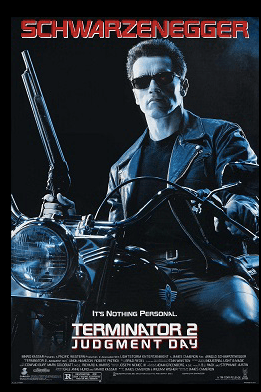
This right here is the movie that inspired me to write this series. Of all the movies I have discussed, or will discuss, this is the ’90s-est, action-est, movie-est.

While I obviously like every movie listed here, I could point to flaws in most of them. Terminator 2 is too cartoonishly violent, Last Action Hero has too many crude jokes, GoldenEye has Xenia Onatopp, and so on. But when it comes to The Mummy, I’m at a loss to find much fault with it. It’s a classic pulp adventure.

You’ve got wonderful characters, from the gunslinging American Rick O’Connell and the bumbling twit Jonathan Carnahan, to the mysterious Ardeth Bay and the jovial pilot Winston Havelock. Not forgetting the conniving coward Beni or the sinister High Priest himself, Imhotep.

And then, of course, there’s Evie Carnahan. I can do no better than to quote her description of herself, after she’s had a little too much to drink around the campfire one night:

“I may not be an explorer or an adventurer or a treasure-seeker or a… a gunfighter, Mr. O’Connell! But, I am proud of what I am! I… am a librarian!”

All right, maybe that’s not Evie at her finest, although definitely she is pretty awesome even when she’s been hitting the bottle. But what I love is how she and O’Connell make such a good team. His adventuring skills and her thorough knowledge of Egypt help rescue them time and again from the wrath of the revivified mummy.

Everything about the movie is just fun. You can tell the actors are enjoying themselves, and why shouldn’t they? It’s a cracking good yarn of romance and derring-do. It’s one of those movies that, when you see it come on TV, you just sit and watch it before you even realize where the time has gone.

I’ve said it before and I’ll say it again: the better I like a movie, the harder it is to review it. How many ways are there to say, “this movie is awesome and I love it”? Not bloody many. This is probably why academic critical analyses of movies tend to focus on what’s wrong with them; that’s much more fruitful ground. But the result is that many words are generated on the topic of bad movies, and not so much on the good ones.

Well, I’m no academic, but I’ll give this a try: The Mummy is great because it offers us an immediately recognizable, yet still sufficiently different world we can escape into. People watch movies because they want fun. Critics, as a rule, don’t want fun. Ergo, critics aren’t people. Oops, wait; I’m a critic, aren’t I? Hmm.

My point is, if you want to write a 20 page paper on themes and symbolism and whatnot, this movie probably won’t furnish you with enough raw material for same. But who cares? Only weirdos like me sit down and write at length of their thoughts on movies; normal people just enjoy them. And joy is an underrated emotion when it comes to providing fodder for writing. Probably because it’s so far beyond words. There’s a reason that the most famous instance of a composition expressing joy was written in music.

In a way, writing critiques is just dodging the real issue. Could any review I write, no matter how clever, witty, or insightful, ever equal the sheer glee I had as an 11 year old kid watching Rick O’Connell mow down legions of zombie warriors? Of course not! Writing about it is just a way to relive the experience over again, and hopefully share the joy with others.

The real greatness of movies is never found in reviews; it’s found when you are sitting there in that theater, with your popcorn and your drinks, ideally with people you really like, sharing the pleasure of diving together into some fantastic, imaginary world full of excitement and suspense and adventure that you can talk about afterward not in the technical, fussy language of a critic, but with the burbling excitement of a kid playing in the backyard. Take that, Bembridge scholars!

This book is in that uncomfortable range of works that is neither obscure nor famous enough to typically warrant a review from me. I like to review either indie books that are really new, or iconic books that are so famous everyone knows them. This one, though, falls somewhere in between.

I read it because of H.R.R. Gorman’s review. By the way friends, if you want to get me to read a book, this is how to do it:

“This one was a trip. Like, really weird. Super out there. I had fun for the most part, but certain elements just threw me off hard.”

Such was H.R.R.’s verdict, and to me, that’s about as enticing as it gets.

That Inevitable Victorian Thing is a YA romance set in an alternate future where the British Empire never fell. How exactly this happened is left vague, but it’s suggested that Victoria overrode Parliament, ruling more as an absolute than a constitutional monarch, and married her children off to all parts of the Empire, thereby embedding its influence all across the globe.

Our three main characters are Helena Marcus, the daughter of an important geneticist, August Callaghan, who is set to inherit his father’s shipping company and planning to marry Helena, and Victoria-Margaret, the crown princess, traveling in disguise for the debut season in Ontario, Canada.

In other words, we have many standard tropes of Victorian novels: disguised royalty, engagements, and lots of fancy parties and grand balls. I was impressed early on with how well the author imitated the style of The Old Victorian Novel. I was worried it was going to be one of those affairs where we’re told it’s a neo-Victorian setting, but everyone acts and talks just like modern-day people. Thankfully, that’s not the case for the most part.

And of course, also very much in keeping with the expectations of Victorian melodrama, everyone has a secret. Victoria-Margaret is concealing the fact that she is the heir to the throne of the British Empire. August is concealing an indiscreet business arrangement he foolishly made early in his career. And Helena…

…well, I won’t say exactly what Helena is concealing. But let’s say that it is one of those “accident of birth” things with which the Victorians were so fascinated. The Victorians were obsessed with concepts like blood and breeding, and that’s very much the case here, as evidenced by the prominence of the DNA-based computer dating service that drives so much of the plot.

That said, this is more of a comedy of manners than a melodrama. The plot develops largely at dances and over teas, or at long trips to the family summer retreat. Again, classic Victorian romance stuff.

The other thing that struck me about the book was how nice everyone was. There are no villains; the drama mostly comes from misunderstandings. The worst person in the whole thing is an overly-aggressive paparazzo trying to get pictures of the undercover princess. Everyone is polite, well-meaning and generally decent. (Not to fall into blatant stereotyping, but it was set in Canada, and written by a Canadian…)

Before I wrap this up, a quick word about the cover. I like it a lot. It reminds me of something. But what? I’ve been trying to figure it out, but I can’t. At first I thought it was this image of The Golden Bough, but on closer inspection, I realize it can’t be. So, what is it then? There is something Victorian that looks like that, I’m convinced of it.

Anyway, though, this is a very charming romance story that honors its Victorian heritage well. There are a few nits to pick here and there, including one super-jarring use of a certain word beginning with “f”, but for the most part, it’s a sweet, cozy tale of young love at the height of a great Empire.

Except…

…as Columbo would say, “There’s just one more thing.” Well, actually, maybe it’s more like three more things.

Could anyone seriously believe that the author of American Chimera would call a mere cozy comedy of manners “really weird”? Oh, no, no, no. There’s a lot more going on here. If you’ve read H.R.R.’s review, you already knew that.

There is so much more to address, and this is running long. So, for the first time on A Ruined Chapel by Moonlight, I’m splitting the review in two, with the second part to be posted next Friday, same bat-time, same bat-channel. Then we’ll find out what is really happening.

[Audio version of this post available below.]

This is the second book in the Dr. Rowena Halley series, the first of which I reviewed here. This one picks up right where the first one left off in following the career of Rowena Arwen Halley, the Russian language Ph.D. struggling to navigate a brutal academic job market as well as her own desire for a relationship. But, her heart is torn between Alex, another struggling post-doc, and Dima, the Russian soldier-turned-journalist who broke up with her and sent her back to the U.S. while he continued reporting on conflict in Eastern Ukraine.

Dr. Halley has started a new one-semester teaching position, and from day one, is beset by annoyances, the most prominent of which is Jason, a student in one of her classes who wants to use her to help him fight a custody battle with his estranged Russian wife.

The start of the book is a bit slow, although it does give a good window into the dreary reality of academia. Where it really picks up is with the arrival of Rowena’s brother, Ivanhoe Elladan Halley, the rough-and-tumble Marine Corps officer recently returned from Iraq and Afghanistan, who comes to visit in the middle of the book. (Disregarding his parents’ decision to name him after Sir Walter Scott and Tolkien characters, he goes by “John” most of the time.)

John is my favorite character in the book. For one thing, his lines are pretty funny, especially his unsolicited blunt advice to his sister and his foul-mouthed contempt for her boyfriends, past and present. But he’s also a more complex character: a veteran who probably has PTSD but masks it with machismo, alcohol, and womanizing. He’s basically a good guy, but he’s been through some bad stuff, and it has taken its toll on him.

I won’t lie, the middle third of the book, in which John appears regularly, is definitely my favorite part. The ending suffers from some of the same issues as the beginning; namely, that it gives a very accurate portrayal of the current state of seeking employment in academia, particularly in the humanities.

There’s one other issue I have with this book. Unlike the first installment, which really was a mystery that needed to be figured out, here, the main conflict isn’t a mystery. The person who is obviously bad ultimately turns out to be… bad. Which is kind of a letdown. It’s not that exciting when at the climax of the story, a character turns out to be exactly who you thought they were.

But that’s okay. This is a character-driven book, more so than the first one was. The interesting thing is less about seeing where it all goes than how it gets there, and how it gets there is pretty interesting. Stark tackles a variety of social and geopolitical issues, from the overproduction of elites in American higher education leading to a glut on the academic job market, to the many ruined lives resulting from ongoing conflicts in the Middle East and Eastern Europe, to the destruction of society at the most fundamental level as a result of people lacking basic virtues.

So, don’t go into it expecting some kind of plot-twist filled mystery. Instead, read it as a commentary on the many deeply-rooted problems in modern society. Read that way, it paints a vivid and memorable picture.

[Audio version of this post available below.]

This is a short story in two parts. The first part is a ghost story, told by a young man who gets lost while driving one stormy night, and ultimately finds his way to a creepy house where terrifying events occur. He flees with a small carved statuette in the shape of the titular grinning god, which becomes his only proof that anything happened at all when he is unable to find the house again despite a thorough search in daylight.

The second part of the story involves Prof. Augustus S. F. X. Van Dusen meeting the young man who recounted the events in the first part of the story, who by this time is raving mad. Prof. Van Dusen is nicknamed “The Thinking Machine” because of his relentlessly logical mind, which enables him to use pure reason to solve seemingly-impossible mysteries. Prof. Van Dusen’s formidable intellect goes to work, trying to determine a rational explanation for these bizarre events.

You know me: I like a good horror story that leaves things unexplained. Hence, you won’t be surprised to learn that I liked the first part of the story better than the second part.

But, what makes this particularly noteworthy is the story behind the story: the first part was written by May Futrelle, to set up a deliberately impossible problem for Prof. Van Dusen, a character created by her husband, Jacques Futrelle. Jacques then wrote the second part, where he tried to come up with a way to satisfyingly solve the unsolvable problem.

Apparently, Mr. Futrelle wrote a ton of these Prof. Van Dusen stories. He seems to have been the heir to Sherlock Holmes as a popular fictional detective, though he’s obviously not been as enduring. Futrelle likely would have written many more stories, but alas, he died at the age of 37, in the wreck of the Titanic. (May survived, however.)

Anyway, “The Grinning God.” Do I recommend it? Yeah, I’d say it’s worth reading just for the first part. The second part is more gimmicky, but it was still interesting. It was written in 1907, so it’s probably public domain, though I ended up just reading it in the collection linked above for the sake of convenience.

[Audio version of this post available below.]

It occurs to me, gentle reader, that perhaps this series has a curious structure to it. The posts are getting longer and, hopefully, building upon each other. However, this structure might make it confusing to read. Maybe it’s better to read it in reverse order, with the posts hopefully cascading to tell a larger story. Like the verses in “I Have  A Song to Sing, O!”

Or maybe not. Anyway, our journey has now brought us to the 1995 007 flick, GoldenEye.

GoldenEye is, in my opinion, the best James Bond movie. Now, my opinion could be biased by the fact that it is the first James Bond movie I ever saw. But I don’t think so. Part of the reason is that Brosnan is not my favorite Bond; not even close, and yet I still enjoy this film the most.

The key thing with all James Bond films is that they are walking a fine line. You can’t take James Bond too seriously, because, well, the whole premise is basically ridiculous. The early Connery films established a somewhat over-the-top, tongue-in-cheek tone.

Unfortunately, the 1970s happened, and this tone got carried to a new extreme during the Roger Moore era, which saw Bond films that ranged from pseudo-blaxploitation to rip-offs of Star Wars.  And that was before we even got to Octopussy and A View to a Kill. <shudder>

The Timothy Dalton era wasn’t really even an era, consisting as it did of only two films: The Living Daylights, which still has some residual silliness inherited from the Roger Moore tradition, and the serious and gritty Licence to Kill, a clear forerunner of the darker tone of the Craig era.

It’s a shame Dalton didn’t sign up for one more turn as 007 in GoldenEye, because it’s the one that finally hit that proper medium. It isn’t outright camp like the Moore films, but it has enough awareness of its genre not to try and be some sort of grim, realistic thriller.

And we should expect nothing less! Because it was made in the ’90s, and the whole point of this exercise is that the ’90s were the halcyon days of action movies. GoldenEye isn’t a great film, and I would grade it as distinctly inferior to the preceding three films I’ve reviewed in this series, but there’s no doubt in my mind it is the best Bond film, and the best that’s likely to be made for some while.

There are even some moments of social commentary, incredible as it may seem. Like when Bond goes wandering amid a wasteland of Soviet relics to meet the leader of the Janus crime syndicate, with the implication being that Bond himself is another holdover from the Cold War. The film asks: with the U.S.S.R. gone, what is even the point of an operative like 007?

The whole movie is kind of a farewell to Cold War thrillers. Large portions of it are set in Russia, with Russian villains, and Russian super-weapons, and a brief discussion of the repatriation of the Cossacks in the aftermath of World War II. It’s a meditation, to the extent that any action movie can be called a “meditation,” on what all the tropes of the spy genre would look like in the unipolar moment.

Because what was a spy to do, at The End of History? For that matter, what were these huge, military-industrial complexes with vast arsenals of experimental weapons built up over decades to do? (The answer to both, GoldenEye suggests, is “fall into the hands of terrorists and madmen.”)

But that’s another story, for another decade. In the ’90s, it was still all just fun and games, and James Bond could be counted on to save the world with his sexy sidekicks and his cool gadgets, and even the blundering, bumbling American CIA could show up for a cameo at the end.

I can’t end this review without mentioning GoldenEye‘s most enduring legacy: the spin-off video game that proved to be one of the most influential of its era, and which remains legendary in gaming circles to this day.  Do they still do video game spin-offs of movies these days? I haven’t heard about any. Games based on movies have a reputation for being awful; and yet we see that it was done successfully at least once, in that strange, gauzily-remembered decade between the fall of the Berlin Wall and Y2K. It seems the knowledge once existed, though it has subsequently been lost. Like Greek Fire.

[Update: check out my friend Pat Prescott’s response to this post. His take on the movie is very different than mine, and while I stand by my opinion, I admit he makes some good points. But then, he’s a real Bond expert, having seen all the films many times. One thing I hope to encourage with this series is for people to post their own opinions on the films I discuss.]

There I was, thinking to myself, wouldn’t it be nice to read a cyberpunk book right about now? And then, thanks to a timely retweet from the incomparable Carrie Rubin, this book came to my attention. It was like it was meant to be.

The Copernicus Coercion is a cyber thriller about two hackers, Brock and Kathryn K, who quickly find themselves drawn into an intricate conspiracy. This book hits all the cyberpunk notes: we have hackers with embedded implants that provide continuous network access, shady back-alley surgeons providing illegal cybernetic augmentation, super-powerful artificial intelligences that become eerily human, a group of gray hat hackers operating out of an old church, and most importantly, sinister plots by shadowy elites.

Naturally, I ate it up. If you like cyberpunk stories, you’re probably going to like this. And despite the requisite tech-heavy aspects of the plot, Scobie was careful to make the characters strong, too. From the interaction between the two protagonists, to minor characters like the hacker-priest at the church or even an amateur carjacker, most of the characters in the book are interesting and memorable.

If I have any complaints about the book, it’s that the ending felt a bit rushed, and the character who functions as the final antagonist isn’t as well fleshed-out as the rest of the cast. It’s not a major problem, and generally, I’m of the opinion that if the journey is enjoyable, I can forgive a flawed ending. And The Copernicus Coercion is certainly an enjoyable journey.

In another serendipitous occurrence, I happened to be reading this book at the same time as I was reading Ray Kurzweil’s The Age of Spiritual Machines. The issues Kurzweil examines in that work of ’90s futurism are explored in an entertaining way in this novel, so it makes a perfect complement. If you want a fun story that also poses some interesting questions about humanity’s relationship to technology, pick this one up.

[Audio version of this post available below.]

This is a sequel to He Needed Killing, which I reviewed here. If you enjoyed that book, you’ll like this one, too, because it’s more of the same. Once again, retired university IT professional James Crawford is hired by the provost to investigate a murder on campus.

And like He Needed Killing, the charm of the book is less about the mystery than the atmosphere and the characters. Crawford’s life in a southern college town is portrayed as pleasant, slow-paced, and filled with food and football on a regular basis. Sure, there’s a murder to be solved, but that doesn’t stop Crawford from taking time to enjoy the good things in life. Like another southern detective, he “strolls leisurely” on his way to the truth.

And it’s an enjoyable stroll, because the descriptions of campus life are so well-written and the characters so likable. (Except, of course, for the ones who really do “need killing.”)

Crawford is a great protagonist, and his style of investigation is perhaps best captured by these lines, which he says while musing out loud to his cat:

“They were figuring out all the orbits of the solar system–how the orbits of the planets and moons were impacted by gravity, but the model kept predicting the wrong orbits. The only way they could get the model to work was if there was another planet the size of Neptune where Neptune had to be. So they looked and–by damn–there was Neptune. Don’t you think that’s cool?”

Crawford makes sense of things by thinking out loud while puttering around his house. It’s not flashy like Sherlock Holmes, which leads a lot of people to underestimate his detective skills. Much to their detriment, as it turns out…

But, in all honesty, I didn’t read this book for the mystery. In fact, I figured out who the killer was pretty early on. But that did not detract from my enjoyment one bit, because what’s really fun about it is the style, the pace, and the setting.

[Audio version of this post available below.]

If you’ve followed this blog for a while, you’ve probably already heard me sing the praises of Litka’s books many times. In fact, there are a few people who, I’m delighted to say, I’ve introduced to his work and who have also become serious fans. (Litka-heads, maybe? We’re still working on what to call ourselves.)

Yet, Litka’s work is not as well-known as it should be. Sailing to Redoubt may indeed be his greatest work, although I suppose I always feel that way after reading any of his books.

Litka books have a way of transporting you instantly into another world. They are at once fantastic and simultaneously cozy. There is rarely anyone truly “evil” in a Litka book; the conflict tends to arise from misunderstandings or differing priorities than from people who are just out to be mindlessly bad.

In that regard, Litka reminds me of P.G. Wodehouse. Now, you might not instantly see the parallels with Wodehouse’s world of upper-class Edwardian silliness with Litka’s tales of sci-fi and fantasy adventure, and indeed, no one will ever get confused as to whether they are reading Litka or Wodehouse.

But, all the same… there’s a little of Bertie Wooster in our hero, Lt. Taef Lang, and the way he just can’t seem to say no to the sisters, Lessie and Sella Raah, who lead him from one madcap adventure to the next. Lessie, with her cold aloofness, calls to mind PGW’s Florence Craye, while the playful and flirtatious Sella is more like Stephanie “Stiffy” Byng. While Lt. Lang gets dragged into matters considerably more complex than, say, stealing a cow creamer, the principle is the same: a good-natured young man who repeatedly finds himself in the middle of all kinds of strange adventures.

That said, Lang, while he can be a bit reckless and at times foolish, can definitely hold his own. He’s a naval officer, after all, and has a thorough understanding of the history and geography of local islands as well as a taste for adventure acquired from reading adventure novels as a boy. All in all, he’s a man to be reckoned with, though he wears his knowledge lightly and falls easily into the role of a personal assistant to the two sisters.

And speaking of the “local islands”: as always, I’m in awe of Litka’s ability to craft an entire world with scant description. Seemingly effortlessly, he builds a setting complete with geography, climate, multiple cultures, languages, political history, and even its own series of adventure novels. Before I even knew what was happening, I was completely immersed.

There are a few typos here and there, but nothing that detracted from the story. Also, you should know this book is part of a series, and ends with many things to be resolved in the second book.

You may think, “aww, that’s just a ploy to sell books!” Except… both this book and the sequel are free. Yes, free. You can get this wonderful nautical adventure and its sequel without spending anything.

So what are you waiting for? Why are you still hanging around here? Be off with you, and go read Sailing to Redoubt!

[Audio version of this post available below.]

If this movie had been made a decade or two later, it would have inspired a fan backlash.
Do you doubt me? This is the film that transforms Sarah Connor from the ordinary young waitress of the original movie into a hardboiled commando, athletic and capable of handling firearms with ease. You can’t tell me that people wouldn’t complain about the change. As if that weren’t enough, now the T-800 is a good guy, fighting to protect the young John Connor. “But how did that even work?” the Comic Book Guys of the world may ask. “How does it fit with the established lore?”

But T2‘s biggest crime against the franchise is the subversion of The Terminator‘s original theme. The first film is fatalistic, with the coming nuclear war caused by Skynet understood as an inevitable outcome.

T2 says otherwise; that “there is no fate but what we make for ourselves.” It totally undercuts the original’s theme. Not to mention opening a whole new can of worms about multiple timelines, in addition to the paradoxes that are implicit in every time travel story.

All these are valid criticisms. But it doesn’t change the fact that Terminator 2 is still a really great action movie. Yes, it replaces The Terminator‘s grittiness with some pretty over-the-top and cartoonish action sequences, most notably the use of an M134 minigun as a precision non-lethal weapon to avoid casualties. Just… no. Or rather, only in the movies. Though I am come to sing T2‘s praises, I’m not going to sit here and tell you it’s believable.

But look: this was the ’90s, and the ’90s were pretty optimistic. The Cold War was over! It had been won not with guns and bombs, but with blue jeans! It was The End of History!

This might sound silly nowadays, and yet, I think, it was the attitude that made ’90s pop culture so damn infectious. Terminator 2 is lighter than both The Terminator and Terminator 3. And that, I submit, is because it was made after the renewed US-Soviet tensions of the ’80s and before the post-9/11 2000s. It captures the mood of the era, by willing to be a fun Arnold Schwarzenegger movie where the killer robot says things like “Hasta la vista, baby.”

Is The Terminator a “better” movie? I dunno, depends what you mean by “better.” In some ways, sure. But in terms of being a fun action movie that you can just enjoy and walk out of feeling like the good guys won and the bad guys lost, Terminator 2 is better.

This is why I contend that Terminator 2 is the perfect movie to encapsulate what I mean when I speak of ’90s action movies. It kicked off a style of film that would rule the decade. And moreover, it was the last decade that films like Terminator 2 could rule, exactly because fandoms had not yet organized to talk about them.

All the films I’m going to talk about in this series could not be made now, for one reason or another. And that’s partially why I want to write about them, because (you may laugh) I think these films say something about their time, and, perhaps, by way of reflection, our time as well.

But that’s only secondary. The main reason is that ’90s action movies are freaking fun, and that’s why I like watching them. James Cameron, for all his faults, sure knows how to make a good action picture. Even when he goes and makes something that’s nothing but a rip-off of Ferngully meets Dances With Wolves, the action sequences are still good. And here was Cameron at his peak, making a film with one high-speed action scene after another. I think the canal chase is my favorite part. You’ve got to love the way Arnold flips that shotgun around.

That said, let’s not forget the prelude to that sequence, when the T-1000 and the T-800 hunt John Connor through the mall. Watching it now, of course, I’m highly nostalgic. Malls are a feature of the ’90s that has since been devoured by the internet. In reality, it turned out that “Skynet” needed no nuclear missiles to take over the world; it just needed a ton of server space.

Sorry; I’m getting philosophical again. I do that sometimes when I write about movies. You’re still here, so maybe you like it, or at least are willing to tolerate it. Philosophy is a wonderful thing, and it’s delightful to find it sprinkled around the edges of our favorite movies.

But it can never be the main thing. Ultimately, movies are at their best when they show us a world we can get lost in, give us characters we can love and hate, and above all else, tell us a good story. The films I’m going to discuss all do that, and that’s why I’m revisiting them now. Come join me, won’t you? Or should I say, “Come with me if you want to live… the ’90s over again.”

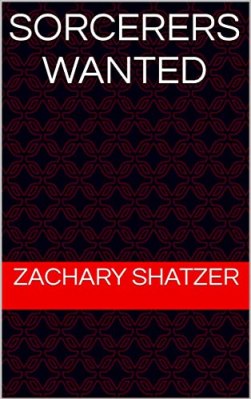
Zachary Shatzer’s books never fail to make me laugh out loud. They’re absurd, over-the-top, fast-paced and hilarious, and Sorcerers Wanted is no exception.

The best way to describe it is, imagine a spoof of Harry Potter and all the Potter clones that followed it, but done with the sensibility of the movie Airplane!, only in book form. I won’t summarize the plot, because it’s too zany, and anyway, you don’t read a book like this for the plot. There’s an evil sorcerer called Pobius who has conquered Arizona, an even eviler and much cooler sorcerer named Doomsboro who has conquered Chicago, and a school to train young sorcerers to fight back against them.

This school is where our protagonist (who is unnamed, but sometimes referred to as “Mitchell” or “Doofus”) begins his journey. He’s not what you’d call a real success in life, having failed at pretty much everything he’s ever tried, but he tries to remain upbeat.

There are just too many funny lines to even count in this one. Like this, describing Doomsboro’s use of a TV game show to capture the public’s imagination:

It’s hard for most people to choose defiance against evil when they have to give up televised drama as part of the deal.

Or this, on his use of propaganda:

These papers now cranked out nothing but propaganda about Doomsboro. How strong he was, how handsome he was, how tyranny and malevolence were actually cool and benevolence was only for old fogies who can’t keep up with the times.

“Coolness” is a major theme in the book, and in fact the use of the intangible concept of being cool is used by all sides in this complex magic war. Which is critical for our protagonist, who is about as uncool as it gets.

And like an earlier Shatzer book, there’s a fictional text mentioned in this one that I desperately wish actually existed: The Cowboy Sorcerer, by Jenkins Crabston, a novel that combines Crabston’s “experience as a sorcerer and his love of movies set in the old west.”

This book so, so needs to be real.

As for Sorcerers Wanted, it’s a wonderful comic romp that had me guffawing uncontrollably. Highly recommended for when you want to just kick back and read something light.

[Audio version of this post available below.]